

Key takeaways
- Short beds: Look for a 5–5.5-foot model. Do not force a standard-bed tent to eliminate wrinkles.
- Standard beds: A 6–6.5-foot model usually offers the easiest fit and more room for two sleeping pads.
- Truck-bed liners: Spray-in liners rarely cause problems, but tall drop-in liners can reduce usable height and slightly change strap placement.
- Tonneau covers: Soft roll-up covers may need to be rolled fully forward. Hard folding covers can interfere with the tent’s rear straps.
- Bed racks and tool boxes: These are the most common compatibility obstacles. A tent with external straps may not fit around them.
The best truck bed tents depend on your truck-bed length, the amount of headroom you need, and whether you are buying for occasional weekends or frequent, wet-weather camping: the Napier Backroadz Truck Tent is the best all-around choice, the Rightline Gear Truck Bed Tent is the quickest lightweight option, and the Kodiak Canvas Truck Bed Tent is the better long-term choice for durability and comfort.
Our top picks


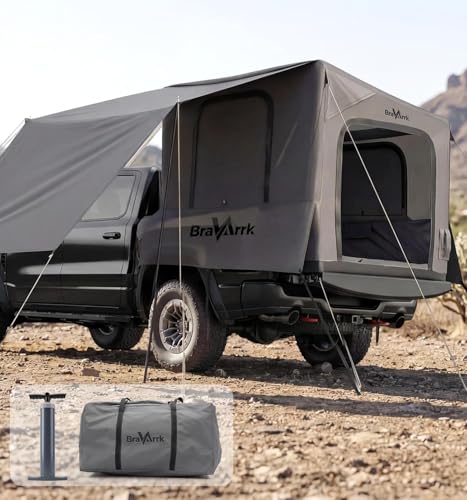
As an Amazon Associate we earn from qualifying purchases at no extra cost to you. Ratings are shown as listed on Amazon.
Best truck bed tents at a glance
| Truck bed tent | Best for | Bed compatibility | Sleeping capacity | Interior height | Packed size and weight | Typical market range |
|---|---|---|---|---|---|---|
| Napier Backroadz Truck Tent 19 Series | Most campers and occasional trips | Common 5.5–6.5 ft beds; choose the matching size | 2 adults | About 58 in | About 30 x 10 x 10 in; roughly 13 lb | $170–$240 |
| Rightline Gear Truck Bed Tent | Fast setup and compact storage | Available in sizes for short and standard beds | 2 adults | About 58 in | About 24 x 8 x 8 in; roughly 8 lb | $120–$190 |
| Kodiak Canvas Truck Bed Tent | Frequent use and poor weather | Typically 5–6.5 ft beds, depending on model | 2–3 adults, depending on model | About 60 in | About 30 x 12 x 12 in; roughly 30 lb | $300–$450 |
| Truck-bed tent with awning and annex | Longer stays and changing weather | Usually offered for 5.5–6.5 ft beds | 2 adults in the bed; annex adds usable ground space | About 55–60 in | Often 30–40 x 12 x 12 in; 15–25 lb | $180–$350 |
Specifications vary by model year and bed-size version. Measure your truck before ordering, particularly if it has a tonneau cover, bed liner, tool box, rack, or wheel-well storage.
Our picks by camping situation
Best all-around: Napier Backroadz Truck Tent 19 Series
The Backroadz is the most balanced pick for ordinary weekend camping. Its floorless design fits over the truck bed while leaving the bed surface accessible, and its color-coded poles and sleeves make setup less confusing for first-time users. The approximately 58-inch peak height is enough to sit up and change clothes, although it is not standing height for most adults.
Napier makes versions for different bed lengths, so compatibility is less of a gamble than with a one-size-fits-most tent. The polyester shell generally includes a waterproof coating and taped or protected seams, while the rainfly adds a second layer over the roof. It is a sensible choice for two people using sleeping pads rather than bulky mattresses.
Choose it if you want a conventional, reasonably roomy truck tent without paying canvas-tent prices. Its main compromises are a larger packed bundle than ultralight designs and less fabric longevity than heavy cotton canvas when it is used every week.
Best for fast setup and small storage: Rightline Gear Truck Bed Tent
Rightline Gear’s truck-bed models appeal to campers who want a light tent that can stay in the vehicle. The compact packed size and roughly 8-pound weight are useful when your truck is already carrying recovery equipment, coolers, bikes, or work tools. The floorless structure also avoids trapping a wet truck-bed floor underneath a sewn-in tent floor.
Setup is generally quick because the tent attaches to the truck with straps rather than requiring a separate freestanding footprint. Expect approximately 10–15 minutes once familiar with the pole layout. The trade-off is less interior volume and fewer comfort features than larger tents with awnings or annexes. This is a practical choice for one or two people spending one or two nights away from home.
Check the instructions for the exact bed-length version. A short-bed model is not a substitute for a standard-bed model: excess fabric can create loose areas that collect water and flap in wind.
Best for frequent use: Kodiak Canvas Truck Bed Tent
The Kodiak Canvas Truck Bed Tent is the comfort-and-durability choice. Its Hydra-Shield cotton duck canvas is heavier than coated polyester, but it is designed to be breathable and robust. The near-60-inch interior height and comparatively generous floor dimensions make it more comfortable for extended trips.
Canvas can feel less clammy than thin synthetic fabric in humid conditions, but it demands better ownership habits. Pack it only when completely dry, or open it again at home within the same day. A damp canvas tent stored in its bag can develop mildew and odors. The approximately 30-pound packed weight also makes it less attractive for minimalist travel.
Choose Kodiak when the tent will be used repeatedly, when fabric durability matters more than minimum weight, or when you prefer a roomier shelter for cool-weather camping. It is unnecessary overkill for a single fair-weather trip each year.
Truck-bed compatibility matters more than the brand
Measure the usable bed length with the tailgate closed, from the front wall to the inside edge of the tailgate. Then measure between the wheel wells. A tent advertised for a 5.5-foot bed may fit the length but still be awkward if your bed is unusually narrow or has a large wheel-well liner.
- Short beds: Look for a 5–5.5-foot model. Do not force a standard-bed tent to eliminate wrinkles.
- Standard beds: A 6–6.5-foot model usually offers the easiest fit and more room for two sleeping pads.
- Truck-bed liners: Spray-in liners rarely cause problems, but tall drop-in liners can reduce usable height and slightly change strap placement.
- Tonneau covers: Soft roll-up covers may need to be rolled fully forward. Hard folding covers can interfere with the tent’s rear straps.
- Bed racks and tool boxes: These are the most common compatibility obstacles. A tent with external straps may not fit around them.
Waterproofing, ventilation, and real weather performance
A waterproof rating alone does not determine whether a truck tent stays dry. Look for a full rainfly, protected seams, covered zippers, and enough ventilation to reduce condensation. A tightly closed synthetic tent can collect moisture from breathing even when no rain enters.
Floorless tents have one advantage in wet weather: rainwater can drain directly from the truck bed instead of pooling beneath a sewn-in floor. They also require more care with the bed itself. Clear leaves and grit before pitching, and avoid placing sharp cargo edges against the tent fabric.
For steady rain, stake or guy out the rainfly even though the truck provides an elevated platform. Wind loads can pull on pole joints and straps. No truck-bed tent should be treated as a severe-weather shelter during thunderstorms, high winds, or exposed alpine conditions.
How much setup time should you expect?
- Park on the most level ground available and clean the bed of debris.
- Roll or fold any tonneau cover completely out of the tent’s attachment area.
- Lay out the tent so the doors and windows align with the tailgate and cab.
- Assemble the poles before inserting them, checking that each segment is fully seated.
- Attach the upper straps loosely, then tension each side evenly.
- Add the rainfly and guy lines before the weather changes.
- Open vents and windows on the sheltered side to limit condensation.
A first setup commonly takes 20–30 minutes. After one practice run at home, a simple polyester tent may take 10–15 minutes; a larger canvas model or a tent with an annex may take 20 minutes or more. Practicing before arriving after dark is one of the most useful purchases you can make.
A practical decision matrix
| Your situation | Best fit | Why |
|---|---|---|
| First truck tent, two people, occasional weekends | Napier Backroadz | Balanced height, fit options, and moderate cost |
| Limited storage or spontaneous overnight trips | Rightline Gear | Lower packed weight and quick attachment |
| Frequent camping, repeated setup, rougher use | Kodiak Canvas | Heavier construction and more comfortable interior |
| Long stays, changing clothes outside, or wet ground | Model with an awning or annex | Provides sheltered storage and extra living space |
Ownership costs and maintenance
Price per trip can change the decision. A $350 canvas tent used 35 nights costs about $10 per night before accessories. A $180 polyester tent used six nights costs $30 per night. If you expect only occasional use, the lighter and less expensive tent may be the better value even if its fabric eventually needs replacement.
The first parts likely to wear are pole shock cords, strap buckles, zipper pulls, and the coating on heavily folded rainflies. Keep zippers free of sand, avoid over-tightening straps, and do not drag the tent across the bed. Brush off dirt, wash according to the manufacturer’s instructions, and dry it completely before storage. Do not machine-dry coated fabric or apply household waterproofing products without checking compatibility.
Bottom line
For most truck owners, the Napier Backroadz offers the best combination of bed compatibility, useful sitting height, two-person capacity, and manageable setup. Pick the Rightline Gear model when packed size and speed matter most. Pick the Kodiak Canvas model when you camp often and are prepared to carry and maintain a heavier shelter. Whichever you choose, correct bed sizing and dry storage will affect comfort and service life more than a small difference in advertised waterproofing.


Write Your Review
No reviews yet. Be the first to share your experience!