

Key takeaways
- For electric or induction cooking with light-to-moderate use, start around 300–500 CFM.
- For a typical gas cooktop used daily, consider 600–900 CFM.
- For high-BTU gas ranges, wok cooking, or frequent searing, consider 900–1,200 CFM, subject to make-up-air requirements.
The best 36 inch range hoods for most serious home cooks are ducted models rated around 600–900 CFM, with a 36-inch canopy, a 30–36-inch-wide cabinet opening, and a published sound rating below about 5 sones at normal speed.
Our top picks


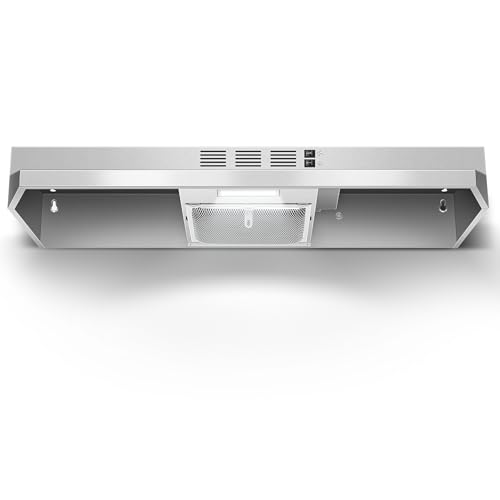

As an Amazon Associate we earn from qualifying purchases at no extra cost to you. Ratings are shown as listed on Amazon.
Quick picks by cooking style
| Best for | Recommended hood type | Target airflow | What to prioritize | Typical 2026 price range |
|---|---|---|---|---|
| Occasional electric cooking | Under-cabinet or slim insert | 300–500 CFM | Quiet low-speed operation and easy filter cleaning | $250–$800 |
| Daily cooking on gas or induction | Ducted wall-mount or insert | 600–900 CFM | Efficient capture, 6–8-inch ducting, low sones | $700–$2,000 |
| High-heat wok or frequent searing | Professional-style ducted hood | 900–1,200 CFM | Deep canopy, baffle filters, strong front capture | $1,500–$4,000+ |
| No practical exterior duct route | Recirculating hood | 300–600 CFM nominal | Thick charcoal filters and affordable replacements | $300–$1,500 |
These are useful starting points rather than universal rules. A 36-inch hood over a low-output electric cooktop does not automatically need 1,200 CFM, while a high-BTU gas range may need more airflow and make-up air planning. The right choice balances capture area, duct design, noise, cabinet clearance, and how often you cook.
Best 36 inch range hoods by situation
Best overall: a 600–900 CFM ducted wall-mount hood
For a typical 36-inch gas or induction cooktop, a ducted hood in this range offers the best balance of smoke removal, heat capture, and manageable noise. Look for a canopy at least as wide as the cooktop and preferably 3–6 inches wider when the layout allows it. A 36-inch hood is therefore appropriate for a 36-inch cooktop, but a 42-inch model can provide better edge capture if the surrounding cabinetry and wall space permit.
Established choices in this category include models from Zephyr, Broan-NuTone, Best, Faber, and Hauslane. Specifications vary substantially within each brand, so compare the actual operating CFM and sound rating rather than choosing by brand name alone.
Best for quiet operation: a lower-CFM hood with a well-designed duct
Noise is determined by more than the fan motor. Narrow ducting, sharp elbows, backdraft dampers, vibrating metal, and high fan speed can make an otherwise quiet hood unpleasant. A 500–700 CFM hood with a smooth, short, properly sized duct can sound quieter than a nominally stronger hood forced through a restrictive installation.
For quiet ventilation, seek a published sound rating at the speed you will actually use. Approximately 1–2 sones is quiet, 3–5 sones is noticeable but usually tolerable, and 6 sones or more can be intrusive during conversation. Manufacturers do not always measure sound in identical conditions, so treat ratings as useful comparisons within a product line rather than laboratory-equivalent figures across every brand.
Best for powerful cooking: a professional-style hood with 900–1,200 CFM
High-output gas burners, griddles, indoor grilling, and frequent wok cooking benefit from a deeper canopy and stronger front-to-back capture than a shallow under-cabinet hood can provide. Stainless-steel baffle filters are preferable for heavy cooking because they are durable, dishwasher-friendly in many designs, and less prone to holding grease than thin mesh filters.
Power above roughly 400 CFM may trigger local requirements for make-up air, especially in tightly sealed homes. A make-up-air system replaces air exhausted by the hood and may be required by building code. Have the installer confirm the local rule before ordering a 1,000-plus-CFM model.
Best when ducting is impossible: a recirculating hood
Ductless ventilation is a compromise, not an equivalent substitute for exterior exhaust. It can capture grease with a metal filter and reduce some cooking odors through activated carbon, but it returns heat, moisture, combustion byproducts, and much of the fine airborne material to the room.
Choose a recirculating model only when exterior ducting cannot be installed or the building rules prohibit it. Check the price and replacement interval for charcoal filters before buying. If replacement filters cost $30–$100 and need changing every three to six months, ownership cost can exceed the initial savings within a few years.
CFM: how much power does a 36-inch hood need?
A practical sizing method starts with the heat source and cooking habits:
- For electric or induction cooking with light-to-moderate use, start around 300–500 CFM.
- For a typical gas cooktop used daily, consider 600–900 CFM.
- For high-BTU gas ranges, wok cooking, or frequent searing, consider 900–1,200 CFM, subject to make-up-air requirements.
Another useful check is burner output. Some installers use approximately 1 CFM per 100 BTUs for wall-mounted hoods, although local codes and manufacturer instructions take priority. For a 60,000-BTU range, that rule suggests about 600 CFM before considering duct losses, hood depth, and cooking style. It should not be treated as a substitute for a code-compliant design.
Cabinet and installation measurements that determine fit
Measure the opening, not just the appliance label. A nominal 36-inch hood may have a body slightly narrower or wider than 36 inches, and an insert may require a custom liner or cabinet cutout.
- Width: The hood should be at least as wide as the cooktop. Confirm the product’s actual overall width and required opening width.
- Depth: A 20–24-inch canopy is common. Deeper hoods capture more from front burners but can interfere with head clearance.
- Height: Many wall-mount hoods need roughly 24–30 inches above an electric or induction surface and about 30–36 inches above gas, but follow the exact manual and local code.
- Duct size: 600–900 CFM models commonly specify a 6-, 7-, or 8-inch round duct. Do not reduce the duct size to match an existing smaller hole without approval from the manufacturer.
- Cabinet strength: A hood can weigh approximately 35–90 pounds before ductwork. Reinforce the wall or cabinet framing rather than relying only on thin cabinet panels.
For an insert, leave enough liner depth to cover the cooking surface. If a 36-inch cooktop is 22 inches deep but the insert is only 18 inches deep, the front burners may sit outside the strongest capture zone. A wider or deeper hood can compensate better than simply increasing CFM.
Ducted versus ductless: head-to-head
| Factor | Ducted | Ductless |
|---|---|---|
| Smoke and steam removal | Best; exhausts outdoors | Limited; returns moisture and heat indoors |
| Odor control | Strong when properly installed | Depends heavily on fresh charcoal filters |
| Installation cost | Higher, often $500–$2,500 or more | Lower and simpler |
| Ongoing consumables | Metal filter cleaning | Metal filter cleaning plus charcoal filters |
| Best use | Frequent cooking, gas, high heat | Light cooking where ducting is unavailable |
Ownership details that affect long-term value
Grease filters are usually the first part to require regular attention. Wash stainless baffle or aluminum mesh filters approximately monthly with frequent cooking, or sooner if they feel tacky. A clogged filter restricts airflow, increases noise, and allows grease to reach the blower and duct.
Clean the hood’s exterior with a non-abrasive stainless-steel cleaner or mild soapy water. Avoid chlorine bleach, abrasive pads, and spraying liquid directly into switches or the motor housing. Inspect the damper annually: a stuck damper can allow drafts, insects, and outdoor noise into the kitchen.
The most common installation mistake is choosing a powerful motor but undersizing the duct. A long run with several elbows may need a larger duct or an inline blower. Another mistake is mounting the hood too high. Extra clearance may feel safer, but it weakens capture and encourages users to run the fan at maximum speed.
Bottom line
For most households, the best 36 inch range hoods are ducted 600–900 CFM models with a canopy at least as wide as the cooktop, a correctly sized smooth duct, washable metal filters, and a normal-speed rating under about 5 sones. Choose 300–500 CFM for lighter electric cooking, step up to 900–1,200 CFM for high-heat gas cooking after checking make-up-air rules, and select ductless only when exterior ventilation is impractical.



Write Your Review
No reviews yet. Be the first to share your experience!