

Key takeaways
- Armchair vs recliner compared on comfort, space, and features. See which single seat suits reading corners, TV rooms, and small living rooms best.
Every living room eventually needs one great single seat: a place to read, watch a film, take a call, or simply sit with a cup of coffee while everyone else spreads out on the sofa. The two obvious candidates are the armchair and the recliner. They look similar at a glance — one seat, two arms, a back — but they are built around different ideas of comfort. An armchair is a fixed, upright seat designed for posture, conversation, and style. A recliner is a moving seat: its back tilts, its footrest rises, and in powered models the whole chair can lift you toward standing.
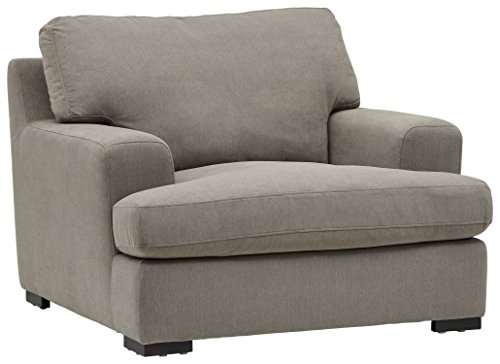

Choosing between them shapes how the room works. An armchair slides into a corner, pairs neatly beside a fireplace, and leaves your floor plan alone. A recliner asks for clearance behind and in front, but rewards you with a near-flat lounging position no fixed chair can match. This guide compares the two on comfort, space, features, and upkeep, then walks through five real products — three armchairs and two recliners — so you can see what each type actually offers.
As an Amazon Associate, I earn from qualifying purchases.
Short Answer
Choose an armchair if you want a versatile, upright seat that fits almost anywhere, works for reading and conversation, and doubles as a design accent. Choose a recliner if your priority is full-body relaxation — feet up, back tilted — for films, naps, and long evening sessions, and you have the floor space to let it open up. If the seat is mainly for a TV room, the recliner usually wins. If it has to serve guests, readers, and a tight layout all at once, the armchair is the safer pick.
Key Differences
Sitting Position and Comfort
An armchair holds you in one position: seated upright, feet on the floor, back supported at a fixed angle. Good armchairs do this very well, with deep seats, padded arms, and cushions shaped for hours of reading or talking. What they cannot do is change shape. A recliner starts in roughly the same upright pose, then transforms — the footrest comes up, the back leans back, and your weight spreads along the whole frame. For pure lounging, that adjustability is a genuine advantage. For sitting at a laptop, eating from a tray, or chatting face to face, the armchair’s stable posture feels more natural.
Space and Placement
This is where the armchair pulls ahead. Most armchairs need no clearance beyond their own footprint, so they can sit flat against a wall, angle into a corner, or flank a sofa in a matched pair. A recliner is a bigger commitment: a manual model typically needs several inches behind it for the back to tilt, and a wall-hugger or power model still needs room in front for the footrest to extend. In a small living room, one recliner can dictate the whole layout. Measure your space with the chair fully open before you decide.
Features and Mechanisms
Armchairs are simple furniture. Apart from the occasional swivel base, there is nothing to adjust and nothing to break. Recliners are machines by comparison: manual levers or push-back mechanisms, or in powered models, motors, remotes, lift assistance, vibration, heat, and USB charging. Those features are wonderful when you want them — a lift recliner can be life-changing for anyone with limited mobility — but they add weight, complexity, and more parts that can wear over time.
Style and Room Fit
Armchairs come in every furniture style: tailored club chairs, oversized lounge chairs, swivel barrels, wingbacks, and printed statement pieces. They are often the chair that gives a room its character. Recliners have improved, but the category still leans toward plush, padded silhouettes that read as comfort furniture first. If the seat will sit in a formal living room or a styled reading nook, an armchair usually blends in more easily. In a family room or media room, a recliner looks right at home.
Moving and Upkeep
A typical armchair weighs between 30 and 60 pounds and can be carried through a doorway by one or two people. Recliners are heavier — power lift models especially — and their mechanisms dislike being dragged or tipped. For upkeep, an armchair needs only vacuuming and the occasional cushion fluff. A recliner adds mechanism care: keeping the moving parts clear, checking cables on powered models, and being careful with drinks near the motor and controls.
Five Products to Compare
Armchair Picks: Fixed Seats Done Well
1. Amazon Brand – Stone & Beam Lauren Down-Filled Oversized Living Room Armchair, 46″W, Slate
The Lauren makes the strongest case for the armchair side: at a full 46 inches wide, it is closer to a one-person sofa than a side chair. The down-filled cushions and squared, fully padded arms are built for sinking into with a book or a long film, and the slate performance fabric keeps the look calm enough for almost any living room scheme. It proves a fixed seat does not have to feel upright or formal.
Specs
- Type: Oversized armchair
- Width: 46 inches
- Fill: Down-filled cushions
- Arms: Squared, fully padded
- Upholstery: Performance fabric
- Color: Slate
- Model: 2676B-LC-Slate
2. Christopher Knight Home Boaz Fabric Club Chair, Floral Print
The Boaz is the classic club armchair shape with a decorative twist. Under the floral print sits a birch hardwood frame, a 21.75-inch seat depth, and a 19-inch seat height — dimensions that suit long, relaxed sits without swallowing a smaller room. It shows the other thing armchairs do better than recliners: pattern and personality. A chair like this can carry a plain room on its own.
Specs
- Type: Club armchair
- Dimensions: 28.75″W x 32″D x 34.5″H
- Frame: Birch hardwood
- Upholstery: 100% polyester fabric, floral print
- Fill: Foam
- Seat depth: 21.75 inches
- Seat height: 19 inches
- Arm height: 25.75 inches
- Weight capacity: 250 pounds
- Model: 300439
3. Christopher Knight Home Monroe Velvet Swivel Club Chair, Dark Yellow
The Monroe narrows the gap between the two categories: it is an armchair, but it moves. The barrel back wraps around into the arms, and the iron base swivels a full 360 degrees, so you can turn toward a conversation or the television without dragging the chair. At 37.25 inches wide with a 300-pound capacity, it is a generous seat — and a reminder that some armchairs offer motion without a reclining mechanism.
Specs
- Type: Swivel club armchair
- Dimensions: 37.25″W x 32.75″D x 26.5″H
- Upholstery: Velvet
- Fill: Foam
- Base: Iron swivel base, 360-degree rotation
- Back style: Barrel back with tufting
- Weight capacity: 300 pounds
- Item weight: 54.45 pounds
- Model: 326232
Recliner Picks: Built to Lean Back
4. MCombo Electric Power Lift Recliner Chair Sofa 7040 with Massage and Heat, Dark Brown
The MCombo shows everything a recliner can add. A counter-balanced lift mechanism raises the whole chair to help the sitter stand, the back reclines through three positions to 140 degrees, and eight vibration points plus lumbar heat are built in. Dual USB ports, cup holders, and side pockets make it a self-contained station for one person. If mobility help or powered comfort is on your list, no armchair can answer it the way this chair does.
Specs
- Type: Power lift and recline, 3 positions, up to 140 degrees
- Upholstery: Faux leather, dark brown
- Extras: 8-point vibration, lumbar heat, dual USB ports, cup holders, 2 side pockets
- Dimensions: 35.8 x 35.2 x 44.5 inches
- Seat depth: 20.5 inches
- Weight capacity: 350 pounds
- Assembly: Tool-free, about 20 minutes
5. CANMOV Leather Recliner Chair, Classic Manual Recliner, Nut Brown
The CANMOV is the recliner as furniture rather than equipment: a traditional single seat in nut brown leather, with padded arms and back and a concealed, quiet manual mechanism. It blends into a classic living room in a way feature-heavy models do not, and it asks for nothing more than a few inches of wall clearance to tilt. For buyers who want the reclining position without motors or remotes, this is the straightforward route.
Specs
- Type: Manual recliner
- Upholstery: Leather, nut brown
- Style: Classic and traditional
- Model: RM001
- Seating capacity: 1 person
- Arms and back: Padded for extended sitting
Comparison Table
| Feature | Armchair | Recliner |
|---|---|---|
| Sitting position | Fixed upright | Adjustable, feet-up lounging |
| Space needed | Footprint only, wall-friendly | Clearance behind and in front |
| Best for | Reading, conversation, guests | Films, naps, long lounging |
| Extra features | Rare, occasional swivel | Lift, heat, vibration, USB on power models |
| Style range | Very wide, many statement designs | Mostly plush, comfort-first shapes |
| Moving parts | None (or a swivel base) | Manual mechanism or motors |
| Typical weight | Lighter, easy to move | Heavier, plan placement first |
Which Should You Choose?
Pick the armchair if your seat has to multitask. It is the better choice for a reading corner, a conversation area, a guest-friendly living room, or any layout where space is tight and the chair may need to move. Armchairs also win on looks: with prints, velvet, swivel bases, and oversized lounge shapes like the Lauren, Boaz, and Monroe above, there is an armchair for nearly every style of room.
Pick the recliner if the seat has one main job: helping you unwind. For film marathons, evening sports, naps, and anyone who wants their feet up and their back supported at an angle, the reclining position is hard to beat. Go manual, like the CANMOV, for simplicity and a classic look; go powered, like the MCombo, if lift assistance, heat, or vibration would genuinely be used.
Still torn? Think about the last ten times you sat in a single chair at home. If most of them involved a book, a laptop, or a conversation, buy the armchair. If most involved a screen and a blanket, buy the recliner.
Frequently Asked Questions
Can a recliner work in a small living room?
Yes, if you choose carefully and measure with the chair fully open. Wall-hugger designs slide forward as they recline and need only a few inches behind them, and a compact manual recliner can take up little more room than an oversized armchair once it is closed. The mistake is measuring only the closed footprint — the extended footrest is part of the chair’s real size.
Is an armchair comfortable enough for watching films?
For most people, yes, especially a deep, oversized model with an ottoman in front of it. What an armchair cannot do is raise your feet and tilt your back in one motion, so if you regularly watch for three or four hours at a stretch, a recliner will feel noticeably more supportive by the end of the evening.
Which type lasts longer, an armchair or a recliner?
A well-built armchair generally has fewer things to go wrong, because it has no moving parts beyond perhaps a swivel base. Recliner mechanisms are durable when treated well, but they are wear items, and powered models add motors and electronics to the equation. In both cases, frame material and upholstery quality matter more than the category itself.
Can you pair an armchair and a recliner in the same room?
Absolutely — it is a common and practical mix. Put the recliner in the prime viewing spot and use the armchair as the flexible second seat for reading or guests. To keep the room cohesive, match the upholstery family or repeat a color from the recliner in the armchair’s cushion or throw.
Conclusion
Armchair vs recliner is not a contest between a plain chair and a fancy one; it is a choice between two kinds of comfort. The armchair offers posture, flexibility, and style in a seat that fits anywhere and asks for nothing. The recliner offers transformation — feet up, back down, and in powered models a helping lift to stand. Decide how the seat will really be used, measure your space with lounging in mind, and either type can become the most fought-over chair in the house.
More from Amazon
Programs that pair well with the guide above. Offers and eligibility are set by Amazon and may change.
Collect the home and kitchen items you want in one registry that guests can shop from.
Create a wedding registrySet up recurring deliveries of everyday items on eligible products. Terms and savings are set by Amazon.
Explore Subscribe & SaveFree shipping on eligible items, Prime Video and more. Eligible new members can start with a free trial.
Start a Prime free trialAudiobooks and podcasts to listen to on the go. Eligible new members can start with a free trial.
Try Audible freeAs an Amazon Associate we earn from qualifying purchases.


Write Your Review
No reviews yet. Be the first to share your experience!