

Our Short List of 3
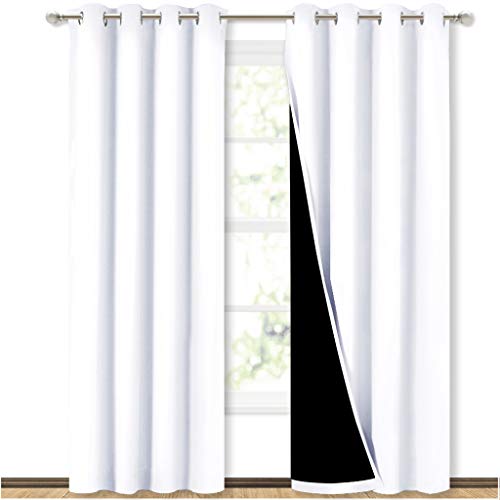
- Type: Blackout curtain panels (curtain side)
- Panel size: 52 inches wide x 84 inches long each
- Set: 2 panels
- Fabric: Polyester with a black blackout liner

- Type: Light-filtering curtain panels (curtain side)
- Panel size: 52 inches wide x 84 inches long each
- Set: 2 panels
- Fabric: Faux linen with a textured weave

- Type: Semi-sheer curtain panels (curtain side)
- Panel size: 52 inches wide x 84 inches long each
- Set: 2 panels
- Fabric: Faux linen voile with embroidered leaf pattern
All 5 Picks at a Glance
| Product | Specs | Action |
|---|---|---|
| NICETOWN 100% Blackout Window Curtain Panels |
| Check price on Amazon |
| BGment Linen Curtains, 84 Inch Length |
| Check price on Amazon |
| MIULEE White Sheer Curtains with Embroidered Leaf Pattern |
| Check price on Amazon |
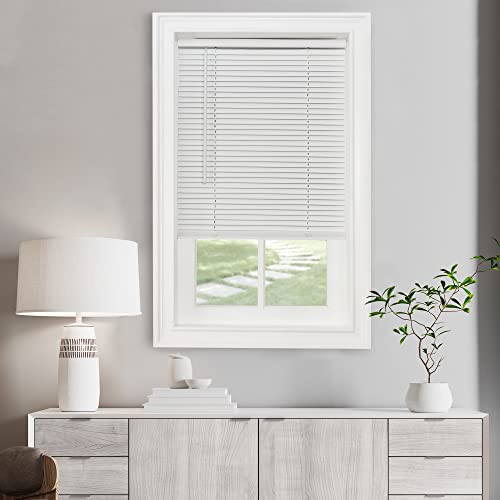 Achim Home Decor Cordless GII Morningstar Mini Blind |
| Check price on Amazon |
 Persilux Cordless Zebra Blinds |
| Check price on Amazon |
Key takeaways
- Curtains vs blinds compared on light control, privacy, insulation, upkeep and style, with five verified picks to help you cover windows with confidence.
Every window in your home asks the same question: soft fabric panels that sweep to the floor, or a fitted blind that sits neatly inside the frame? Curtains and blinds both control light and privacy, but they do it in very different ways, and the right choice changes from room to room. A bedroom that needs real darkness at dawn has little in common with a kitchen window above a sink, and a wide living room picture window plays by different rules again.
This guide compares curtains vs blinds across the things that actually decide the purchase: light control, privacy, insulation, style, upkeep, and installation. Below you will find a short answer, the key differences, a framework for choosing, and five verified products — three curtains and two blinds.
As an Amazon Associate, I earn from qualifying purchases.
The Short Answer
Choose curtains when you want softness, warmth, and the strongest light blocking. Fabric panels frame a window, absorb sound, and add insulation, and a lined blackout pair can make a bedroom genuinely dark. Choose blinds when you want precise, adjustable light control in a compact footprint. Slats and dual-layer fabrics tilt or shift so you can fine-tune brightness through the day without opening or closing anything fully. Many homes end up with both: blinds on kitchen, bathroom, and office windows, curtains in bedrooms and living rooms, and sometimes the two layered together.
Key Differences
Light Control
Curtains work in two main modes: open or closed. Sheer and light-filtering fabrics soften daylight while keeping a bright feel, while blackout panels with a dense liner shut light out almost completely. What curtains cannot do well is give you partial, directional control — a half-drawn panel still leaves one side of the window fully exposed.
Blinds are built for adjustment. Venetian-style slats tilt to bounce light toward the ceiling or cut glare on a screen while the view stays partly open. Zebra blinds take a different route, sliding alternating sheer and solid bands past each other so the same blind shifts from see-through to private in one pull. If your day involves constant small adjustments — a home office, a south-facing lounge — blinds handle that rhythm better.
Privacy
Both sides can deliver privacy, but the timing differs. A closed curtain or a fully lowered blind blocks the view completely. The difference shows in daylight hours: tilted blind slats let you see out at an angle while passersby see very little in, and light-filtering curtain fabrics blur shapes while letting the room stay bright. For street-facing ground floor rooms, blinds usually win on daytime privacy because the slats can stay angled all day without darkening the room.
Insulation and Comfort
Fabric is the better insulator. Heavy curtain panels, especially lined blackout styles, trap a layer of still air against the glass, which softens drafts in winter and slows heat gain on a sunny afternoon. Blinds sit closer to the glass and their hard slats leave more gaps at the edges, so they contribute less, though dual-layer zebra fabrics narrow the gap. Curtains also absorb echo, while hard blinds reflect it.
Style and Space
Curtains are a design statement. They add color, pattern, and texture, and hanging the rod high and wide can make a window look taller and a ceiling feel higher. The trade-off is physical presence: panels need wall space on each side of the frame and floor clearance below. Blinds are the minimalist option. Mounted inside the frame, they keep the window architecture clean and leave sills free for plants or seating, which suits small rooms and modern interiors, though they offer fewer decorative moves.
Upkeep and Durability
Blinds collect dust on horizontal surfaces, and mini blind slats need regular wiping or a pass with a duster, though vinyl slats shrug off splashes and steam, suiting kitchens and bathrooms. Curtains gather less visible dust day to day but need periodic laundering or vacuuming with an upholstery tool, and delicate sheers ask for a gentle cycle. In homes with pets, blinds avoid fabric that collects hair at floor level, while curtains avoid slats that curious cats love to bend.
Installation
A blind is usually the quicker install: a pair of brackets inside or above the frame, a handful of screws, and the headrail clips in. Many current models are cordless, which removes dangling cords entirely. Curtains need a rod, brackets, and careful leveling across a wider span, plus the discipline of choosing a length that lands where you want it — sill, apron, or floor. Blinds forgive small measuring errors more readily, since they are ordered or trimmed to the frame.
How to Choose
A few questions narrow the field quickly:
- What does the room need most? Total darkness for sleep points to lined blackout curtains. Glare control for screens points to tilting blinds or a zebra blind.
- How much moisture is in the air? Kitchens and bathrooms favor vinyl blinds or washable synthetic curtains; natural-fiber drapes are the last thing steamy rooms need.
- How wide is the window? Very wide spans and sliding doors suit curtains, which glide sideways. Blinds get heavy and awkward at large widths.
- Who shares the room? Cordless blinds remove cord hazards for young children and pets. Curtains on a sturdy rod survive tugging better than thin slats do.
- Do you want to layer? A blind for daytime adjustment plus curtain panels for softness and night-time blackout is a legitimate answer, not a compromise.
With those answers in mind, the five picks below show the range: a true blackout curtain, an everyday light-filtering linen-look curtain, a decorative sheer, a classic cordless mini blind, and a modern dual-layer zebra blind.
The Picks: 3 Curtains and 2 Blinds
NICETOWN 100% Blackout Window Curtain Panels
- Type: Blackout curtain panels (curtain side)
- Panel size: 52 inches wide x 84 inches long each
- Set: 2 panels
- Fabric: Polyester with a black blackout liner
This is the curtain side’s strongest argument: panels with a black liner built in, made to block light fully rather than merely dim it. The grommet top slides smoothly on a rod, and the fabric hangs in clean folds. If the bedroom faces east or a streetlamp sits outside, this style of curtain does what no standard blind can — it turns the window off.
BGment Linen Curtains, 84 Inch Length
- Type: Light-filtering curtain panels (curtain side)
- Panel size: 52 inches wide x 84 inches long each
- Set: 2 panels
- Fabric: Faux linen with a textured weave
For living rooms and bedrooms that want daylight without glare, these faux linen panels filter light through a burlap-style texture that reads relaxed and farmhouse-friendly. The dual hanging option — rod pocket or back tabs — lets you choose between a gathered look and cleaner pleats. They give privacy during the day while keeping the room bright, which is the middle ground where curtains shine.
MIULEE White Sheer Curtains with Embroidered Leaf Pattern
- Type: Semi-sheer curtain panels (curtain side)
- Panel size: 52 inches wide x 84 inches long each
- Set: 2 panels
- Fabric: Faux linen voile with embroidered leaf pattern
Sheers are the curtain family’s light specialists. This pair uses a faux linen voile with an embroidered leaf pattern, softening harsh sun into an even glow. Sheers rarely work alone at night, but over a blind or as a daytime layer they deliver the diffused light that makes living rooms feel finished.
Achim Home Decor Cordless GII Morningstar Mini Blind
- Type: Horizontal mini blind (blind side)
- Size: 36 inches wide x 64 inches long
- Slats: 1 inch vinyl slats
- Operation: Cordless lift with tilt wand
The classic mini blind remains the blind side’s workhorse. One-inch vinyl slats tilt for angled light and privacy, the cordless lift raises the blind with a push on the bottom rail, and vinyl construction tolerates kitchen steam and bathroom humidity that would trouble fabric. Sized for a standard single window, it mounts inside or outside the frame and simply gets on with the job.
Persilux Cordless Zebra Blinds
- Type: Dual-layer zebra roller blind (blind side)
- Fabric: Polyester with alternating sheer and solid bands
- Operation: Cordless free-stop lift
- Housing: Upgraded cassette valance
Zebra blinds answer the curtain-versus-blind question with a hybrid: a roller blind whose fabric alternates sheer and solid horizontal bands. Align the solid stripes and the room goes private; offset them and light filters through the sheer stripes. The cordless free-stop lift parks at any height, and the cassette housing gives the top a finished look a bare roller never achieves.
Comparison Table
| Product | Side | Type | Light Control | Operation | Best For |
|---|---|---|---|---|---|
| NICETOWN 100% Blackout Panels | Curtain | Blackout panels | Full blackout | Grommet top on a rod | Bedrooms needing darkness |
| BGment Linen Curtains 84 Inch | Curtain | Light-filtering panels | Filters light, adds privacy | Rod pocket or back tab | Living rooms, farmhouse style |
| MIULEE Sheer Curtains, Leaf | Curtain | Semi-sheer panels | Diffuses daylight | Rod pocket | Layering and soft light |
| Achim GII Morningstar Mini Blind | Blind | Venetian mini blind | Tilting slats | Cordless lift, tilt wand | Kitchens, baths, rentals |
| Persilux Cordless Zebra Blinds | Blind | Dual-layer roller blind | Sheer to private bands | Cordless free-stop | Modern rooms, offices |
Frequently Asked Questions
Are curtains or blinds better for blocking light in a bedroom?
Curtains, specifically lined blackout panels, block more light because the fabric overlaps the frame on all sides and the liner absorbs what the face fabric misses. Blinds sit inside the frame, so thin lines of light leak at the edges even when the slats are fully closed. If you choose blinds for a bedroom, an outside mount that extends past the frame reduces those edge gaps.
Which is easier to keep clean, curtains or blinds?
It depends on the room. Blinds need frequent light dusting because slats catch dust on their flat surfaces, but vinyl blinds wipe clean in seconds and handle splashes. Curtains need attention less often — a vacuum pass every few weeks and a wash a few times a year for washable fabrics — yet each cleaning is a bigger job. In steamy or greasy rooms, blinds are the lower-effort choice.
Can you hang curtains over blinds?
Yes, and the combination is popular for good reason. The blind handles daytime light adjustment and privacy, while the curtain panels add softness, insulation, and extra darkness at night. Mount the blind inside the frame, then fit the curtain rod on brackets that project far enough from the wall to clear the blind’s headrail, and let the panels hang on either side.
Which option suits a small room better?
Blinds usually serve small rooms better because they sit inside the window frame, keep the wall plane clean, and leave floor space and sills free. Curtains can still work in a compact room if you hang the rod close to the ceiling and choose panels that end at the sill or just below it, which keeps the fabric from crowding the floor and makes the window read taller.
Conclusion
Curtains vs blinds is not a contest with one winner; it is a matching exercise between a covering and a room. Curtains bring softness, insulation, and the deepest darkness, and they carry the decorative weight of a space. Blinds bring precision, a small footprint, and easy care in wet or busy rooms. Work through the light, moisture, and width questions above, pick the side that fits each window, and layer the two where a room asks for both. The five picks here cover the main styles on each side, so whichever direction a window takes you, there is a proven place to begin.
More from Amazon
Programs that pair well with the guide above. Offers and eligibility are set by Amazon and may change.
Collect the home and kitchen items you want in one registry that guests can shop from.
Create a wedding registrySet up recurring deliveries of everyday items on eligible products. Terms and savings are set by Amazon.
Explore Subscribe & SaveFree shipping on eligible items, Prime Video and more. Eligible new members can start with a free trial.
Start a Prime free trialAudiobooks and podcasts to listen to on the go. Eligible new members can start with a free trial.
Try Audible freeAs an Amazon Associate we earn from qualifying purchases.


Write Your Review
No reviews yet. Be the first to share your experience!