

Key takeaways
- 27–30-inch bench: choose a 16–22-inch seat for conventional seated work.
- 34–38-inch workbench: choose a 22–28-inch seat, usually with a foot ring.
- 40–42-inch standing bench: choose a 28–34-inch drafting stool or use a sit-stand perch.
- Mixed-height tasks: prioritize at least 6 inches of adjustment rather than buying a fixed-height stool.
Best Shop Stools for Workshops and Workbenches
The best shop stools are adjustable, stable, and comfortable enough for your actual bench height: choose a 24–30-inch drafting-style stool for most workbenches, a 28–34-inch industrial shop stool for standing-height benches, or a low 18–24-inch stool when seated work is close to the floor.
A workshop stool is more than a place to sit. Its seat height determines whether your shoulders stay relaxed, its base controls how safely you move, and its cushioning affects whether a short repair session turns into an uncomfortable hour. The right choice depends on your bench height, how often you sit, whether you need to roll, and how much dirt, oil, and welding debris the stool will encounter.
Our top picks


As an Amazon Associate we earn from qualifying purchases at no extra cost to you. Ratings are shown as listed on Amazon.
Quick Comparison: Which Shop Stool Fits Your Bench?
| Stool type | Typical seat height | Best for | Back support | Typical base | General market range |
|---|---|---|---|---|---|
| Low shop stool | 18–24 in. | Detailing, assembly, low work surfaces | Usually none | Four legs or fixed pedestal | $40–$120 |
| Adjustable shop stool | 22–30 in. | Standard workbenches and mixed tasks | Optional or low back | Five-star pedestal | $80–$220 |
| Drafting-height stool | 24–34 in. | High benches, drafting tables, electronics work | Often included | Five-star base with foot ring | $120–$300 |
| Industrial mechanic stool | 20–28 in. | Garages, repair work, frequent repositioning | Usually low back or none | Welded steel frame or heavy pedestal | $100–$250 |
| Rolling saddle or creeper-style stool | 15–22 in. | Vehicle work and low components | Rarely included | Four or five casters | $60–$180 |
How to Choose the Correct Seat Height
Measure from the floor to the top of your bench, then select a stool that lets your elbows remain close to your sides while your hands rest on the work. As a useful starting point, the seat is usually about 9–12 inches below the work surface for precision tasks. This leaves room for your thighs and avoids forcing your shoulders upward.
- 27–30-inch bench: choose a 16–22-inch seat for conventional seated work.
- 34–38-inch workbench: choose a 22–28-inch seat, usually with a foot ring.
- 40–42-inch standing bench: choose a 28–34-inch drafting stool or use a sit-stand perch.
- Mixed-height tasks: prioritize at least 6 inches of adjustment rather than buying a fixed-height stool.
For example, if your workbench is 36 inches high and you want approximately 10 inches between the seat and work surface, a seat near 26 inches is a sensible starting point. Check the manufacturer’s measurement carefully: some listings give the height to the top of the cushion, while others give the gas-lift range without the seat thickness.
Best Shop Stool Picks by Situation
Best overall: adjustable five-base shop stool
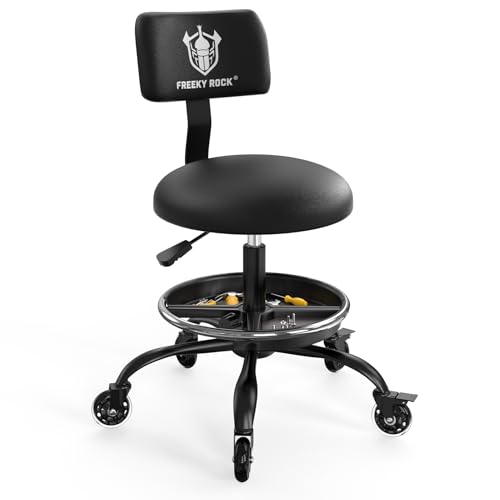
For most home workshops, an adjustable stool with a 22–30-inch range offers the best balance of versatility and stability. Look for a padded seat at least 14 inches wide, a metal foot ring, and a five-point base. This format works at electronics benches, woodworking benches, and many garage workstations without committing you to one height.
Choose polyurethane or molded vinyl cushioning if the stool will encounter oil, dust, or occasional spills. Fabric may feel pleasant during long sessions but is harder to clean and can retain fine workshop dust.
Best for long precision sessions: high-back drafting stool
A high-back drafting stool makes sense when you spend several hours at a high bench or drafting-height workstation. The backrest should support the lower and middle back without preventing you from leaning forward. A foot ring is important because your feet may not reach the floor at the stool’s upper settings.
Do not assume a taller back automatically means better support. A bulky backrest can interfere with reaching into a cabinet or turning toward a tool. For a narrow workshop, a low back or backless design is often easier to store.
Best for vehicle work: rolling mechanic stool
A low rolling stool is convenient around wheels, brake components, and lower bodywork. Four or five large casters roll more predictably over concrete than tiny office-style wheels. A tool tray or integrated storage bin can save repeated trips to the toolbox, but it also makes the stool wider and easier to overload.
Use a rolling stool only when the floor is reasonably clear. Casters can catch on extension cords, floor cracks, and metal debris. Locking casters or a weighted base are preferable when you need to apply force with a hand tool.
Best for occasional use and tight budgets: fixed steel stool
A fixed four-leg or pedestal stool is often the most durable low-cost choice. It has fewer moving parts, does not require gas-lift maintenance, and can be pushed completely under a bench. It is less flexible, however, so confirm the height before buying.
Expect a general market price of about $40–$100 for a basic fixed stool, $80–$220 for an adjustable workshop model, and $150–$300 for a heavily built drafting or industrial stool. Higher prices should buy better welds, a stronger base, replaceable components, or more useful adjustment—not merely thicker padding.
Seat Cushioning: Comfort Versus Workshop Durability
Thick foam is not automatically comfortable. Very soft foam can compress unevenly and leave you sitting on the seat pan during long sessions. A medium-firm cushion around 2–3 inches thick is a practical target for general bench work.
- Vinyl: easy to wipe clean and suitable for grease-prone garages; can crack if exposed to sunlight or extreme cold.
- Polyurethane: resilient and resistant to many workshop conditions; molded versions are often firmer than upholstered foam.
- Fabric: breathable and comfortable, but more difficult to clean after oil or metal dust contamination.
- Wood or hard plastic: durable and inexpensive, but better for short tasks than all-day seated work.
A contoured seat can reduce sliding, but an aggressively raised front edge may press into your legs. A nearly flat seat is easier to move around on and works better when you frequently stand, pivot, or reach sideways.
Base, Casters, and Footrests
A five-point base generally offers better resistance to tipping than a narrow three-leg pedestal. A wide base is especially valuable when the stool is adjusted high. Check the published base diameter; approximately 24–28 inches is common for a stable adjustable stool, although it may be too wide for a crowded bench aisle.
Casters are useful only when you need to move. Soft polyurethane wheels are quieter and more forgiving on finished floors, while hard wheels often roll better on rough concrete. For precision work, a fixed-foot base or locking casters reduces unwanted movement.
A foot ring is one of the most important features on a tall stool. It supports your feet, gives you leverage when turning, and reduces the feeling that your legs are dangling. A ring that rotates with the seat is convenient, while a fixed welded ring is usually more durable. Check whether the ring is high enough for your shortest comfortable seat setting.
Decision Matrix for Workshop Buyers
| Your situation | Recommended design | Features to prioritize | Features to avoid |
|---|---|---|---|
| Under $100 and occasional use | Fixed steel stool | Welded frame, wipe-clean seat, correct fixed height | Cheap gas lift with a narrow base |
| Several hours per week | Adjustable five-base stool | 22–30-inch range, medium-firm cushion, foot ring | Thin foam and non-replaceable casters |
| Small workshop | Backless or low-back stool | Compact footprint, under-bench storage, fixed feet | Large backrest and wide rolling base |
| Rough concrete floor | Industrial stool or mechanic stool | Large casters, reinforced frame, sealed upholstery | Tiny office casters and exposed fabric |
| High workbench | Drafting-height stool | 28–34-inch adjustment, sturdy foot ring, back support | Short gas-lift range |
Durability and Ownership Details That Matter
The parts most likely to wear first are casters, gas-lift mechanisms, seat upholstery, and foot-ring welds. Dust can work into caster bearings, while oil and solvents can harden vinyl or weaken some plastic surfaces. A stool with replaceable casters and a standard gas cylinder may cost less to keep than a cheaper model that must be discarded when one component fails.
Clean the base and casters monthly in a busy shop. Remove hair, wire, and packed dust from wheel axles; wipe vinyl with mild soap and water; and avoid soaking the gas-lift cylinder. Do not lubricate a gas lift unless the manufacturer specifically permits it, because excess oil can attract abrasive dust.
Inspect the stool before each long session. Stop using it if the seat rocks, the base is bent, a caster socket is cracked, or the gas lift sinks under normal weight. Never use a rolling stool as a step ladder, and stay within the manufacturer’s weight rating—especially when carrying tools or leaning far to one side.
Bottom Line
For the widest range of workshop tasks, buy an adjustable five-base stool with a 22–30-inch seat range, medium-firm wipe-clean cushioning, a foot ring, and replaceable casters or glides. Select a drafting-height model for a high bench, a low rolling mechanic stool for vehicle work, or a fixed steel stool when simplicity and compact storage matter more than adjustment. The best shop stool is the one that puts your hands at the right working height while remaining stable, cleanable, and durable under the specific conditions of your workshop.








Write Your Review
No reviews yet. Be the first to share your experience!