

Key takeaways
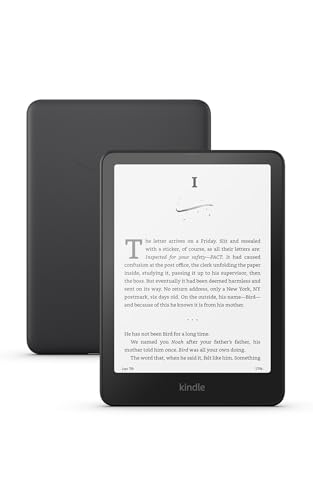
- Mostly novels in bright or outdoor light: Kindle Paperwhite.
- Color comics with minimal distractions: Kobo Libra Colour.
- One small device for books, comics, web pages, and notes: iPad mini (A17 Pro).
- Technical PDFs and full-page magazines: iPad Air 11-inch (M3).
- Large illustrated books on a budget: a 10.9- to 11-inch Android tablet with an LCD screen.
- Android apps with an e-ink display: BOOX Go Color 7, accepting slower page refresh and less vivid color.
The best tablet for reading is the Amazon Kindle Paperwhite for distraction-free novels, the Apple iPad mini (A17 Pro) for a compact all-purpose reader, and the iPad Air 11-inch (M3) for PDFs, comics, and large-format documents.
Our top picks


As an Amazon Associate we earn from qualifying purchases at no extra cost to you. Ratings are shown as listed on Amazon.
Quick picks by reading situation
- Mostly novels in bright or outdoor light: Kindle Paperwhite.
- Color comics with minimal distractions: Kobo Libra Colour.
- One small device for books, comics, web pages, and notes: iPad mini (A17 Pro).
- Technical PDFs and full-page magazines: iPad Air 11-inch (M3).
- Large illustrated books on a budget: a 10.9- to 11-inch Android tablet with an LCD screen.
- Android apps with an e-ink display: BOOX Go Color 7, accepting slower page refresh and less vivid color.
The right choice depends less on processor speed than on screen behavior, aspect ratio, weight, lighting, battery endurance, and whether your preferred reading apps work well on the operating system.
Best tablets for reading: comparison
| Device | Screen and aspect ratio | Weight | Battery expectation | Best for |
|---|---|---|---|---|
| Kindle Paperwhite | 7-inch monochrome E Ink, 300 ppi, approximately 4:3 | About 211 g | Up to about 12 weeks, depending on use and lighting | Novels, travel, outdoor reading |
| Kobo Libra Colour | 7-inch color E Ink, 300 ppi black-and-white, approximately 4:3 | About 199 g | Typically several weeks | Color covers, comics, library borrowing |
| BOOX Go Color 7 | 7-inch color E Ink, 300 ppi black-and-white, lower effective color resolution, approximately 4:3 | About 195 g | Often days to a few weeks, depending on Android apps and front light | Android reading apps on an e-ink screen |
| iPad mini (A17 Pro) | 8.3-inch LCD, 2266 × 1488, approximately 3:2 | About 293 g | Up to about 10 hours of web or video use | Portable mixed reading and comics |
| iPad Air 11-inch (M3) | 10.86-inch LCD, 2360 × 1640, approximately 3:2 | About 460 g | Up to about 10 hours of web or video use | PDFs, magazines, textbooks, color comics |
| Typical 10.9- to 11-inch Android LCD tablet | LCD, usually 1920 × 1200 or 2000 × 1200, 16:10 | About 450–550 g | Roughly 8–14 hours of active reading | Budget color reading and video |
Battery figures are manufacturer-style estimates rather than guaranteed reading times. Brightness, wireless radios, page animation, audio, and demanding comic or PDF apps can reduce them substantially.
Screen type: E Ink or LCD?
E Ink for long novels
Monochrome E Ink reflects ambient light instead of shining a bright image directly at you. Its paper-like appearance, low power consumption, and lack of glare make it particularly good for novels and extended reading sessions. The Kindle Paperwhite is a strong default because its 7-inch screen is noticeably roomier than older 6-inch readers while remaining light enough for one-handed use.
E Ink is not automatically better in every environment. The built-in front light is useful in darkness, but E Ink screens are not as bright or uniformly illuminated as a good LCD. Page turns are slower, scrolling is awkward, and complex PDF layouts may require frequent zooming. Color E Ink also looks muted compared with an LCD. The Kobo Libra Colour and BOOX Go Color 7 are useful for covers, diagrams, and comics, but neither reproduces saturated artwork like an iPad.
LCD for comics, PDFs, and responsive apps
LCD tablets provide fast scrolling, sharp text, vivid color, and much better compatibility with apps such as Libby, Kindle, Kobo, Google Play Books, Marvel Unlimited, and Comixology-style services. They are the safer option for graphic novels with full-page art, two-page spreads, scanned magazines, or PDFs containing charts and color diagrams.
The tradeoff is weight and battery life. An 11-inch tablet can be excellent on a stand or lap but tiring to hold above your face. A smaller iPad mini is easier to carry, although some PDF pages and comic lettering become cramped. If you read in bed, a lightweight e-reader usually creates less wrist strain than a glass-and-metal tablet.
Brightness, glare, and reading comfort
For indoor reading, around 200–400 nits is usually sufficient on an LCD when reflections are controlled. In a sunny room or outdoors, 500 nits or more is more comfortable, but a matte or paper-like surface can matter as much as the headline brightness. The iPad Air and iPad mini have bright, sharp displays, though their glossy glass can reflect windows and lamps.
For an LCD tablet, reduce reflections by changing the angle before raising brightness. A matte screen protector can help, but it may slightly soften small text and reduce color clarity. On E Ink, use the lowest front-light level that makes the page comfortable; maximum brightness consumes more power and can make the screen appear bluish or gray.
Aspect ratio and usable page size
Aspect ratio determines how much of a page fits without zooming. E Ink readers near 4:3 suit ordinary books and manga pages well, but a 7-inch display is still small for dense PDFs. The iPad mini’s approximately 3:2 shape is versatile: it shows a book page at a comfortable width and can display a comic page with modest margins.
Many budget Android tablets use 16:10 screens. This is useful for video but leaves more unused space around a portrait book page. An 11-inch 16:10 tablet can still be excellent for PDFs because its physical height is generous. For two-page comic spreads, however, an 11-inch or larger screen is preferable; a 12.9- or 13-inch tablet gives the best layout but becomes noticeably heavier and more expensive.
Reading-app support
- Kindle Paperwhite: Excellent for Kindle purchases and personal documents sent through Amazon’s document tools. It is not a general-purpose app tablet, and many non-Kindle services are unavailable.
- Kobo Libra Colour: Strong Kobo store integration, EPUB support, library borrowing in supported regions, and physical page-turn buttons. Check local library compatibility before buying.
- BOOX Go Color 7: Runs Android apps, making it flexible for Kindle, Kobo, Libby, and other services. App performance, refresh modes, and setup are more complicated than on a dedicated reader.
- iPad mini and iPad Air: The broadest app support, including Kindle, Kobo, Apple Books, Libby, Google Play Books through supported access, PDF editors, cloud storage, and comic services.
- Android LCD tablets: Usually support Kindle, Kobo, Libby, Google Play Books, and comic apps through Google Play, but software update policies vary significantly by manufacturer.
Decision matrix: which type fits you?
| Your priority | Recommended type | Why | Compromise |
|---|---|---|---|
| Daily novels, lowest charging frequency | Monochrome E Ink | Weeks of battery life and low weight | Weak color and slower navigation |
| Occasional reading on a limited budget | 10.9- to 11-inch LCD tablet | One device handles books, video, and browsing | More glare and shorter standby life |
| Frequent comics and graphic novels | iPad mini or iPad Air | Fast page turns and vivid color | Needs regular charging |
| Large PDFs several times a week | 11-inch or larger LCD tablet | Less zooming and better diagram visibility | Heavier in one hand |
| Multiple reading ecosystems on e-ink | Android e-ink tablet | Flexible app selection with a paper-like display | Higher cost and more configuration |
Ownership details people often overlook
Battery capacity is less important than software behavior. A monochrome E Ink reader may last weeks because it uses power mainly during page changes. An LCD tablet may have a similar battery capacity in watt-hours yet last only a day or two of active use. If you read PDFs with Wi-Fi, cloud synchronization, and high brightness enabled, expect much shorter runtime than a simple novel-reading estimate.
Storage needs also vary. Text books consume little space, while scanned comics and downloaded magazines can consume hundreds of megabytes each. For regular comic readers, 128 GB is a sensible starting point; 64 GB is adequate for mostly text and streaming; 256 GB is worthwhile when storing a large offline library, video, and artwork together.
The parts most likely to show wear are the charging port, screen surface, buttons, and battery. Use a case that protects the corners without adding excessive weight, keep sand away from E Ink screens and USB ports, and avoid cleaning with household glass cleaner. A soft, slightly damp microfiber cloth is safer. Do not press hard on an E Ink display, since its layered screen can be damaged by localized pressure.
A practical way to choose screen size
Measure a typical PDF or comic page rather than relying on diagonal size. If the page is about 7 inches wide, an 8.3-inch tablet usually displays it legibly at near-full size. An 11-inch tablet gives more comfortable margins and less frequent zooming. For a two-page spread, divide the tablet’s usable width by two: an 11-inch screen may make each page too narrow, while a 12.9-inch model is more suitable.
For most buyers, the final choice is simple: choose a Kindle Paperwhite for the best novel-reading experience, a Kobo Libra Colour when color and library features matter more, an iPad mini for portability across many apps, or an iPad Air for serious PDF and comic reading. Buy an Android LCD tablet instead when the main goal is broad functionality at a lower general market price.





Write Your Review
No reviews yet. Be the first to share your experience!