

Key takeaways
- Twin bed vs full bed compared on mattress dimensions, room fit and who each size suits, with five verified frames in both sizes to help you choose.
Choosing between a twin bed and a full bed sounds simple until you measure the room, think about who will actually sleep in it, and realize the two sizes behave very differently in daily life. Both share the same 75-inch length, so the decision comes down to width: a twin mattress is 38 inches wide, while a full mattress stretches to 54 inches. Those extra 16 inches change how a sleeper stretches out, how much floor the bed takes up, and how long the bed stays useful as a child grows. This guide walks through the real differences between a twin bed vs full bed setup, explains which rooms and sleepers each size suits, and finishes with five verified frames — three twin and two full — so you can see how the sizes translate into actual products.


As an Amazon Associate, I earn from qualifying purchases.
Short Answer
Pick a twin bed when the room is small, the sleeper is a child, or you want two separate beds in one shared room. Pick a full bed when the sleeper is a teenager or adult who wants room to move, when one bed has to serve a growing child for many years, or when a guest room needs to feel generous without giving up as much floor space as a queen. Same length, different width, different job.
Key Differences
Mattress dimensions
A twin mattress measures 38 inches wide by 75 inches long. A full mattress, sometimes called a double, measures 54 inches wide by 75 inches long. The length is identical, so a tall sleeper gains nothing by moving up to a full; the gain is entirely in width. For reference, a twin XL keeps the twin width but adds five inches of length at 38 by 80 inches, which is why dorm rooms use it. When you compare twin bed vs full bed footprints, the full needs a floor area roughly 42 percent larger, and frames add a few inches beyond the mattress on every side.
Sleeping space per person
Sixteen extra inches of width is the difference between sleeping in one fixed position and being able to roll over, bend a knee, or let a arm fall to the side. A twin gives one sleeper a defined lane, which suits children and back sleepers who stay put. A full gives one sleeper a generous surface and can host two people for a night or two, though each person then gets only 27 inches — less personal width than a twin provides a solo sleeper. Couples who share every night usually outgrow a full quickly, but for a single adult it feels roomy without dominating the room.
Room fit and layout
A twin frame is typically around 38 to 42 inches wide overall, so it fits bedrooms as small as 7 by 10 feet and leaves space for a desk, dresser, or play area. Two twins can share one room with a walkway between them, which is why they dominate kids’ rooms and bunk setups. A full frame runs about 54 to 58 inches wide, and it needs a room closer to 10 by 10 feet to keep comfortable clearance on both sides. In a narrow room, a full pushed against a wall works, but making the bed and changing sheets from one side gets old fast.
Bedding and day-to-day use
Twin bedding is the easiest to find and the simplest to wash, and a twin bed is light work to make each morning — a genuine plus for kids learning to tidy their own room. Full bedding is just as widely available, and the wider quilt drapes better over the sides. Because both sizes are the same length, fitted sheets are not interchangeable: a twin sheet will not stretch across a full mattress, so switching sizes means replacing the full bedding set, including the comforter, if you want the overhang to look right.
How long the bed stays useful
A twin suits most children from the first big-kid bed through the early school years, and it remains a sensible guest or daybed size indefinitely. A full tends to last longer as a primary bed: it carries a child into the teen years and on into adulthood without feeling cramped, which is why many parents skip the twin stage for an only child in a medium room. If the bed will later move to a guest room, a full is the more welcoming of the two for adult visitors.
How to Choose
Measure the room first, including where doors and closet doors swing. If the clear floor area for the bed is under about 42 inches of width, the twin wins by default. Next, think about the sleeper’s age and build: children under ten are well served by a twin, while teens, restless sleepers, and adults who read or sprawl in bed use the full’s width every night. Consider the second job the bed might do — a twin trundle or a pair of twins handles sleepovers and shared rooms, while a full handles a single guest more comfortably. Finally, look at frame clearance: a taller platform frame adds under-bed storage that can offset the floor space either size takes up, which matters in small apartments and dorm-style rooms.
Five Frames That Show the Difference
The picks below split three twin frames against two full-size options, all platform designs that skip the box spring, so the size contrast stays front and center.
ZINUS Mia Metal Platform Bed Frame with Headboard, Twin, Black
The Mia pairs a bold black steel frame with a built-in headboard, giving a twin bed a finished, grown-up look that works in a teen room or a compact guest corner. Its wooden slats sit 3 inches apart in the twin size, close enough to support foam, latex, or spring mattresses evenly, and the frame stands tall enough to leave a full foot of storage space underneath.
Specs
- Size: Twin
- Assembled dimensions: 75.5″L x 37.8″W x 38″H
- Frame material: Steel with plywood slats
- Slat spacing: 3 inches
- Under-bed clearance: 12 inches
- Item weight: 22 pounds
- Model number: AZ-ASMPH-15T
- Warranty: 5-year
ZINUS 12 Inch Lorelei Metal Platform Bed Frame, Twin, Black
The Lorelei is the minimalist take on a twin: a low 12-inch steel platform with no headboard, so it slides under windows and into tight kids’ rooms without visual bulk. Steel slats replace wood here, the whole frame assembles in under 30 minutes with the included tools, and 11 inches of clearance underneath still swallows storage bins and boxes.
Specs
- Size: Twin
- Assembled dimensions: 74″L x 38″W x 12″H
- Frame material: Steel
- Support: Steel slat platform
- Under-bed clearance: 11 inches
- Item weight: 21.9 pounds
- Model number: OLB-SMPB-12T
- Assembly: Under 30 minutes, tools included
ZINUS Van 16 Inch Twin Bed Frame with Steel Slat Support
The Van raises the twin to 16 inches, trading the low profile for serious under-bed storage volume — handy in dorms and studio apartments where the bed has to double as a dresser substitute. Heavy-duty metal construction and steel slat support carry foam, latex, or spring mattresses with no box spring, and the plain black finish keeps the taller frame from looking industrial.
Specs
- Size: Twin
- Frame height: 16 inches
- Frame material: Heavy-duty metal
- Support: Steel slat support
- Box spring: Not needed
- Storage: Under-bed storage space
- Model number: AZ-MPRC-16TS
- Warranty: 5-year
ZINUS Mia Metal Platform Bed Frame, Full, Black
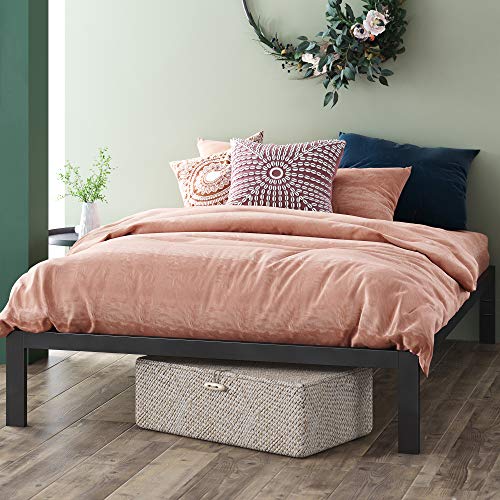
This is the same Mia design in full size, and the spec sheet shows what the upgrade buys: the frame widens to 53.3 inches while keeping the 12 inches of under-bed clearance and the wood slat platform spaced 3 inches apart for the full size. The maximum weight recommendation of 700 pounds underlines that this is a bed built for adults, and openings in two legs let you attach your own headboard later if you want the finished look.
Specs
- Size: Full
- Assembled dimensions: 74.5″L x 53.3″W x 14″H
- Frame material: Alloy steel with wood slats
- Slat spacing: 3 inches
- Under-bed clearance: 12 inches
- Maximum weight recommendation: 700 pounds
- Item weight: 46.2 pounds
- Model number: AZ-ASMP-15F
- Warranty: 5-year
DHP Miles Metal Full Loft Bed with Desk, Black

The Miles shows the other direction a full bed can go: up. This metal loft raises the full-size sleeping surface over a built-in desk, which suits students and teens in rooms where a bed and a study area would never fit side by side. It is a useful reminder that a full mattress needs 54 inches of width wherever it sits — the loft simply spends the floor space vertically instead of horizontally.
Specs
- Size: Full
- Assembled dimensions: 77.5″L x 56.5″W x 72″H
- Frame material: Metal
- Form factor: Loft bed with built-in desk
- Included components: Loft bed frame with desk
- Model number: 4308029
- Finish: Black metal
Comparison Table
| Product | Size | Dimensions (L x W x H) | Support | Under-Bed Clearance |
|---|---|---|---|---|
| ZINUS Mia with Headboard | Twin | 75.5″ x 37.8″ x 38″ | Wood slats | 12 inches |
| ZINUS Lorelei 12 Inch | Twin | 74″ x 38″ x 12″ | Steel slats | 11 inches |
| ZINUS Van 16 Inch | Twin | Twin platform, 16″ high | Steel slats | Tall storage clearance |
| ZINUS Mia | Full | 74.5″ x 53.3″ x 14″ | Wood slats | 12 inches |
| DHP Miles Loft with Desk | Full | 77.5″ x 56.5″ x 72″ | Metal loft frame | Desk space below |
Frequently Asked Questions
What is the actual size difference between a twin and a full bed?
Both mattresses are 75 inches long. The difference is width: a twin is 38 inches wide and a full is 54 inches wide, so the full adds 16 inches of sleeping width and needs noticeably more floor space once the frame is counted.
Can two people sleep comfortably on a full bed?
For a night or two, yes, but it is snug. Each person gets about 27 inches of width, which is less than a twin gives one sleeper. A full works well for one adult full time, or for a parent reading beside a child, rather than as a permanent bed for two adults.
Is a twin bed big enough for a teenager or an adult?
A twin can work for a single teen or adult, especially in a small room, as long as they are comfortable within the 75-inch length. Taller sleepers may prefer a twin XL for its 80-inch length, and restless sleepers usually prefer the full’s extra width when the room allows it.
Which size is better for a guest room?
A full bed is usually the better guest room pick because it feels generous for one visitor and can handle a couple in a pinch. A twin still makes sense in a small guest space, and two twins offer flexibility when guests do not want to share a bed.
Conclusion
Twin bed vs full bed is a width decision, not a length one. The twin keeps a small room workable, serves children well, and pairs up neatly in shared spaces. The full spends extra floor space on sleeping room that teens and adults genuinely feel every night, and it lasts longer as a primary bed. Measure the room, think honestly about who sleeps there and for how long, and let the frames above show how little — or how much — those 16 inches change a bedroom.
More from Amazon
Programs that pair well with the guide above. Offers and eligibility are set by Amazon and may change.
Collect the home and kitchen items you want in one registry that guests can shop from.
Create a wedding registrySet up recurring deliveries of everyday items on eligible products. Terms and savings are set by Amazon.
Explore Subscribe & SaveFree shipping on eligible items, Prime Video and more. Eligible new members can start with a free trial.
Start a Prime free trialAudiobooks and podcasts to listen to on the go. Eligible new members can start with a free trial.
Try Audible freeAs an Amazon Associate we earn from qualifying purchases.


Write Your Review
No reviews yet. Be the first to share your experience!