

Key takeaways
- Best overall for demanding 4K gaming and creative work: GeForce RTX 5090
- Best high-end value: Radeon RX 9070 XT
- Best for 1440p ray tracing and creator software: GeForce RTX 5070 Ti
- Best efficient 1440p choice: Radeon RX 9070
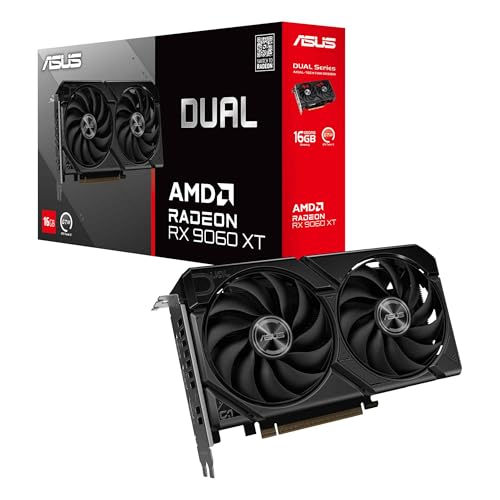
- Best budget card with useful VRAM: Radeon RX 9060 XT 16GB
- Best for high-refresh 4K without moving to the flagship: GeForce RTX 5080
The best graphics cards in 2026 depend on your target resolution and workload: choose the GeForce RTX 5090 for uncompromised 4K creation and gaming, the Radeon RX 9070 XT for strong 1440p value, and a 16GB mid-range card such as the GeForce RTX 5070 Ti or Radeon RX 9060 XT for a balanced system.
Our top picks



As an Amazon Associate we earn from qualifying purchases at no extra cost to you. Ratings are shown as listed on Amazon.
Best graphics cards by situation
- Best overall for demanding 4K gaming and creative work: GeForce RTX 5090
- Best high-end value: Radeon RX 9070 XT
- Best for 1440p ray tracing and creator software: GeForce RTX 5070 Ti
- Best efficient 1440p choice: Radeon RX 9070
- Best budget card with useful VRAM: Radeon RX 9060 XT 16GB
- Best for high-refresh 4K without moving to the flagship: GeForce RTX 5080
These recommendations assume a desktop PC and a sensible match between the GPU, processor, power supply, monitor, and case. A faster card can deliver little benefit at 1080p if the processor is limiting frame rates, while a 4K monitor can quickly expose inadequate VRAM or memory bandwidth.
Head-to-head comparison
| Graphics card | VRAM | Typical board power | Typical length | Best use | General 2026 market range |
|---|---|---|---|---|---|
| GeForce RTX 5090 | 32GB GDDR7 | 575W | 304mm Founders Edition; partner cards often 330–360mm | 4K/8K work, rendering, AI, heavy ray tracing | $2,000–$2,700 |
| GeForce RTX 5080 | 16GB GDDR7 | 360W | 304mm Founders Edition; roughly 300–360mm by model | High-refresh 4K gaming and GPU-accelerated creation | $1,000–$1,400 |
| GeForce RTX 5070 Ti | 16GB GDDR7 | 300W | Usually about 300–335mm | 1440p ray tracing, 4K with upscaling, editing | $750–$1,050 |
| Radeon RX 9070 XT | 16GB GDDR6 | 304W | Usually about 300–330mm | High-value 1440p and 4K raster gaming | $650–$900 |
| Radeon RX 9070 | 16GB GDDR6 | 220W | Usually about 280–330mm | Efficient 1440p and moderately demanding 4K | $550–$750 |
| Radeon RX 9060 XT 16GB | 16GB GDDR6 | 160W | Usually about 240–310mm | 1080p or sensible 1440p gaming | $350–$500 |
Dimensions and power figures vary between manufacturers, so treat the table as a planning guide rather than a substitute for the exact product specification. Factory-overclocked cards frequently use larger heatsinks and draw more power than reference designs.
How resolution changes the buying decision
1080p
At 1080p, the Radeon RX 9060 XT 16GB is a practical upper-mainstream choice, especially for high-refresh esports and modern single-player games. Spending substantially more can produce higher frame rates, but the benefit often depends on the CPU. If the goal is competitive gaming at 240Hz or above, prioritize a fast processor, low-latency memory, and a card that maintains consistent frame times rather than buying the largest GPU available.
1440p
1440p is where the Radeon RX 9070, RX 9070 XT, and GeForce RTX 5070 Ti make the most sense. The RX 9070 XT generally offers compelling traditional raster performance for the money. The RTX 5070 Ti is the stronger fit when ray tracing, CUDA-accelerated applications, or creator features are important. Sixteen gigabytes of VRAM gives each card useful headroom for high-resolution textures and demanding games.
4K
For 4K, the RTX 5080 and RX 9070 XT target different priorities. The RTX 5080 is preferable for heavier ray tracing and software that benefits from NVIDIA’s rendering and upscaling ecosystem, but its 16GB capacity can become a consideration in unusually demanding workloads. The RX 9070 XT is often the better value for conventional rasterized gaming, though it may require more compromises in ray-traced titles.
The RTX 5090 is the no-compromise option when very high 4K frame rates, large creative projects, GPU rendering, or local AI workloads justify its cost, heat output, and power consumption. It is not automatically the best value for ordinary gaming.
Gaming versus creative work
For gaming, compare native raster performance, ray tracing, frame-generation support, upscaling quality, and VRAM. A card that is fast at native 4K can still be the better purchase if you prefer image quality without aggressive reconstruction. Conversely, an efficient upscaling mode can make a mid-range card feel much faster at 4K.
For video editing, 3D rendering, motion graphics, and AI, the software matters more than a generic gaming benchmark. NVIDIA cards are often the safer choice for applications built around CUDA, OptiX, or specific encoder features. The RTX 5090’s 32GB VRAM is particularly valuable for complex scenes, high-resolution timelines, and models that exceed the capacity of 16GB cards.
AMD cards can be excellent for raster gaming and general GPU acceleration, but check the exact applications you use before choosing one for professional work. A card with higher gaming performance is not necessarily faster in Blender, DaVinci Resolve, Adobe applications, or an AI workflow.
VRAM, cooling, and case fit
VRAM is not the same as speed, but insufficient VRAM can cause stuttering, texture reductions, or failed workloads. Eight gigabytes is increasingly restrictive for a new performance-oriented purchase. Sixteen gigabytes is the sensible target for 1440p and entry-level 4K longevity. Thirty-two gigabytes is a specialist advantage for the RTX 5090 rather than a requirement for normal gaming.
Measure the available GPU space from the rear expansion brackets to the first obstruction, not merely the advertised case length. Allow additional room for front radiator fans, drive cages, and the power connector. Also check card thickness: a card occupying three or more slots can block expansion slots or restrict airflow around a second device.
Cooling design affects sustained performance and noise. Large triple-fan cards generally run quietly at a given load, but they weigh more and need better case ventilation. Compact two-fan cards fit smaller systems but may operate warmer or louder. A well-ventilated case with at least two intake fans and one exhaust fan is more valuable than a premium cooler installed in a sealed enclosure.
Power requirements and running cost
Use the manufacturer’s recommended power supply rather than adding the GPU’s board power to the rest of the computer. The RTX 5090 typically calls for a high-capacity supply around 1,000W or more, while an RTX 5070 Ti or RX 9070-class system commonly fits a quality 750W supply. Leave headroom for transient spikes and future upgrades, and use the correct native high-power connector or the supplied adapter without sharply bending it near the plug.
A simple ownership calculation illustrates why efficiency matters. Suppose a 300W card is used for four hours each day at an electricity rate of $0.18 per kilowatt-hour:
0.300kW × 4 hours × 365 × $0.18 = about $79 per year.
A 160W card used in the same way costs about $42 annually. The difference is modest for occasional gaming but becomes meaningful for a workstation that renders or exports for many hours each week. This calculation excludes the rest of the PC and assumes the card actually operates near its rated load.
Decision matrix
| Your situation | Recommended direction | Why |
|---|---|---|
| Limited budget, 1080p monitor | RX 9060 XT 16GB | Good capacity and moderate power without paying for unused 4K performance |
| 1440p gaming, value first | RX 9070 XT | Strong raster performance and 16GB VRAM |
| 1440p with ray tracing or creator software | RTX 5070 Ti | Balanced performance with NVIDIA software support |
| Small case or lower electricity use | RX 9070 | Lower typical power than the XT and broad 1440p capability |
| 4K gaming with demanding ray tracing | RTX 5080 or RTX 5090 | More suitable hardware and software support for intensive effects |
| Large 3D scenes, AI, or professional rendering | RTX 5090 | Its 32GB VRAM can prevent capacity limits that affect 16GB cards |
Ownership realities and common mistakes
Dust buildup usually affects the heatsink and case filters before the GPU itself fails. Clean filters regularly, power the computer down before maintenance, and use compressed air in short bursts while preventing the fans from free-spinning. Do not spray liquid cleaner into the card. Over time, fans can become noisy and thermal paste can age, but opening a graphics card may affect warranty coverage; use the manufacturer’s service process when possible.
The most common purchasing mistakes are ignoring card length, buying too little VRAM to save a small amount, pairing a flagship GPU with an inadequate power supply, and choosing based on one game or one benchmark. Compare the applications and resolutions you actually use, then select the smallest card that meets those requirements with enough power, cooling, and memory headroom.
Final recommendation
For most enthusiasts, the Radeon RX 9070 XT is the value-oriented 1440p and 4K choice, while the GeForce RTX 5070 Ti is the more versatile option for ray tracing and creative software. Choose the RTX 5090 only when its 32GB VRAM and extreme performance solve a real workload problem. For a quieter, less expensive system, the Radeon RX 9060 XT 16GB or RX 9070 offers a more balanced ownership experience than an oversized flagship card.






Write Your Review
No reviews yet. Be the first to share your experience!