

Key takeaways
- Choose 10–11 inches for streaming, remote work, shared household use, and reading magazines or comics.
- Choose a smaller model when portability matters more than multitasking.
- Prefer a higher refresh rate if smooth scrolling matters; it improves interface motion but does not automatically improve film quality.
- Look at aspect ratio as well as resolution. A tablet can have a sharp screen while still showing black bars around widescreen video.
The best budget tablets for streaming and everyday use are the Apple iPad (A16) for the strongest all-round performance, Samsung Galaxy Tab A9+ for a large screen at a lower price, Lenovo Tab M11 for bundled entertainment features, and Amazon Fire HD 10 for the lowest-cost basic option.
Your best choice depends less on having the fastest processor and more on four trade-offs: screen size, battery endurance, storage, and how demanding your daily apps are. A tablet used for Netflix, reading, video calls, email, and light documents does not need the same hardware as one used for gaming, creative work, or multitasking.
Our top picks

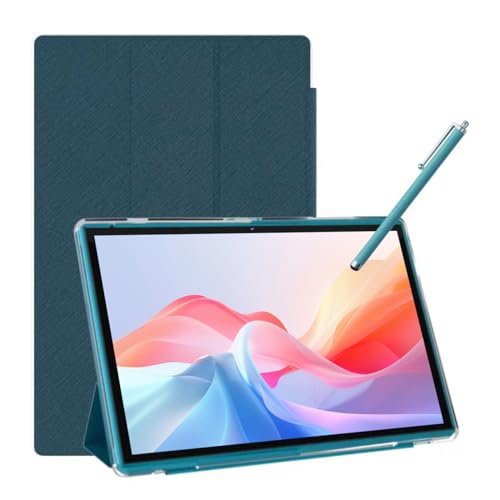

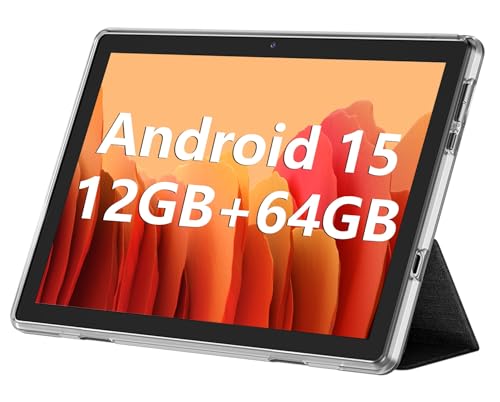
As an Amazon Associate we earn from qualifying purchases at no extra cost to you. Ratings are shown as listed on Amazon.
Best budget tablets at a glance
| Tablet | Screen | Weight | Storage options | Battery claim or typical rating | Best for |
|---|---|---|---|---|---|
| Apple iPad (A16) | 11-inch, 2360 × 1640 | 477 g | 128 GB or 256 GB | Up to 10 hours of web or video use | Long-term everyday performance |
| Samsung Galaxy Tab A9+ | 11-inch, 1920 × 1200, up to 90 Hz | About 480 g | 64 GB or 128 GB, microSD support | Up to about 13 hours of video playback, depending on configuration | Large-screen streaming and multitasking |
| Lenovo Tab M11 | 11-inch, 1920 × 1200, 90 Hz | About 465 g | Typically 128 GB, microSD support | Up to about 10 hours of video playback | Family use, reading, and included accessories |
| Amazon Fire HD 10 | 10.1-inch, 1920 × 1200 | 434 g | 32 GB or 64 GB, microSD support | Up to 13 hours, depending on use | Basic streaming at the lowest price |
Battery figures are manufacturer estimates and vary with brightness, wireless use, speakers, downloads, and background apps. Storage also varies by software: the usable space is lower than the advertised capacity.
Which budget tablet should you buy?
Choose the Apple iPad (A16) for the safest long-term buy
The iPad (A16) is the best budget tablet when you want one device to remain responsive for several years. Its A16 chip has considerable headroom for browsing with many tabs, office apps, video calls, photo editing, and casual games. The 11-inch display is sharp enough for text and high-definition video, although it does not have the higher refresh rate found on some Android competitors.
The main compromise is expansion. There is no microSD card slot, so the 128 GB model is the practical minimum for most people. If you download several large games, keep offline films, or store photos locally, 256 GB is more comfortable. It is also usually the most expensive option in this group, with general market pricing often around $300–$450 depending on storage and promotions.
Choose the Samsung Galaxy Tab A9+ for a big screen and flexible storage
The Galaxy Tab A9+ is a strong fit for streaming, split-screen work, and family use. Its 11-inch display gives films and sports more impact than an 8-inch tablet, while the 90 Hz refresh rate makes scrolling feel smoother than on many entry-level models. Samsung’s interface also supports useful multitasking features for email, notes, and a browser side by side.
Its Snapdragon 695 processor is suitable for streaming, documents, social apps, and moderate gaming, but it is not a high-end gaming platform. The 64 GB version can fill quickly after system files and applications are installed, so the 128 GB model is preferable when the price difference is reasonable. A microSD card can hold downloaded media and photos, though some apps must remain in internal storage. Expect a broad market range of roughly $170–$270.
Choose the Lenovo Tab M11 for shared household entertainment
The Lenovo Tab M11 offers a balanced 11-inch display, stereo speakers with Dolby Atmos branding, and a metal-backed design. Some bundles include a Lenovo Tab Pen and a folio case, which can make it attractive for handwritten notes, children’s learning activities, and recipe or video viewing around the home.
Its MediaTek Helio G88 processor handles streaming, reading, web browsing, and ordinary productivity, but demanding games and heavy multitasking may feel slower. The M11 makes most sense when the bundle includes the accessories you actually need. Otherwise, a faster tablet may deliver better value. Typical market pricing is approximately $150–$250.
Choose the Amazon Fire HD 10 for simple streaming on a tight budget
The Fire HD 10 is the lowest-cost recommendation for straightforward video playback, reading, music, and basic browsing. Its 10.1-inch Full HD display is large enough for films without making the device excessively heavy, and microSD expansion is useful for downloaded content.
The trade-off is the Fire operating system and its app ecosystem. It is not as flexible as standard Android or iPadOS, and some apps may be unavailable or require browser-based workarounds. Performance is adequate for light use but less suitable for intensive multitasking. General market pricing is often around $100–$180, depending on storage and advertising configuration.
Screen size: portability versus comfortable viewing
An 8-inch tablet is easier to hold for long periods and fits smaller bags, but a 10- or 11-inch model is better for films, split-screen documents, recipes, and video calls. The larger displays in this comparison add only a modest amount of weight, but they are noticeably less comfortable to hold one-handed in bed or while standing.
- Choose 10–11 inches for streaming, remote work, shared household use, and reading magazines or comics.
- Choose a smaller model when portability matters more than multitasking.
- Prefer a higher refresh rate if smooth scrolling matters; it improves interface motion but does not automatically improve film quality.
- Look at aspect ratio as well as resolution. A tablet can have a sharp screen while still showing black bars around widescreen video.
Storage and performance: how much is enough?
For streaming without many downloads, 64 GB can work, but it leaves little room for large games, photos, and offline video. A 128 GB tablet is the better minimum for a device intended to last several years. MicroSD support helps with media files, but it does not turn a slow processor into a fast one, and not every application can be moved fully to the card.
For email, web browsing, word processing, and video calls, 4 GB of RAM is usable; 6 GB or more provides more breathing room when switching between apps. Processor generation matters more than a single clock-speed number. The iPad’s A16 is substantially better suited to demanding apps than the entry-level chips in the least expensive Android tablets, while the Galaxy Tab A9+ occupies a useful middle ground.
Decision matrix by situation
| Your situation | Best choice | Why | What to accept |
|---|---|---|---|
| Lowest practical budget | Fire HD 10 | Good Full HD screen and expandable storage for basic viewing | More limited app selection and modest performance |
| Streaming plus split-screen work | Galaxy Tab A9+ | 11-inch display, 90 Hz scrolling, and Android multitasking | Internal storage is limited on the base model |
| Several years of regular use | iPad (A16) | Strong processor and generally broad app support | No microSD slot and higher purchase price |
| Family sharing and note-taking | Lenovo Tab M11 | Large display, speakers, and accessory bundles | Not ideal for demanding games or heavy creative apps |
Battery life and ownership costs
Manufacturers quote best-case figures, so plan around a lower real-world result when streaming over Wi-Fi at medium-to-high brightness. A simple estimate illustrates the difference: if a tablet delivers 10 hours of actual video use and you watch two hours per evening, it should last about five evenings between charges. At three hours per evening, that falls to roughly three evenings. Downloads, Bluetooth headphones, bright screens, and weak Wi-Fi can reduce this further.
Budget tablets usually have sealed batteries. The battery is the component most likely to lose capacity first, often after several years of frequent charging. Avoid leaving the device in a hot car, keep software updated, and do not routinely run it to zero. A protective case and screen protector can prevent a cracked display from becoming the tablet’s most expensive failure.
Common buying mistakes
- Buying 32 GB for long-term use: system files and updates consume space before you add apps or downloads.
- Assuming every streaming app works identically: check the operating system and app availability before choosing a low-cost platform.
- Ignoring speaker placement: cases can muffle downward-facing speakers; headphones or a small Bluetooth speaker may be useful.
- Confusing screen sharpness with speed: resolution affects image detail, while the processor and memory affect app responsiveness.
- Forgetting accessories: add the cost of a case, charger, keyboard, stylus, or microSD card when comparing the total purchase.
For most people, the Galaxy Tab A9+ is the best balance of screen size, storage flexibility, and price. Choose the iPad (A16) if sustained performance and long-term app support matter most, the Lenovo Tab M11 if its accessory bundle suits your household, and the Fire HD 10 only when simple streaming and the lowest upfront cost are the priorities.



Write Your Review
No reviews yet. Be the first to share your experience!