

Key takeaways
- Powered speakers: use the DAC amplifier’s RCA or 3.5 mm line output, or a variable preamp output if volume control is supported.
- Passive speakers: add a separate speaker amplifier. A headphone DAC amp normally cannot drive them.
- Headphones and speakers together: confirm whether plugging in headphones mutes the rear output. Automatic switching is convenient, but some units require manual selection.
- USB computer audio: choose an asynchronous USB input for broad compatibility and low setup friction.
- Phone or tablet listening: Bluetooth is convenient, while USB generally offers more predictable format and volume behavior.
The best DAC amplifiers for a home office depend on three numbers: enough power for your headphones or powered speakers, an output impedance that suits the headphones, and a footprint that does not crowd your desk.
Our top picks

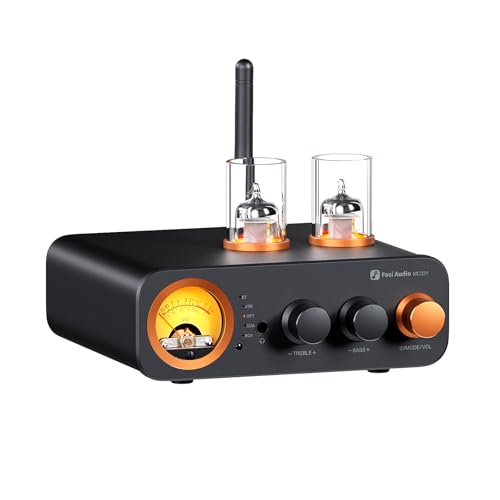

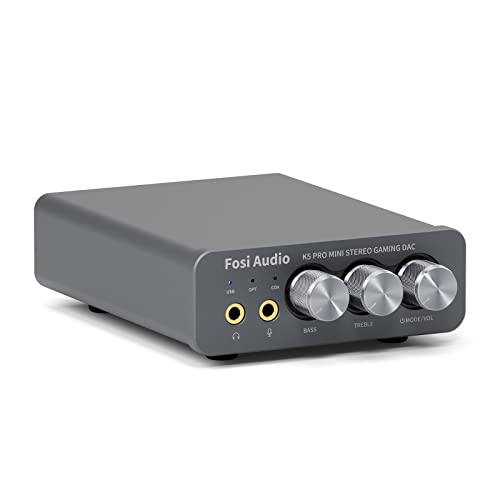
As an Amazon Associate we earn from qualifying purchases at no extra cost to you. Ratings are shown as listed on Amazon.
Quick picks by home-office situation
| Situation | Best fit | Why it makes sense | Typical 2026 market range |
|---|---|---|---|
| Small desk, headphones only | FiiO K11 | Compact desktop DAC amp with both balanced and single-ended headphone outputs | $130–$180 |
| Headphones plus occasional powered speakers | iFi ZEN DAC 3 | Simple front-panel headphone control and rear line output for active speakers | $200–$250 |
| One-box desktop system with Bluetooth | Topping DX3 Pro+ | DAC, headphone amplifier, preamp functions, remote control, and Bluetooth in one chassis | $180–$250 |
| Flexible headphone amp with upgradeable DAC options | Schiit Magni Unity | Compact modular design and strong output for demanding headphones | $190–$250 |
| Advanced workstation or multiple listening setups | RME ADI-2 DAC FS | Detailed controls, display, equalization, multiple outputs, and extensive configuration | $1,100–$1,400 |
Prices are broad market ranges rather than fixed quotes. Regional taxes, included accessories, and retailer promotions can change the final cost.
What power output actually tells you
Power is normally listed in milliwatts (mW) at a particular headphone impedance, such as 32, 80, or 300 ohms. A larger number is not automatically better. It matters only when matched with a headphone’s sensitivity and impedance.
Low-impedance headphones, often between 16 and 40 ohms, usually need voltage and current control rather than extreme power. High-impedance headphones, such as many 250- or 300-ohm studio models, generally benefit from greater voltage swing. Planar-magnetic headphones can require substantial current even when their impedance looks moderate.
As a practical target, a DAC amplifier offering around 100–300 mW into 32 ohms is sufficient for many efficient headphones at comfortable levels. Around 500 mW or more gives useful headroom for less-sensitive models. For difficult planars or quiet classical recordings, a unit with approximately 1 W or more into 32 ohms is a safer choice, provided the volume control remains precise at low levels.
Do not compare power figures without checking the test condition. “2 W” may refer to balanced output into 32 ohms, while the same device may deliver much less through its ordinary 6.35 mm or 3.5 mm output.
Headphone impedance and output matching
Output impedance is the amplifier’s electrical resistance at its headphone socket. Lower is usually safer. A useful rule is to keep amplifier output impedance below one-eighth of the headphone’s nominal impedance. For a 32-ohm headphone, that means below 4 ohms; for a 300-ohm model, below 37.5 ohms.
Most modern DAC amplifiers have output impedance below 2 ohms, so they work well with both portable headphones and studio models. This is especially important with multi-driver in-ear monitors, whose frequency response can change when paired with a high-impedance source. If you use sensitive in-ear monitors at your desk, prioritize a quiet amplifier with fine volume adjustment over the highest wattage.
Balanced output is useful when it provides more power or helps accommodate a longer cable. It does not automatically improve sound quality, and a balanced headphone cable must be wired for the correct connector standard. Never connect a balanced headphone output to an unbalanced adapter unless the manufacturer specifically permits it.
Best DAC amplifiers by desk footprint
FiiO K11: the compact power choice
The FiiO K11 is a strong choice when headphones are the main priority and desk space is limited. Its chassis is approximately 147 × 133 × 32 mm and weighs about 436 g, making it substantially smaller than a typical hi-fi component. It provides 4.4 mm balanced and 6.35 mm single-ended headphone outputs, plus line-level outputs for connecting powered speakers or another amplifier.
Choose it for a small desk, a work-and-gaming setup, or headphones that benefit from more headroom. It is less suitable if you want a built-in microphone input, a phono connection, or conventional passive speaker power.
iFi ZEN DAC 3: the easy headphone-and-speaker switcher
The iFi ZEN DAC 3 uses a wider, low-profile form that is easy to place beside a keyboard or monitor stand. It includes a front headphone output, a physical volume control, and rear line outputs for powered desktop speakers. Its PowerMatch feature lets users increase gain for harder-to-drive headphones, while sensitive earphones can be used at the lower setting.
This is a sensible choice when the same source needs to serve headphones in the morning and powered speakers later. Remember that it is a line-level source, not a power amplifier: passive speakers still require a separate speaker amplifier.
Topping DX3 Pro+: the all-in-one desk hub
The Topping DX3 Pro+ is approximately 208 × 138 × 32 mm and adds Bluetooth, a remote control, a display, headphone output, and line-level operation. It suits a desk where a computer, phone, and powered speakers all share one audio system.
Its larger footprint than the K11 is justified if you value source switching and remote volume control. It is less attractive if you only need USB headphone audio and want the smallest possible box.
Schiit Magni Unity: the modular option
The Schiit Magni Unity is a compact headphone amplifier with an optional internal DAC configuration. It is a good match for buyers who prefer a straightforward front-panel control and may want to change the digital-input arrangement later. Its metal enclosure is roughly 127 × 89 × 36 mm, so it occupies little horizontal space.
Its main limitation is that it is designed around headphones and line-level connectivity rather than a complete passive-speaker system. Check the exact version before buying because input and DAC features can vary by configuration.
RME ADI-2 DAC FS: for control rather than minimalism
The RME ADI-2 DAC FS is physically larger and significantly more expensive, at roughly 215 × 140 × 52 mm. It earns its place through control: configurable outputs, a detailed display, parametric equalization, channel settings, loudness functions, and extensive level management.
It is appropriate for an office that also functions as a serious listening or production station. For ordinary computer headphones, its feature set may be unnecessary, and the budget may be better spent on headphones or acoustic improvements.
How to calculate whether an amplifier fits your headphones
Start with the headphone’s impedance and sensitivity. Suppose a headphone is rated at 32 ohms and 100 dB sensitivity per milliwatt. A target of 110 dB requires approximately ten times the power because a 10 dB increase is about a tenfold power increase. That means roughly 10 mW before allowing extra headroom for musical peaks.
An amplifier capable of 300 mW into 32 ohms therefore has ample reserve for this example. It should not be operated near maximum volume, however. If a headphone is rated at 300 ohms and has lower sensitivity, compare the amplifier’s voltage capability at 300 ohms rather than relying on its headline 32-ohm wattage.
Use the manufacturer’s sensitivity convention carefully: dB per mW and dB per volt are not interchangeable. When the specification is unclear, choose an amplifier with published power figures at several impedances.
Choosing outputs for powered or passive speakers
- Powered speakers: use the DAC amplifier’s RCA or 3.5 mm line output, or a variable preamp output if volume control is supported.
- Passive speakers: add a separate speaker amplifier. A headphone DAC amp normally cannot drive them.
- Headphones and speakers together: confirm whether plugging in headphones mutes the rear output. Automatic switching is convenient, but some units require manual selection.
- USB computer audio: choose an asynchronous USB input for broad compatibility and low setup friction.
- Phone or tablet listening: Bluetooth is convenient, while USB generally offers more predictable format and volume behavior.
Ownership details that affect the buying decision
Volume controls are the part most likely to become annoying first. A small, poorly graduated knob can make sensitive earphones difficult to adjust, while digital controls may change volume in fixed steps. Check for a low-gain mode and channel balance at quiet levels.
Keep ventilation openings clear, particularly on compact units placed under a monitor. Dust the chassis with a dry microfiber cloth rather than spraying cleaner near the controls. Repeatedly inserting and removing large headphone plugs eventually wears the socket, so use a short extension cable if the amplifier sits behind the desk.
Common setup mistakes include leaving a DAC and computer volume both heavily reduced, accidentally selecting a fixed line output, and connecting powered speakers to a headphone output. Set powered speakers to a moderate gain, use the DAC’s variable line output when available, and increase levels gradually.
Bottom line
For most headphone-focused home offices, the FiiO K11 offers the best balance of compact size and output headroom. Pick the iFi ZEN DAC 3 when powered speakers are part of the daily routine, or the Topping DX3 Pro+ when Bluetooth and remote source control matter. Choose the Schiit Magni Unity for a compact, modular approach, and spend on the RME ADI-2 DAC FS only when its detailed configuration tools solve a specific workstation need.



Write Your Review
No reviews yet. Be the first to share your experience!