

Key takeaways
- Find the best camera navigation robot vacuums for low furniture — slim, camera-guided cleaners that reach dust under beds, sofas, and cabinets.
The best camera navigation robot vacuums for low furniture combine two things that matter more than any other feature: a body slim enough to slide under beds, sofas, and cabinets, and a camera-based navigation system smart enough to find its way back out again. Dust, pet hair, and crumbs collect fastest in the places a upright vacuum never reaches, and a robot that is too tall simply skips them. A camera-guided robot maps the room, recognizes chair legs and cables, and cleans in straight, planned rows instead of bumping around at random.


Camera navigation works differently from model to model. Some robots use a front-facing camera to spot and steer around obstacles. Others use an upward-facing camera to track ceiling patterns and build a map. Many of the strongest options pair a camera with laser mapping, using the camera to identify what is in the way and the laser to measure the room. This guide focuses on robots that genuinely use a camera as part of navigation, with bodies low enough to fit under typical low furniture. Measure the clearance under your own furniture before ordering, since a gap of three and a half inches is common under platform beds and low sofas, and every fraction of an inch counts.
How to Choose
1. Height and Clearance
Height is the first filter. The robots in this guide stand between 3.4 and 3.8 inches tall, which fits under most platform beds, low-profile sofas, media consoles, and dressers. Measure the lowest gap in each room, including the space under bed frames with slats or center supports that hang lower than the frame edge. Leave at least a quarter inch of breathing room above the robot so it does not scrape or get wedged. Remember that a robot also needs room to turn around under furniture, not just to enter in a straight line.
2. Camera System Type
Not every camera does the same job. A front-facing camera watches the floor ahead and identifies obstacles such as shoes, cables, and pet waste, which is the most useful kind for cluttered rooms. An upward-facing camera reads ceiling patterns to track position, which keeps the robot slim because there is no laser turret on top. A hybrid system uses both a camera and a laser, combining object recognition with precise distance measurement. If your rooms are often dim, favor a model with a built-in fill light or a laser backup, since cameras that rely on visible light alone can struggle in darkness.
3. Obstacle Avoidance
Under low furniture, a robot meets a different set of hazards than it does in open rooms: dangling bed skirts, power strips, charging cables, pet toys, and the legs of coffee tables. Strong obstacle avoidance means fewer rescue missions and fewer half-cleaned rooms. Look for a system that names the objects it recognizes rather than one that only promises generic avoidance. The ability to send you a photo of an obstacle and ask whether to avoid it in future runs is a useful sign that the camera is doing real work.
4. Mapping and Room Control
A camera-guided robot should build a map you can actually use. Room-by-room cleaning, virtual boundaries, and no-go zones let you send the robot under the bed in the guest room without sending it into a tangle of cables behind the television stand. Multi-floor mapping matters if you carry the robot between levels. Check that the app lets you edit the map, merge or split rooms, and set cleaning sequences, since a map you cannot adjust becomes a source of frustration within a few weeks.
5. Suction and Brush Design
The space under furniture collects fine dust, hair, and crumbs, so suction and brush design matter as much as navigation. Rubber brush rollers resist hair tangles better than bristle brushes and are easier to clean. Strong suction helps on carpet edges and along baseboards where dust drifts. A side brush that reaches into corners helps under dressers and nightstands, where the round body of a robot cannot sit flush against the wall.
6. Dock, Bin, and Upkeep
A self-emptying dock means the robot can run for weeks without you touching the dustbin, which is the whole point of automating the chore. If the robot also mops, a dock that washes the mop pad keeps the mopping function useful instead of letting a dirty pad smear dust around. Weigh the size of the dock against the space where it will live, since a tall dock needs its own clear spot against a wall. Also check how easy it is to remove and wash the filter, brushes, and sensors, because a camera lens covered in dust navigates poorly.
Top Picks
iRobot Roomba j7+ Self-Emptying Robot Vacuum
The Roomba j7+ is the most focused camera-navigation pick in this guide, and the slimmest at 3.4 inches tall. Its PrecisionVision Navigation uses a front-facing camera to identify and steer around obstacles such as socks, shoes, charging cords, and pet waste in real time. Instead of pushing through clutter, it recognizes what is in front of it and cleans around it, which is exactly the behavior you want under a bed or sofa where you cannot see what the robot is doing.
At 13.3 inches wide and 13.3 inches long, the round body fits under most low furniture and turns in tight spaces between legs and supports. Imprint Smart Mapping learns the layout of your home and stores maps for multiple floors, so you can schedule room-by-room cleaning and send the robot straight to the bedroom without cleaning the whole house. The Clean Base Automatic Dirt Disposal empties the robot on its own, holding debris for up to 60 days before the bag needs attention.
Suction is rated by the manufacturer at 10 times the power-lifting suction of the entry-level Roomba 600 series, and the dual multi-surface rubber brushes adjust to different floor types while resisting hair tangles. The robot works with voice assistants and the iRobot Home app, and it can send photos of obstacles it is unsure about so you can tell it to avoid them in future runs.
View the iRobot Roomba j7+ on Amazon
Who it is for: Homes with pets, cluttered floors, and low beds and sofas, where obstacle avoidance matters as much as slimness.
Caveats: The camera-based system performs best with some light in the room, so very dark rooms can slow it down. It vacuums only and does not mop, so hard floors that need mopping will need a separate step.
iRobot Roomba Combo j7+ Robot Vacuum and Mop
The Roomba Combo j7+ takes the same 3.4-inch body and PrecisionVision camera system as the j7+ and adds a fully retractable mopping pad. That combination makes it the strongest pick for homes with hard floors under low furniture, where dust and light spills collect together. The Auto-Retract Mopping System lifts the mop pad completely away from carpet, and Dry Rug Intelligence keeps carpets dry while the robot mops hard floors in the same run.
Navigation is identical in approach to the j7+: a front-facing camera identifies obstacles, Imprint Smart Mapping stores the layout, and the app supports room-by-room schedules and virtual boundaries. The robot measures 13.3 inches wide and 3.4 inches high, so it clears the same low gaps as its vacuum-only sibling. The Clean Base empties the dustbin on its own for up to 60 days, and SmartScrub mode moves the robot back and forth with steady pressure on tougher floor marks.
The mopping system uses a reusable microfiber pad, and the package includes hard-floor cleaning concentrate. Because the mop retracts fully, you can run a combined vacuum-and-mop session across mixed flooring without swapping parts or worrying about damp carpet edges under the bed.
View the iRobot Roomba Combo j7+ on Amazon
Who it is for: Homes with mostly hard floors and some rugs, where one robot that vacuums and mops under low furniture is more useful than a vacuum-only model.
Caveats: The mopping pad is designed for light, everyday floor cleaning rather than heavy scrubbing. As with other camera-guided robots, the system navigates best when rooms have at least some light.
ECOVACS DEEBOT T8 AIVI Robot Vacuum and Mop

The DEEBOT T8 AIVI pairs a front-facing camera with laser mapping, giving it two ways to understand a room. The AIVI system uses a 122-degree HD camera to recognize common household objects and avoid them, while the laser builds a precise map of walls and furniture. That combination is helpful under low furniture, where the robot must judge both the gap it is entering and the objects sitting inside it. The body stands about 3.7 inches tall, so it fits under most beds and sofas, though you should measure tighter gaps before choosing it over a 3.4-inch model.
The T8 AIVI vacuums and mops in a single run, with carpet detection that increases suction on carpet and avoids mopping it. Runtime runs to more than three hours on a single charge, which is generous for large rooms with lots of under-furniture area to cover. The camera also supports on-demand live video, so you can check in on the house or look in on pets from the app, and the robot can send voice messages through its built-in speaker.
Mapping supports multiple floors, virtual boundaries, and custom cleaning zones. The app lets you choose which rooms to clean and in what order, and you can set no-mop zones for rugs and carpeted areas. An auto-empty station is available as a separate option for homes that want hands-free bin emptying.
View the ECOVACS DEEBOT T8 AIVI on Amazon
Who it is for: Larger homes and mixed-floor homes where the combination of camera object recognition and laser mapping is worth a slightly taller body.
Caveats: At about 3.7 inches tall, it needs a little more clearance than the Roomba j-series models, so measure carefully under platform beds. The live video camera is a feature some households will love and others will prefer to switch off, so check the privacy settings during setup.
Roborock S7 MaxV Ultra Robot Vacuum and Mop
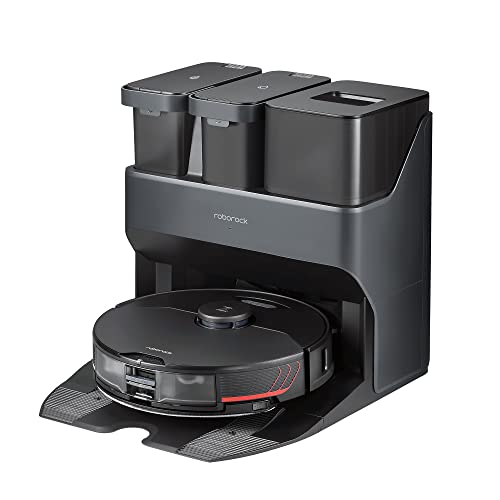
The Roborock S7 MaxV Ultra is the most automated pick in this guide, pairing camera navigation with a dock that empties the dustbin, washes the mop, and refills the water tank. Its ReactiveAI 2.0 system uses an RGB camera and a neural processing unit to recognize obstacles, supported by 3D structured light that measures the size and position of objects in its path. A fill light switches on in dark rooms so the camera keeps working under beds and sofas where daylight never reaches.
The robot stands about 3.8 inches tall, the tallest in this guide, so it suits furniture with a little more clearance rather than the very lowest platform beds. What it gives up in slimness it returns in cleaning power and automation: suction reaches 5100Pa, and the VibraRise sonic mopping system scrubs hard floors while lifting the mop away from carpet. LiDAR mapping works alongside the camera, so the robot builds accurate maps even in dim rooms and supports room-by-room cleaning, virtual boundaries, and multi-floor maps.
The Empty Wash Fill Dock is the centerpiece of the Ultra package. After each run, the dock empties the dustbin, washes the mop pad, and refills the robot’s water tank, so the robot is ready for the next run without daily attention. The camera also supports real-time video calls, letting you check in on pets or family members from the app.
View the Roborock S7 MaxV Ultra on Amazon
Who it is for: Homes that want the most hands-free setup available, with strong suction, sonic mopping, and a dock that handles emptying and mop washing on its own.
Caveats: The 3.8-inch body needs more clearance than the slimmer picks here, so it is not the right choice for the very lowest furniture. The dock is large and needs a dedicated spot with clear space around it.
Comparison Table
| Product | Height | Navigation | Vacuum and Mop | Self-Empty Dock | Obstacle Avoidance |
|---|---|---|---|---|---|
| iRobot Roomba j7+ | 3.4 inches | PrecisionVision front camera | Vacuum only | Yes, up to 60 days | Camera object recognition |
| iRobot Roomba Combo j7+ | 3.4 inches | PrecisionVision front camera | Vacuum and mop, retractable pad | Yes, up to 60 days | Camera object recognition |
| ECOVACS DEEBOT T8 AIVI | About 3.7 inches | AIVI camera plus laser mapping | Vacuum and mop in one run | Available separately | AI object recognition |
| Roborock S7 MaxV Ultra | About 3.8 inches | ReactiveAI 2.0 camera plus LiDAR | Vacuum and sonic mop | Yes, with mop washing and water refill | RGB camera plus 3D structured light |
Which One Is Right for You?
Start with a tape measure. If the lowest gap under your furniture is barely above three and a half inches, the choice is simple: pick one of the 3.4-inch Roomba j-series models. The j7+ is the right call if you only need vacuuming and want the strongest obstacle avoidance in the slimmest body. The Combo j7+ is the better fit if your floors are mostly hard surfaces and you want mopping included without giving up any clearance.
If your furniture sits a little higher and your home is larger or has mixed flooring, the DEEBOT T8 AIVI earns its place with camera-plus-laser navigation and a long runtime. It is a good middle ground between slimness and mapping strength, and the live video feature is a genuine bonus for pet owners.
Choose the Roborock S7 MaxV Ultra if you want to think about floor cleaning as little as possible. Its dock handles the chores that other robots leave to you, and its fill light solves the one weakness camera navigation usually has under dark furniture. Just confirm that your lowest furniture gap clears 3.8 inches with room to spare, and that you have wall space for the dock.
Whatever you choose, run the robot’s first mapping session with the lights on and the floor as clear as you can make it. A clean first map pays off every time the robot goes back under the bed.
Frequently Asked Questions
How much clearance do these robot vacuums need under furniture?
Measure the gap from the floor to the lowest point of the furniture, including slats, center supports, and bed skirts. The slimmest models here are 3.4 inches tall, so a gap of three and three-quarter inches or more gives comfortable clearance. Leave a little extra room beyond the robot’s height so it can turn and reverse without wedging itself. If a gap is exactly the robot’s height, the robot may enter but struggle to turn around inside.
Do camera navigation robot vacuums work in dark rooms?
Camera systems that rely on visible light need at least some light to navigate well, which is why under-bed cleaning in a dark bedroom can be slower or less precise. Some models solve this with a built-in fill light or by pairing the camera with a laser, which does not need light at all. Running cleaning sessions during daylight hours, or leaving a lamp on in the room being cleaned, keeps camera navigation at its best.
Are cameras in robot vacuums a privacy concern?
A camera on a robot vacuum does raise a fair question, since the device moves through private rooms. Most camera-guided models process obstacle images on the device and let you control camera features, live video, and photo sharing from the app. Check the privacy settings during setup, switch off live video if you do not want it, and keep the robot’s software updated. If camera privacy is a hard line for your household, a laser-only model is the alternative, though it will not recognize objects the way a camera can.
Is camera navigation better than laser navigation for low furniture?
Each system has a strength. A camera recognizes what an object is, so it can steer around a cable or a pet toy instead of just knowing something is there. A laser measures distances precisely and works in complete darkness, which helps in the shadow under a bed. The strongest robots in this guide use both, letting the camera identify obstacles and the laser map the room. For low furniture specifically, the camera’s ability to spot small objects on the floor is the feature that prevents the most stuck robots.
Disclosure: As an Amazon Associate, we may earn from qualifying purchases.
More from Amazon
Programs that pair well with the guide above. Offers and eligibility are set by Amazon and may change.
Collect the home and kitchen items you want in one registry that guests can shop from.
Create a wedding registrySet up recurring deliveries of everyday items on eligible products. Terms and savings are set by Amazon.
Explore Subscribe & SaveFree shipping on eligible items, Prime Video and more. Eligible new members can start with a free trial.
Start a Prime free trialAudiobooks and podcasts to listen to on the go. Eligible new members can start with a free trial.
Try Audible freeAs an Amazon Associate we earn from qualifying purchases.

Write Your Review
No reviews yet. Be the first to share your experience!