

Key takeaways
- Compare the best gym flooring for home gyms, from interlocking EVA foam tiles to dense rubber rolls, with thickness, coverage and material guidance.
A home gym is only as good as the surface it stands on. Bare concrete punishes joints and equipment, hardwood scratches under a rack, and carpet gives a bench nothing firm to plant against. Dedicated gym flooring solves all three problems at once: it cushions floor work, grips underfoot during lifts, absorbs impact and noise, and shields the floor underneath from dropped dumbbells and machine feet.
The five products below cover the three formats home lifters actually buy. Interlocking EVA foam tiles from ProsourceFit, BalanceFrom and We Sell Mats suit bodyweight training, stretching zones and light equipment. Dense rubber tiles from Yes4All and a recycled rubber roll from Rubber-Cal handle heavier racks, benches and free weights. Each pick lists its material, thickness and coverage so you can match the surface to the training you do most.
As an Amazon Associate, I earn from qualifying purchases.
How to Choose Gym Flooring
Start with material. EVA foam is light, soft and forgiving, which makes it the natural fit for floor exercises, yoga-style mobility work, and rooms that double as play spaces. Its limits are real, though: foam compresses under a loaded rack and can dent under heavy machine feet. Rubber is denser and far tougher. It stays put under benches and squat stands, shrugs off dropped dumbbells better, and gives a firmer, more stable platform for lifting.
Thickness is the second decision. Tiles around 3/8 inch work for light duty and standing workstations. Half-inch foam is the common middle ground for general home gym use. For rubber under serious free weights, 3/8 inch is the standard starting point, and thicker or doubled layers help where deadlifts land. Match the thickness to the heaviest thing that will hit the floor, not the average session.
Format comes next. Interlocking tiles are the flexible option: they install without tools, wrap around awkward room shapes, and a single damaged tile can be swapped out. Rolls cover open floor with far fewer seams and no puzzle edges to catch a heel, but they are heavier to handle and harder to trim around obstacles. Finally, measure your space and buy coverage for the training footprint plus a margin, and confirm whether end borders are included, since borders decide whether the finished edge looks clean or ragged.
The Best Gym Flooring Picks
1. ProsourceFit Puzzle Exercise Mat, 1/2 Inch, Black, 24 Sq Ft
ProsourceFit’s puzzle mat is the straightforward starter set for a first home gym corner. Six tiles of high-density EVA foam lock together to cover 24 square feet, enough for a bench, a mat-based routine, or a small cardio machine with room to move around it. The 1/2-inch thickness is the versatile middle of the foam range: soft enough for planks, crunches and stretching, yet firm enough that a bench does not feel spongy underfoot.
Each tile measures 24 by 24 inches, so layouts are easy to plan on paper before you build them, and the interlocking edges hold the surface together without tape or adhesive. The foam is water resistant and wipes clean, which matters in a garage or basement gym where dust and chalk accumulate. Because the set is small and light, it also suits renters who need a floor they can pull up and take along when they move. Add a second set later and the tiles simply extend the same surface.
Specs
- Material: High-density EVA foam
- Tile size: 24 x 24 inches
- Thickness: 1/2 inch
- Pack: 6 tiles
- Coverage: 24 square feet
- Model: ps-2301-pzzl-black
- Colour: Black
2. BalanceFrom Puzzle Exercise Mat, 1/2 Inch, 48 Sq Ft
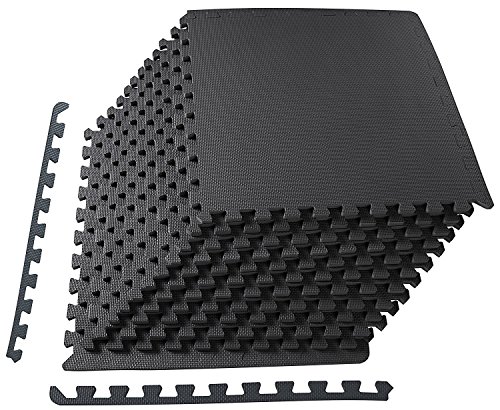
BalanceFrom doubles the starter footprint. Twelve 24-by-24-inch tiles cover 48 square feet, a full workout zone rather than a single-equipment pad, and the set includes 24 end borders so the perimeter finishes with straight, clean edges instead of exposed puzzle teeth. At 1/2 inch thick, the high-density EVA foam lands in the same versatile band as the ProsourceFit set, with a non-slip texture on both faces to keep tiles planted on smooth floors.
The whole set weighs only about 6 pounds, so one person can carry it, lay it, and reconfigure it in minutes. That makes it a good answer for spare rooms that host guests between training blocks, and for anyone building a floor in stages: start with one set under the main training area, then add more as the gym grows. The foam surface cushions knees, elbows and hips through floor work, and the tiles separate just as easily for storage in a closet. For bodyweight circuits, mobility work and light dumbbell training across a larger area, this is the most coverage per box in this roundup.
Specs
- Material: High-density EVA foam
- Tile size: 24 x 24 inches
- Thickness: 1/2 inch (12.7 mm)
- Pack: 12 tiles with 24 end borders
- Coverage: 48 square feet
- Set weight: About 6 pounds
- EAN: 0856271007350
3. We Sell Mats Multipurpose EVA Foam Floor Tiles, 3/8 Inch, 48 Sq Ft

We Sell Mats is the thinner, lighter-duty entry here, and it earns its place where cushioning matters more than load bearing. The 3/8-inch tiles cover 48 square feet in a charcoal grey finish that hides scuffs and chalk dust better than pale colours. Each 24-by-24-inch tile ships with two border pieces, a straight edge and a corner edge, so finished runs look deliberate rather than improvised.
The foam is lead-free, latex-free and phthalate-free, a detail that matters when the same floor hosts children between workouts. The maker is candid about the intended use: these tiles are built for bodyweight exercise such as push-ups, sit-ups, planks and lunges, plus playrooms, offices and laundry rooms, and they are not designed to carry heavy equipment. Installed indoors on a hard, flat surface rather than carpet, they give a standing workstation, a stretching corner or a light training area a softer, warmer feel underfoot. Think of this set as comfort flooring first and gym flooring second, and it performs exactly as promised.
Specs
- Material: EVA foam, lead-free, latex-free and phthalate-free
- Tile size: 24 x 24 inches
- Thickness: 3/8 inch
- Coverage: 48 square feet
- Borders: 2 border pieces per tile included
- Model: M24-10M
- Colour: Charcoal grey
4. Yes4All Heavy Duty Rubber Floor Tiles, 8 Pieces, 20 Sq Ft

When foam is not enough, this is the step up. Yes4All builds these interlocking tiles from 100 percent high-density rubber, the material commercial gyms rely on, in a pack of eight tiles covering 20 square feet. That footprint suits a single lifting station: under a squat stand, beneath a bench, or as a deadlift zone at the end of a garage bay.
Rubber behaves differently from foam in ways lifters feel immediately. It does not compress into a soft valley under a loaded bar, it grips the subfloor instead of skating on it, and it takes dropped dumbbells with far less bounce and noise. The interlocking format keeps the convenience of tiles, so you can start with one pack under the rack and add packs as the gym expands, replacing a single tile if one ever gets damaged. The grey finish suits garage and basement spaces, and the dense surface sweeps and mops clean after chalky sessions. For anyone whose training centres on free weights, this is the most protective surface per square foot in this roundup.
Specs
- Material: 100 percent high-density rubber
- Format: Interlocking tiles
- Pack: 8 tiles
- Coverage: 20 square feet
- Model: ZSQM2
- Colour: Grey
5. Rubber-Cal Elephant Bark Rubber Flooring, 3/8 Inch x 4 x 6 Feet
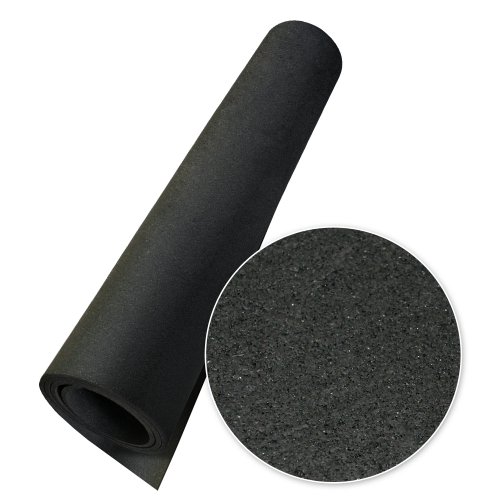
The Elephant Bark roll is the seamless option. Instead of puzzle edges, you get one continuous sheet of recycled rubber, 3/8 inch thick and 4 feet wide by 6 feet long, covering 24 square feet with no seams to separate and no teeth to catch a shoe mid-set. Rolled flooring is the format to choose for an open training area where you move constantly, such as a conditioning zone or a full garage bay laid with several rolls side by side.
Recycled rubber brings the same dense, grippy character as the Yes4All tiles, with a textured bark-style surface that holds footing during dynamic work. The 3/8-inch gauge is the recognised starting point for rubber under free weights, thick enough to blunt impact and deaden sound while staying firm under a bench or rack. A single sheet is also simple to live with: unroll it, trim it to the space with a straight edge and utility knife, and the job is done. There are no borders to fit and nothing to re-lock after a heavy session shifts the floor.
Specs
- Material: Recycled rubber
- Format: Roll
- Thickness: 3/8 inch
- Size: 4 x 6 feet
- Coverage: 24 square feet
- Model: 03_102_WAB_06
- UPC: 845605017035
- Colour: Black
Comparison Table
| Product | Material | Format | Thickness | Coverage |
|---|---|---|---|---|
| ProsourceFit Puzzle Exercise Mat | EVA foam | Interlocking tiles | 1/2 inch | 24 sq ft |
| BalanceFrom Puzzle Exercise Mat | EVA foam | Interlocking tiles | 1/2 inch | 48 sq ft |
| We Sell Mats Multipurpose Tiles | EVA foam | Interlocking tiles | 3/8 inch | 48 sq ft |
| Yes4All Heavy Duty Rubber Tiles | High-density rubber | Interlocking tiles | Heavy duty | 20 sq ft |
| Rubber-Cal Elephant Bark | Recycled rubber | Roll | 3/8 inch | 24 sq ft |
Frequently Asked Questions
Is foam or rubber better for a home gym?
It depends on the training. EVA foam is lighter, softer and kinder for floor work, stretching and bodyweight circuits, and it suits rooms that double as living space. Rubber is denser and firmer, so it holds up under racks, benches and dropped dumbbells and gives lifters a more stable base. Many home gyms use both: foam in the mobility corner, rubber under the weights.
How thick should gym flooring be under heavy equipment?
For rubber, 3/8 inch is the standard starting point under racks and benches, and extra thickness or a doubled layer helps where deadlifts land. Foam tiles of 1/2 inch handle light equipment and floor work well, but foam compresses under heavy machine feet and can dent over time, so keep the heaviest stations on rubber whenever possible.
Can interlocking tiles go over carpet?
Most makers advise against it. Tiles need a hard, flat surface to lock together evenly; over carpet they shift, bunch and wear unevenly, and the puzzle edges can separate mid-workout. If the gym room is carpeted, a firm rubber roll laid over low-pile carpet is the steadier option, and hard flooring underneath is better still.
How do I clean and maintain gym flooring?
Foam tiles wipe down with a damp cloth and mild soap, and individual tiles can be lifted out for a deeper clean. Rubber sweeps and mops clean; expect a mild rubber smell from new rubber products that fades with ventilation over the first days. Avoid harsh solvents on both materials, and let everything dry fully before training on it again.
Conclusion
The right gym flooring follows the training, not the other way round. Choose the ProsourceFit set for a compact first floor under one bench or machine, the BalanceFrom set when you want a full 48-square-foot foam zone with finished edges, and the We Sell Mats tiles where light bodyweight work and family use matter more than load bearing. Step up to the Yes4All rubber tiles for a lifting station that takes real weight, or lay the Rubber-Cal Elephant Bark roll for a seamless rubber surface across an open floor. Measure the space, match the material to your heaviest session, and the floor will quietly do its job for years.
More from Amazon
Programs that pair well with the guide above. Offers and eligibility are set by Amazon and may change.
Collect the home and kitchen items you want in one registry that guests can shop from.
Create a wedding registrySet up recurring deliveries of everyday items on eligible products. Terms and savings are set by Amazon.
Explore Subscribe & SaveFree shipping on eligible items, Prime Video and more. Eligible new members can start with a free trial.
Start a Prime free trialAudiobooks and podcasts to listen to on the go. Eligible new members can start with a free trial.
Try Audible freeAs an Amazon Associate we earn from qualifying purchases.
Write Your Review
No reviews yet. Be the first to share your experience!