

Key takeaways
- The best whipped cream dispensers for most home cooks are stainless-steel, 0.5-liter models that use standard food-grade N₂O chargers, with the iSi Gourmet Whip as the safest all-round choice for reliability and the iSi Professional Whip as the better option…
The best whipped cream dispensers for most home cooks are stainless-steel, 0.5-liter models that use standard food-grade N₂O chargers, with the iSi Gourmet Whip as the safest all-round choice for reliability and the iSi Professional Whip as the better option for frequent or commercial-style use.
Our top picks


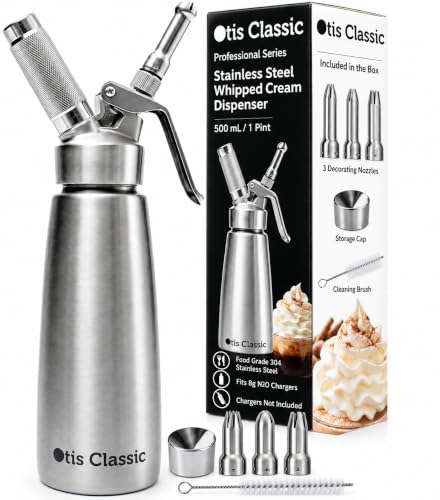

As an Amazon Associate we earn from qualifying purchases at no extra cost to you. Ratings are shown as listed on Amazon.
Best whipped cream dispensers by situation
| Best for | Recommended type or model | Why it fits | Trade-off |
|---|---|---|---|
| Most home kitchens | iSi Gourmet Whip, 0.5 L | Stainless-steel body, standard N₂O chargers, controlled dispensing and broad accessory support | Costs more than basic aluminum models |
| Occasional desserts on a budget | 0.5 L aluminum dispenser with a stainless-steel head | Lightweight and usually available at a lower general market price | More vulnerable to dents, scratches and finish wear |
| Frequent baking or catering | iSi Professional Whip, 0.5 L or 1 L | Designed for repeated service, with durable construction and precise valves | Larger sizes need more refrigerator space and are less convenient for small batches |
| Small refrigerator or limited storage | 0.25 L stainless-steel dispenser | Compact footprint and less leftover cream | Lower output and usually less forgiving for large desserts |
| Decorative piping | Dispenser with multiple stainless-steel tips | Supports rosettes, stars and ridged borders rather than only a round dollop | Extra tips add washing and storage work |
What separates a good dispenser from a frustrating one?
Material: stainless steel versus aluminum
Stainless steel is the better long-term material when durability, odor resistance and easy cleaning matter. A stainless-steel bottle is less likely to dent if it falls from a refrigerator shelf, and it generally tolerates repeated washing better than a thin aluminum body. It also feels more stable when you are decorating a cake or filling several glasses.
Aluminum dispensers are lighter and commonly cheaper. That can be useful if you only make whipped cream a few times a year. The compromise is that dents can affect the seal, while scratches and worn coatings make the body harder to keep looking clean. If an aluminum model has a coated interior or exterior, follow its care instructions rather than assuming it is dishwasher-safe.
The dispenser head deserves as much attention as the bottle. Look for a robust head, a removable gasket and a charger holder made from metal or thick, well-finished polymer. The nozzle valve and gasket are small parts, but they are among the first components to cause trouble when cream leaks, dispenses unevenly or refuses to come out.
Capacity: choose for batch size, not maximum volume
Common household sizes are 0.25 L, 0.5 L and 1 L. The stated capacity refers to liquid mixture, not the volume of finished whipped cream. The cream expands as gas is incorporated, so overfilling can interfere with whipping and create excessive pressure.
| Dispenser size | Practical liquid batch | Approximate servings | Best use | Typical empty weight range |
|---|---|---|---|---|
| 0.25 L | 150–200 ml | 4–6 dessert portions | Small households, coffee and occasional garnish | 0.35–0.55 kg |
| 0.5 L | 350–400 ml | 8–12 dessert portions | Most home baking and dinner parties | 0.6–0.9 kg |
| 1 L | 700–800 ml | 16–24 dessert portions | Large gatherings and frequent service | 0.9–1.4 kg |
These are planning figures rather than universal yield guarantees. A 0.5-liter dispenser is usually the best compromise: large enough for a cake or family dessert, but still small enough to chill quickly and fit upright in a refrigerator door or shelf.
Head-to-head: the main dispenser choices
iSi Gourmet Whip
The iSi Gourmet Whip is the strongest general-purpose pick for home users who want a dependable dispenser without moving to a professional-sized setup. It is available in several capacities, including 0.25 L, 0.5 L and 1 L versions depending on the market. Its stainless-steel construction, replaceable sealing parts and compatibility with iSi N₂O chargers make it a practical ownership choice rather than a disposable gadget.
Choose the 0.5-liter version for ordinary desserts. The 0.25-liter model suits small portions, while the 1-liter version is useful when you repeatedly serve a crowd. Check the specific model instructions before using warm preparations or accessories, since not every attachment is intended for every recipe.
iSi Professional Whip
The iSi Professional Whip is aimed at users who dispense whipped cream frequently and want a more service-oriented design. It is a sensible upgrade for a serious baker, café-style kitchen or caterer because repeated use places more stress on the valve, gasket and charger mechanism than occasional weekend desserts.
Its higher price makes less sense if the dispenser will sit unused for months. For frequent use, however, the cost can be justified by stronger construction, better parts availability and less temptation to replace the entire unit when a seal wears out.
Basic aluminum dispensers
A basic aluminum dispenser can be perfectly adequate for occasional whipped cream, particularly when the head has a removable gasket and the product clearly states compatibility with standard food-grade N₂O chargers. This category is attractive for a tight budget, but quality varies more widely.
Before buying, inspect the cleaning instructions, included nozzle design and replacement-part policy. A low purchase price becomes poor value if the gasket is impossible to replace or the charger holder does not seal consistently. Avoid any product that does not clearly identify the gas type it accepts.
Charger compatibility and nozzle control
Whipped cream dispensers use nitrous oxide, or N₂O, rather than carbon dioxide. Carbon dioxide creates a sharper, acidic sensation in liquid and is intended for carbonation, not conventional whipped cream. Use only chargers identified by the dispenser manufacturer as compatible and food-grade.
Many 0.5-liter dispensers use one charger per batch, while 1-liter models commonly require two chargers. The exact amount depends on the recipe, model and manufacturer instructions. More gas is not automatically better: overcharging can make the texture coarse, cause excess pressure or leave a strong gas sensation.
Nozzle control affects both presentation and waste. A narrow round tip is useful for coffee, hot chocolate and controlled portions. A star tip creates ridges and rosettes for cupcakes and cakes. A dispenser with a lever or button that responds gradually is easier to control than one that releases cream in a sudden burst. If decorating matters, prioritize interchangeable stainless-steel tips and a valve that stops cleanly when released.
A simple cost-per-use calculation
Suppose a 0.5-liter dispenser costs $45–$90, a box of compatible chargers costs $8–$15, and each batch uses one charger. If you make whipped cream once a week for two years, that is about 104 uses. The dispenser itself costs roughly $0.43–$0.87 per use, before ingredients, and the charger adds approximately $0.80–$1.50 per use.
This explains why a sturdier dispenser can be worthwhile for regular users: even a $30 difference in purchase price spreads to less than $0.30 per use over 104 batches. For someone making whipped cream only four times a year, the calculation changes; storage, parts availability and ease of cleaning matter more than maximizing long-term savings.
Setup and cleaning steps that prevent most problems
- Chill the cream and dispenser. Cold cream thickens and aerates more reliably. Chill the bottle if the manufacturer permits it, and avoid filling with warm ingredients unless the model explicitly supports them.
- Strain the mixture. Sugar crystals, fruit fibers, cocoa clumps and zest can block the narrow valve. Use finely powdered sugar and strain flavored mixtures before filling.
- Stay below the fill line. Leave the expansion space specified by the manufacturer. Overfilling reduces aeration and can force cream into the valve.
- Attach the head evenly. Cross-threading or a pinched gasket can create leaks. Tighten according to the instructions, without forcing the threads.
- Charge once, then shake as directed. The number of shakes varies by recipe and model. Test a small amount rather than immediately adding another charger.
- Dispense nozzle-down. This helps the gas and cream move through the valve in the intended orientation. If the cream is runny, chill it longer instead of repeatedly adding gas.
- Depressurize before opening. Follow the manufacturer’s release procedure and never unscrew a pressurized head.
- Wash every removable part. Remove the nozzle, gasket and valve components, rinse away dairy residue and allow everything to dry fully before reassembly.
The nozzle and gasket usually wear first. Dried cream can harden around the valve, while repeated stretching can flatten the gasket. Replacing those inexpensive parts is preferable to forcing a blocked dispenser or abandoning a sound bottle. Do not use sharp tools to clear a nozzle, and do not store the dispenser pressurized for long periods unless the manufacturer specifically recommends it.
Final buying decision
Choose a 0.5-liter stainless-steel dispenser with standard food-grade N₂O compatibility if you want the best balance of reliability, capacity and storage. The iSi Gourmet Whip is the most sensible all-round choice for home desserts. Choose the iSi Professional Whip when the dispenser will be used repeatedly and replacement parts matter. Select a 0.25-liter model for small portions or limited refrigerator space, and choose a basic aluminum design only when low upfront cost outweighs maximum durability.
Whichever model you buy, prioritize a clear fill line, replaceable gaskets, removable nozzles, compatible chargers and cleaning instructions you will actually follow. Those details determine whether homemade whipped cream remains quick and convenient after the novelty wears off.



Write Your Review
No reviews yet. Be the first to share your experience!