

Key takeaways
- 20–22 inches: upright and easier for shorter users to sit with their feet on the floor.
- 22–24 inches: the most versatile range for conversation, reading, and ordinary lounging.
- 25–30 inches: better for curled-up lounging, but it may require cushions behind the lower back.
The best velvet sofas combine a tightly woven, easy-care upholstery with supportive cushions and dimensions that match your room—not simply the softest fabric or the lowest price.
For most living rooms, choose a performance velvet sofa with a seat depth of 22–24 inches, a seat height of 18–20 inches, and high-resilience foam wrapped in fiber. Compact rooms generally work best with a 72–82-inch sofa, while spacious rooms can accommodate a 90–110-inch model or a chaise sectional.
Our top picks
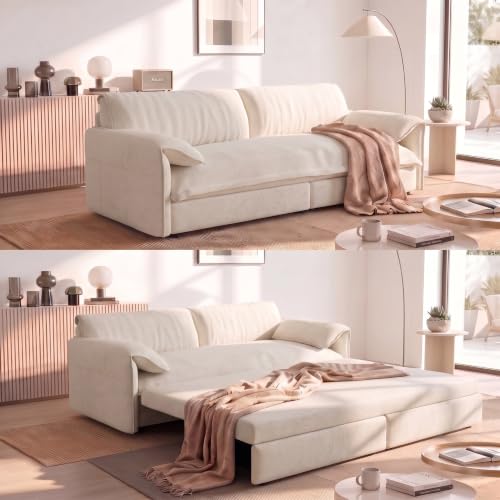


As an Amazon Associate we earn from qualifying purchases at no extra cost to you. Ratings are shown as listed on Amazon.
Best velvet sofas by living-room situation
| Situation | Recommended sofa profile | Useful specifications | Typical market range |
|---|---|---|---|
| Small apartment or narrow room | Apartment-size straight sofa | 72–82 in. wide, 34–38 in. deep, 18–20 in. seat height | $700–$1,800 |
| Everyday family seating | Performance velvet sofa | 84–96 in. wide, 22–24 in. seat depth, removable cushions | $1,200–$3,000 |
| Deep lounging and movie nights | Deep-seat sofa or chaise sectional | 95–115 in. wide, 25–30 in. seat depth, high-density foam | $1,800–$4,500 |
| Formal room with occasional use | Tailored velvet sofa | 78–90 in. wide, 20–23 in. seat depth, bench or fixed seat | $900–$2,800 |
| Pets, children, or frequent entertaining | Stain-resistant performance velvet | Tightly woven pile, removable covers where available, 50,000+ double-rub target | $1,400–$3,500 |
These are planning ranges rather than guarantees. Construction, frame materials, delivery costs, customization, and upholstery composition can move a sofa well outside them.
Velvet types: which fabric is right for your home?
Performance velvet
Performance velvet is the safest all-purpose choice for a sofa used every day. It is usually polyester or a polyester blend treated or engineered to resist liquid penetration, abrasion, and staining. It still requires prompt blotting, but it is more forgiving than delicate natural velvet.
Look for a manufacturer’s cleaning code, abrasion information, and specific instructions for water-based spills. “Stain resistant” is not the same as stain-proof: oil, dye transfer from denim, and dried spills can still leave marks.
Polyester velvet
Polyester velvet offers a soft hand, strong color saturation, and relatively good abrasion resistance at a moderate price. It is often the practical choice for a family room. Its main drawbacks are visible pressure shading—lighter or darker areas where the pile has been brushed—and the possibility of static or heat retention.
Cotton or cotton-blend velvet
Cotton velvet has a plush, natural feel and an especially rich appearance. It can be beautiful in a low-traffic sitting room, but it is generally less forgiving around food, drinks, pets, and frequent rubbing. If you choose it, prioritize removable cushion covers and confirm whether professional cleaning is required.
Mohair or silk-blend velvet
These premium velvets can have distinctive luster and depth, but they are better suited to statement furniture than hard-working family seating. Confirm the cleaning requirements before buying; some blends are not appropriate for ordinary at-home spot treatment.
Seat depth matters more than the sofa’s outside depth
A sofa advertised as 38 inches deep may provide only 22 inches of usable seat depth after accounting for the back cushions. Compare the interior seat measurement, not just the overall footprint.
- 20–22 inches: upright and easier for shorter users to sit with their feet on the floor.
- 22–24 inches: the most versatile range for conversation, reading, and ordinary lounging.
- 25–30 inches: better for curled-up lounging, but it may require cushions behind the lower back.
A simple fit check helps prevent an expensive mistake. Measure from the back of your knee to your lower back while seated comfortably. Subtract roughly 2–4 inches for a supportive cushion position. That gives a useful target for seat depth. For example, if that body measurement is 26 inches, a 22–24-inch seat may support an upright posture better than a 28-inch “deep seat” design.
Cushion construction: the feature you feel after the first month
High-resilience foam wrapped in fiber
This is usually the best balance for daily use. Foam supplies structure, while the fiber wrap softens the edges and reduces a firm, board-like sensation. A density around 1.8–2.5 pounds per cubic foot is a useful quality reference for seat foam, although density alone does not predict comfort.
Down or feather blend
Down-blend cushions feel relaxed and luxurious, but they compress and need regular fluffing. They can also allow feathers to work through the ticking over time. Choose this construction if you prefer a casual, sink-in sofa and will rotate and reshape cushions frequently.
Polyfiber cushions
Polyfiber is often affordable and initially soft, but low-quality fills can flatten sooner than foam. Ask whether the cushion has an inner chamber, a foam core, or a high-resilience fill rather than accepting “plush” as a specification.
Spring or web suspension
The support beneath the cushions affects long-term comfort. Eight-way hand-tied springs can be durable but add cost and weight. Sinuous springs and high-quality webbing can also perform well when properly spaced and attached to a strong frame. Ask about the frame joinery and suspension warranty rather than selecting solely by the phrase “spring seat.”
Compact versus spacious rooms: measure the route, not just the wall
For a compact living room, reserve at least 24–30 inches of walking clearance around the main circulation route. A sofa that fits the wall can still overwhelm the room if its arms, chaise, or deep back block a doorway.
For a spacious room, avoid solving emptiness with the largest possible sofa. Two medium sofas, or a sofa paired with an accent chair, can create better conversation zones than one oversized sectional. Leave approximately 14–18 inches between the sofa and coffee table for comfortable legroom while keeping the arrangement connected.
Measure these points before ordering:
- Wall width and the distance from corners to doors, vents, and radiators.
- Entry door, hallway, stair, elevator, and turning dimensions.
- Packaged sofa dimensions, not only assembled dimensions.
- Ceiling height if the sofa must be carried up stairs or tilted upright.
- Leg height, because a taller leg can make a substantial sofa look visually lighter.
As a practical example, a 78-inch sofa in a 120-inch-wide wall zone leaves 42 inches. That sounds generous until a 30-inch door swing and a side table are included. A 72-inch sofa may create a more usable arrangement even though the difference is only six inches.
Stain resistance and velvet maintenance
Velvet’s pile can hide minor dust while making pressure marks visible. Vacuum with a soft upholstery attachment in the direction recommended by the manufacturer. Rotate loose seat and back cushions every one to three months to distribute wear.
- Blot immediately: Use a clean, absorbent cloth and lift liquid rather than rubbing it into the pile.
- Check the cleaning code: Use only the method permitted for that upholstery. Water-based cleaning can damage some velvets.
- Test an unseen area: Check for color change, watermarking, or pile distortion before treating the visible stain.
- Restore the pile: Once dry, gently brush or steam only if the care instructions allow it.
Common mistakes include rubbing a spill aggressively, placing a velvet sofa in strong direct sunlight, using household disinfectant, and applying a fabric protector without confirming compatibility. Direct sunlight can fade saturated colors, particularly emerald, navy, burgundy, and violet.
What wears first—and how to buy for ownership
On an everyday velvet sofa, the first visible wear often appears on the front edge of the seat, the arm caps, and the favorite sitting position. Loose cushions may develop uneven compression before the upholstery itself fails. Fixed cushions avoid cushion shifting but can be harder to repair or clean.
Prioritize a reinforced frame, replaceable legs, reversible cushions when possible, and a written warranty covering frame and suspension separately from fabric. A sofa with removable covers can be easier to maintain, but confirm replacement-cover availability; “removable” does not necessarily mean machine washable.
For a rough ownership comparison, consider a $2,000 sofa used five times per week for five years: 1,300 uses, or about $1.54 per use before cleaning and delivery. A cheaper $1,000 sofa that needs replacing after two years at the same frequency costs about $1.92 per use. The calculation is not a promise of lifespan, but it shows why frame quality, cushion recovery, and serviceability can matter more than the initial price.
Bottom line
The best velvet sofas for most homes are performance-velvet designs with 22–24-inch seat depth, high-resilience foam wrapped in fiber, durable suspension, and cushions that can be rotated or replaced. Choose a 72–82-inch apartment-size sofa for a compact room, an 84–96-inch sofa for everyday family seating, and a 95-inch-plus deep sofa or sectional only when circulation space and delivery access support it. Fabric type, internal construction, and real measurements will determine satisfaction far more reliably than color or softness alone.



Write Your Review
No reviews yet. Be the first to share your experience!