

Key takeaways
- For most home kitchens, the best cream charger dispenser is a 0.5 L aluminum siphon with a stainless-steel head, a pressure-rated cartridge holder, and three removable decorating nozzles. That size is a practical middle ground: it holds enough cream for…
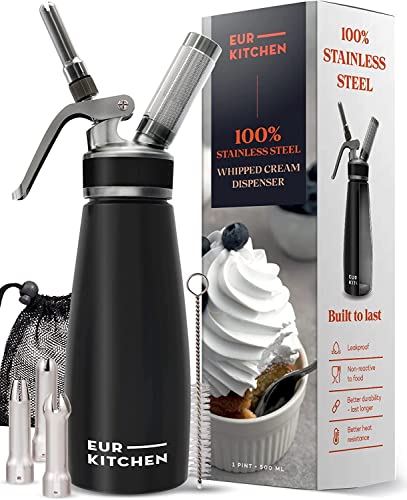
For most home kitchens, the best cream charger dispenser is a 0.5 L aluminum siphon with a stainless-steel head, a pressure-rated cartridge holder, and three removable decorating nozzles.
That size is a practical middle ground: it holds enough cream for a family dessert or a small gathering without becoming awkward to chill, fill, or clean. Choose a 1 L model if you regularly serve a crowd; choose stainless steel rather than aluminum if the dispenser will see frequent use or rough handling. The right charger matters too: a 0.5 L dispenser typically takes one compatible 8 g N₂O charger, while a 1 L model typically takes two. Always follow the manufacturer’s capacity and charger instructions.
Compare capacity, material, and nozzles
The figures below describe common home-kitchen formats, not specifications for every model. Check the product manual before buying: capacities, weights, included parts, and charger requirements vary.
Our top picks



As an Amazon Associate we earn from qualifying purchases at no extra cost to you. Ratings are shown as listed on Amazon.
| Dispenser type | Typical capacity | Typical empty weight | Common body and head | Typical charger setup | Best fit |
|---|---|---|---|---|---|
| Compact aluminum | 0.25 L | About 0.4–0.6 kg | Aluminum body; aluminum or stainless-steel head | Usually one compatible 8 g N₂O charger, if specified | Occasional use, small portions, limited storage |
| Standard aluminum | 0.5 L | About 0.6–0.9 kg | Aluminum body; often a stainless-steel head | Typically one compatible 8 g N₂O charger | Most households and mixed everyday use |
| Large aluminum | 1 L | About 0.8–1.2 kg | Aluminum body; head material varies | Typically two compatible 8 g N₂O chargers | Parties and larger batches |
| Standard stainless steel | 0.5 L | About 0.9–1.3 kg | Stainless-steel body and head | Typically one compatible 8 g N₂O charger | Frequent use, added heft, and a more robust body |
Weight ranges are approximate and can shift with wall thickness, head design, and included accessories. The charger count is a common format, not a universal rule. Do not exceed the dispenser’s stated fill line or use a cartridge type it does not support.
Capacity: choose by batch, not by advertised servings
A 0.5 L dispenser suits a typical home batch of whipped cream and is easier to fit in a refrigerator than a 1 L model. The larger size reduces refills when serving a group, but it is heavier when full and may be inconvenient if your fridge has limited shelf height. A 0.25 L siphon is compact, but its smaller batch can mean more frequent washing and recharging if you cook for several people.
Capacity is not the same as the amount of finished foam you will serve. Recipe, fat content, temperature, and dispensing technique affect yield. Treat any serving count as an estimate, and use the fill line as the firm limit.
Material: lighter handling or heavier-duty construction
Aluminum is light and usually less expensive, making it a sensible choice for occasional home use. Its surface can be more vulnerable to dents and scratches than a sturdy stainless-steel body. Stainless steel adds weight and often costs more, but is a good match for frequent use or a kitchen where equipment gets moved around often.
Look beyond the body. A stainless-steel head, durable threaded parts, and replaceable seals can matter more to long-term use than the body material alone. Avoid abrasive pads and harsh cleaners unless the maker specifically approves them; these can damage finishes or seals.
Nozzles: useful variety versus extra cleanup
A straight nozzle gives a simple round dispense, while a star nozzle makes ridged rosettes and borders. A tulip-style or other decorative nozzle can create a different finish, but is not essential for ordinary topping. Many home models include two or three options. Removable nozzles are useful only if you can clean them thoroughly and keep their small parts from getting lost.
Pick by the way you cook
| Kitchen situation | Practical choice | Why |
|---|---|---|
| One or two people; occasional desserts | 0.25–0.5 L aluminum | Lower cost and easier storage; choose 0.5 L if you want fewer small batches. |
| Regular family use | 0.5 L aluminum with stainless-steel head | A versatile capacity without the bulk of a 1 L unit. |
| Frequent use or a busy household | 0.5 L stainless steel | Heavier, durable construction is worthwhile when the siphon is used often. |
| Large gatherings and repeated servings | 1 L model, with charger setup specified for that size | Fewer refills; confirm refrigerator clearance and the required number of chargers. |
| Decorative piping is a priority | Any suitable capacity with at least a star nozzle and removable parts | Nozzle choice affects presentation, not the amount the dispenser holds. |
If cost is your main constraint, compare the full kit rather than the body price alone. A dispenser that includes the charger holder, cleaning brush, and the nozzles you will actually use may be better value than a bare unit. Replacement seals and compatible chargers are ongoing costs; confirm availability before committing to an unusual design.
Setup and cleaning: the steps that prevent most problems
-
Check compatibility and condition. Confirm that the charger type, dispenser, and holder are designed to work together. Inspect the head, threads, and seals for damage before filling.
-
Prepare a smooth mixture. Strain out lumps, seeds, or other solids that could block the valve or nozzle. Use ingredients and recipes the manufacturer permits.
-
Fill only to the marked limit. Leave the required headspace; overfilling can interfere with proper operation. Fit the head and charger holder as directed by the manual.
-
Dispense as instructed. Keep the nozzle pointed away from people and follow the maker’s directions for charging, shaking, and storage. Do not improvise with extra chargers.
-
Release pressure before opening. Follow the manufacturer’s depressurizing instructions and make sure pressure is fully released before unscrewing the head. Never force open a pressurized dispenser.
-
Wash the parts promptly. Separate the nozzle, head, charger holder, and removable seals as directed. Clean narrow passages with the supplied brush, rinse thoroughly, and let parts dry completely before reassembly.
The nozzle and valve area are the parts most likely to cause trouble: cream residue can dry inside a narrow passage, and a misplaced or worn seal can lead to leaks or poor dispensing. Replace seals only with compatible parts. If the head or body is cracked, threads are damaged, or the unit behaves abnormally under pressure, stop using it and contact the manufacturer rather than attempting a repair.
What to prioritize before buying
For a dependable everyday pick, look for a 0.5 L capacity, stainless-steel head, pressure-rated construction, a clear fill mark, and removable parts that can be cleaned without special tools. Choose aluminum for easier handling and lower upfront cost; choose stainless steel if durability and frequent use matter more. Add a 1 L capacity only when you regularly need larger batches and have room to store the filled dispenser. For nozzles, a straight tip plus a star tip covers most home uses without creating unnecessary cleaning work.




Write Your Review
No reviews yet. Be the first to share your experience!