

Key takeaways
- Fine: best for sandwich bread, rolls, and recipes requiring a smooth dough.
- Medium: useful for rustic loaves and a more noticeable whole-grain texture.
- Coarse: suitable for porridge, cracked wheat, multigrain soakers, and cereals.
- Repeated passes: can make flour finer, but also add heat and time; use only when the mill instructions permit it.
The best flour mills for daily bread baking are usually electric impact or stone-burr mills with adjustable settings, a 100–200 gram-per-minute output, and a hopper large enough for one or two loaves; choose stone burrs for traditional whole-grain texture, steel burrs for durability and broader ingredient flexibility, and a quieter model if the mill will run near living areas.
Our top picks
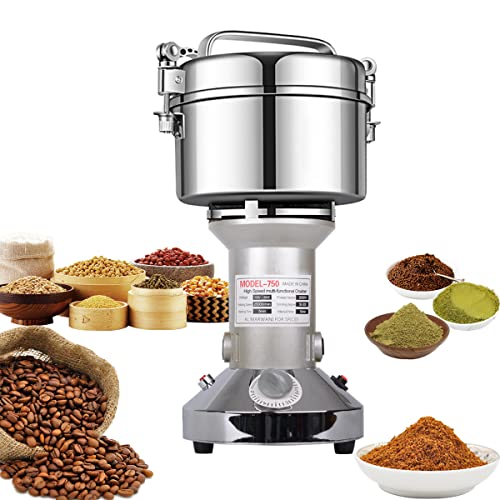
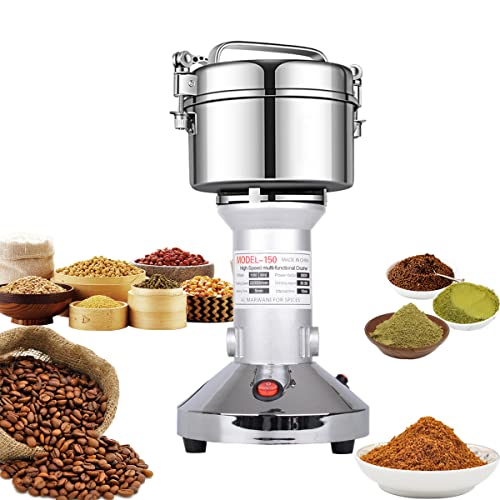


As an Amazon Associate we earn from qualifying purchases at no extra cost to you. Ratings are shown as listed on Amazon.
Quick picks by baking situation
| Situation | Best fit | Why it makes sense | Typical price range |
|---|---|---|---|
| First-time home baker | Compact electric impact mill | Simple controls, fine flour, good speed, and fewer settings to learn | $200–$350 |
| Daily whole-wheat bread | Stone-burr mill such as Mockmill 100 or KoMo Classic | Adjustable texture and strong performance with wheat, rye, and spelt | $300–$550 |
| Frequent baking for a family | Higher-capacity stone or impact mill | Larger hopper and faster throughput reduce repeated batches | $400–$700 |
| Small kitchen or open-plan home | Compact, relatively low-noise mill | Smaller footprint and less disruptive operation | $300–$600 |
| Grinding more than wheat | Steel-burr or impact mill rated for multiple dry grains and legumes | More flexible for oats, rice, corn, beans, and spice-free dry ingredients | $250–$550 |
Stone burrs vs. steel burrs
Stone-burr mills crush grain between two abrasive stones. The distance between the stones controls the grind, so one machine can produce coarse meal for porridge, medium flour for rustic bread, or fine flour for cakes and sandwich loaves. Models such as the Mockmill 100, Mockmill 200, and KoMo Classic are well-known examples of this design.
The main advantage is control. Stone mills can produce flour with a visibly different texture, and their gradual adjustment suits bakers who alternate between whole-grain bread, pizza, pastry, and cracked grain. Their limitation is that the stones are wear parts. Hard foreign objects can chip them, and oily ingredients such as nuts or seeds may clog the grinding chamber unless the manufacturer specifically permits them.
Steel-burr mills use hardened metal burrs to shear or crush ingredients. They are often valued for toughness, easy adjustment, and the ability to process a broader range of dry ingredients. A steel-burr model can be a practical choice when you want flour as well as cracked grains, rice flour, or dry legumes. The trade-off is that some models offer less precise flour-texture adjustment, and the grinding sound can be sharper than the deeper sound of a stone mill.
Do not choose solely on the word “stone.” Burr material affects durability and texture, but motor power, burr diameter, airflow, adjustment mechanism, and manufacturer limits matter just as much. A poorly designed stone mill is not automatically better than a well-built steel-burr or impact mill.
How the leading mill types compare
| Mill type or example | Typical output | Adjustment range | Hopper capacity | Approximate noise | Best use |
|---|---|---|---|---|---|
| Compact impact mill, such as WonderMill | 100–150 g per minute | Usually fine flour to coarse meal, often with limited external adjustment | 700–900 g | High; commonly around 85–95 dB nearby | Fast, fine flour and occasional baking |
| Stone-burr mill, such as Mockmill 100 | 100–110 g per minute | Very fine flour to coarse meal | 600–750 g | Moderate to high; commonly around 75–85 dB nearby | One or two loaves and varied textures |
| Higher-output stone-burr mill, such as Mockmill 200 | 180–200 g per minute | Very fine flour to coarse meal | 1,000–1,100 g | Moderate to high; commonly around 75–85 dB nearby | Several loaves or frequent family baking |
| Wood-cabinet stone mill, such as KoMo Classic | 90–100 g per minute | Fine flour to coarse meal | 1,000 g or more | Moderate; commonly around 70–80 dB nearby | Countertop use where appearance and versatility matter |
| Steel-burr mill | 50–150 g per minute | Varies widely; fine flour to cracked grain | 500–1,500 g | Moderate to high | Users who grind multiple dry ingredients |
Noise figures are useful for comparison but should be treated as approximate. Distance, room acoustics, grain hardness, and the measuring method can change the result. Any mill loud enough to require a raised voice beside it should be operated before quiet hours if your kitchen is near bedrooms or shared walls.
Best flour mills for different priorities
Best all-round stone mill: Mockmill 100
The Mockmill 100 is a sensible choice for a household making bread several times a week. Its compact format suits most counters, while its continuously adjustable stone-burr setting covers fine flour through coarse meal. Its roughly 100-gram-per-minute capacity is enough for a typical loaf without making the machine excessively large. Choose the Mockmill 200 instead if you regularly mill several kilograms in one session; its faster output costs more but reduces waiting.
Best for a quieter, furniture-style countertop appliance: KoMo Classic
The KoMo Classic combines stone grinding with a wood-cabinet design that looks less industrial than many plastic-bodied mills. It is a good match for kitchens where the appliance remains visible. Its larger hopper is useful when milling flour for multiple loaves, but the cabinet adds weight and occupies more visual space. It is best for buyers who value finish, stable construction, and a broad grind range more than the lowest price.
Best for speed and very fine flour: WonderMill-style impact mill
An impact mill is attractive when your priority is quickly producing light, fine flour for sandwich bread, cakes, or general-purpose baking. There are fewer burr adjustments to learn, and many models have generous hoppers. The compromise is sound: impact mills can be noticeably louder than stone mills. They also tend to be less suitable when you want a deliberately coarse, rustic meal or frequent texture changes.
Best for ingredient flexibility: steel-burr mill
A steel-burr model makes sense for a cook who wants one grinder for wheat, rye, rice, corn, and other approved dry ingredients. Check the manual before grinding beans, oily grains, herbs, or spices. “Can grind grain” does not mean “can grind every pantry ingredient.” Steel burrs can also require more careful adjustment: closing the burrs too tightly can increase heat, accelerate wear, and produce unnecessary noise.
Capacity: calculate what you actually need
Most bread recipes use 400–700 grams of flour. At 100 grams per minute, milling 600 grams takes about six minutes of grinding time. At 200 grams per minute, the same amount takes about three minutes. That difference matters when baking four loaves, but it is not usually decisive for one loaf.
A hopper holding 600 grams can handle many single-loaf recipes, while a hopper of 1,000 grams or more is more convenient for larger batches. Remember that hopper capacity is not always the same as usable capacity: grain may bridge above the intake, and some mills should not be filled to the rim. If you bake twice per week, compact size may be more valuable than maximum throughput. If you mill 3 kilograms weekly, the faster model saves roughly 15 minutes compared with a 100-gram-per-minute mill.
Grind settings and bread results
- Fine: best for sandwich bread, rolls, and recipes requiring a smooth dough.
- Medium: useful for rustic loaves and a more noticeable whole-grain texture.
- Coarse: suitable for porridge, cracked wheat, multigrain soakers, and cereals.
- Repeated passes: can make flour finer, but also add heat and time; use only when the mill instructions permit it.
Freshly milled whole-grain flour absorbs water differently from packaged white flour. Begin with the recipe’s suggested hydration, then reserve a small amount of water and adjust after the flour has had time to hydrate. Changing the mill setting is often more useful than simply adding more water: an excessively coarse grind can create a rough dough, while an overly fine grind may make it feel sticky.
Ownership realities: cleaning, wear, and common mistakes
The first wear points are usually the burrs, the grinding chamber, the flour outlet, and any plastic seals or collection containers. Keep grain dry and inspect it for stones before loading the hopper. A single hard object can damage ceramic or composite stones and may also score steel burrs.
After milling, let the machine finish clearing its chamber, then brush away residual flour with a dry, soft brush. Do not wash burrs or electrical components unless the manufacturer explicitly says they are removable and washable. Moisture trapped inside the chamber can encourage clumping or spoilage. If switching from a strongly flavored ingredient, mill a small amount of ordinary wheat and discard it, provided the manual allows that ingredient in the first place.
Do not run an empty mill for long periods, force grain into the intake, or tighten adjustable burrs until they grind against each other. If the motor slows, the flour smells toasted, or the machine repeatedly trips its overload protection, stop and check for a blockage, excessive feed rate, or unsuitable ingredient. A mill used within its stated limits should last considerably longer than one routinely pushed beyond them.
Bottom line
For most daily bread bakers, a continuously adjustable stone-burr mill such as the Mockmill 100 offers the best balance of texture control, capacity, and countertop size. Choose the Mockmill 200 or a larger KoMo model for frequent multi-loaf batches. Choose an impact mill when speed and fine flour matter more than quiet operation or coarse-grind control, and choose steel burrs when processing a wider range of approved dry ingredients is the priority. The best flour mill is the one whose noise, capacity, cleaning demands, and grind range match how often you actually bake.





Write Your Review
No reviews yet. Be the first to share your experience!