

Key takeaways
- Covered patio: IP44 can work when the power supply and controller are protected from direct rain.
- Open patio: Prefer IP65 for the light housings and weather-protected connections.
- Near sprinklers or heavy exposure: Look for IP65 or IP67, sealed connectors, and a listed outdoor power supply.
- Winter conditions: Check the operating temperature range; water resistance does not automatically mean freeze resistance.
The best color changing outdoor lights for patios are weather-rated LED fixtures or string lights with enough brightness for the area, a control system you will actually use, and a power source suited to how often you entertain.
Our top picks


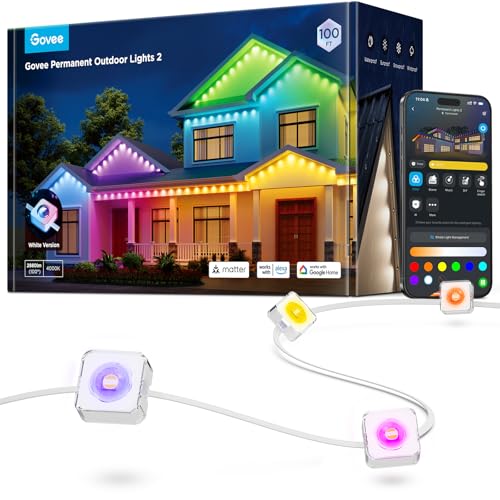

As an Amazon Associate we earn from qualifying purchases at no extra cost to you. Ratings are shown as listed on Amazon.
Quick picks by patio situation
| Patio situation | Best light type | Target specification | Why it fits |
|---|---|---|---|
| Small balcony or 6 × 8 ft seating area | Rechargeable portable lanterns or a short string | 400–800 total lumens; IP44 or higher | Enough atmosphere without glare or permanent wiring |
| Medium 10 × 12 ft patio | Smart string lights or several low-voltage fixtures | 1,000–2,000 total lumens; IP65 preferred | Balances decorative color with useful evening light |
| Large 12 × 20 ft patio | Multiple string runs or smart outdoor spotlights | 2,500–4,000 total lumens; IP65 or higher | Prevents dark zones and lets you separate seating and dining areas |
| Frequent entertaining | Plug-in or low-voltage smart lighting | App, timer, schedules, and local controls | More dependable than repeatedly charging batteries |
| Rental or no outdoor outlet | Solar or USB-rechargeable lights | 8–12 hours claimed runtime; replaceable or accessible battery preferred | Installs with minimal alteration, though brightness varies with weather |
What to check before buying
Brightness: lumens matter more than color count
Color-changing lights are often marketed by RGB effects, scenes, or LED count, but those figures do not tell you how well they illuminate a patio. Look for lumens, and distinguish between total system lumens and output per bulb or fixture.
For ambient decoration, plan on roughly 10–20 lumens per square foot. A 10 × 12 ft patio therefore needs about 1,200–2,400 lumens for evenly distributed decorative light. You may need less if you already have wall sconces, or more if the surface is dark and the lights are mounted high.
RGB colors are usually dimmer than white because colored LEDs may not use all available diodes at once. If you want to read menus, prepare food, or walk safely, choose lights with a dedicated warm-white mode and dimming control. A 2,000-lumen system set to 30% brightness can be more comfortable than a weaker system running at full output.
Weather rating: IP44 is a minimum, not a guarantee of outdoor toughness
An IP rating describes resistance to dust and water. IP44 protects against objects larger than 1 mm and splashing water, making it suitable for many sheltered patios. IP65 adds dust protection and resistance to water jets, which is a better choice for exposed string-light controllers, connectors, and fixtures. IP67 products can tolerate temporary immersion, but the rating does not make a plug or connection safe when it is lying in standing water.
- Covered patio: IP44 can work when the power supply and controller are protected from direct rain.
- Open patio: Prefer IP65 for the light housings and weather-protected connections.
- Near sprinklers or heavy exposure: Look for IP65 or IP67, sealed connectors, and a listed outdoor power supply.
- Winter conditions: Check the operating temperature range; water resistance does not automatically mean freeze resistance.
The weakest point is often the connection between sections, not the bulb itself. Use drip loops, keep connectors off the ground, and follow the manufacturer’s instructions about covering unused sockets.
Control options: choose convenience over novelty
Bluetooth lights are usually simple to set up and work well within a patio or small yard, but your phone may need to remain nearby. Wi-Fi lights offer remote control, schedules, and integration with smart-home platforms, although they depend on reliable network coverage outdoors. Some models use a separate hub, which adds cost but can improve range and reduce the number of devices connected directly to your router.
A physical button or remote is valuable when guests do not have the app, when the Wi-Fi is down, or when you want to turn the lights on without unlocking your phone. For regular use, prioritize these controls:
- Warm-white and color presets
- Brightness adjustment without changing color
- Schedules for automatic on and off times
- Power-loss memory, so the lights do not reset to an unwanted flashing mode
- Grouping, if you plan to control several runs together
Head-to-head: the main types of color-changing patio lights
Smart string lights
String lights are the most forgiving option for renters and for patios where the goal is atmosphere. They spread light across a wide area and can be attached to a railing, pergola, or guide wire. Bulb spacing commonly ranges from 12 to 24 inches, while a typical 48-foot run has 24 to 48 bulbs.
The trade-off is limited task lighting. Individual bulbs can also become a maintenance issue: one failed sealed module may require replacing part of the run, depending on the design. Choose shatter-resistant plastic bulbs for windy areas and confirm whether replacement bulbs are available.
Outdoor spotlights and pathway fixtures
Spotlights create stronger color washes on walls, trees, and architectural features. They are a better choice than strings when you want a clean appearance or separate zones, such as blue light near a pool enclosure and warm white near a dining table. Low-voltage systems generally require a transformer and careful cable routing, but they avoid extension cords across walking paths.
Spotlights produce more concentrated glare. Aim them at surfaces rather than directly toward seating, and use fewer high-output fixtures instead of many bright fixtures pointed at eye level.
Portable rechargeable lanterns
Rechargeable lanterns are flexible and require no permanent installation. They work particularly well on small patios, balconies, and dining tables. Their limitations are runtime, charging frequency, and declining battery capacity after repeated cycles. They are best as supplemental mood lighting rather than the sole source for a large patio.
Solar color-changing lights
Solar lights have the lowest installation effort, but their performance depends on direct sun, panel cleanliness, season, and shade. A product claiming 8 hours of runtime may deliver substantially less after a cloudy day or during winter. Use solar fixtures for low-demand decorative accents, not for dependable lighting at a scheduled gathering.
Decision matrix: which option makes sense?
| Your priority | Recommended choice | Acceptable compromise |
|---|---|---|
| Lowest upfront cost | Basic plug-in RGB string lights, about $25–$70 | Fewer effects and simpler controls |
| Best reliability for weekly use | Plug-in smart strings or low-voltage fixtures, about $70–$250 | More installation and cable management |
| No outlet nearby | Rechargeable or solar fixtures | Lower brightness and charging or weather dependence |
| Most precise ambiance | App-controlled fixtures with scenes and zones | Higher cost and a little more setup |
| Minimal technical experience | Remote-controlled plug-in lights | Limited scheduling and no remote access |
How much coverage do you need?
Measure the edges where you intend to mount the lights rather than buying based only on patio floor area. For a rectangular 10 × 12 ft patio, one perimeter run requires approximately 44 feet before allowing for a power lead and slack. A 48-foot string may fit, but it leaves little room to route around posts. A 72-foot string can provide a complete perimeter with extra length for a second side or a centered zigzag.
For a large 12 × 20 ft patio, the perimeter is 64 feet. Two 48-foot runs may provide better coverage than one long run because you can illuminate separate seating and dining areas. Confirm whether the manufacturer permits connecting multiple sets; exceeding the approved count can overheat wiring or cause voltage drop.
Installation and ownership details that affect value
- Map the power path first. Keep the transformer, adapter, and controller away from puddles and place a weather-rated outdoor cover over the receptacle.
- Mount without pinching the cable. Use clips or hooks designed for the product rather than staples that can cut insulation.
- Set white light before color effects. Confirm that the lights provide comfortable illumination, then save color scenes for accent use.
- Test Wi-Fi or Bluetooth at the final mounting point. A phone that works beside the router does not prove the patio has adequate signal.
- Clean periodically. Dust and pollen reduce brightness and can trap moisture around connectors. Disconnect power, wipe fixtures with a soft damp cloth, and let them dry completely.
- Store removable lights correctly. Bring in portable units and non-rated adapters before freezing weather. Do not coil wet strings tightly, as trapped moisture accelerates corrosion.
The parts most likely to wear first are batteries, rubber connector seals, exposed plugs, and thin mounting wires. Rechargeable lantern batteries may provide noticeably shorter runtimes after a few seasons. For permanent installations, spending more on replaceable sections, accessible fuses, and readily available connectors can cost less than replacing an entire system.
Bottom line
Choose a weather-rated smart string-light system for broad, relaxed patio ambiance; use low-voltage or spotlight fixtures when you need stronger illumination and separate zones; and choose rechargeable or solar lights when installation freedom matters more than consistent brightness. For most medium patios, a system delivering 1,000–2,000 lumens, rated IP65, with warm-white dimming, schedules, and a physical fallback control offers the best balance of comfort, durability, and everyday convenience.





Write Your Review
No reviews yet. Be the first to share your experience!