

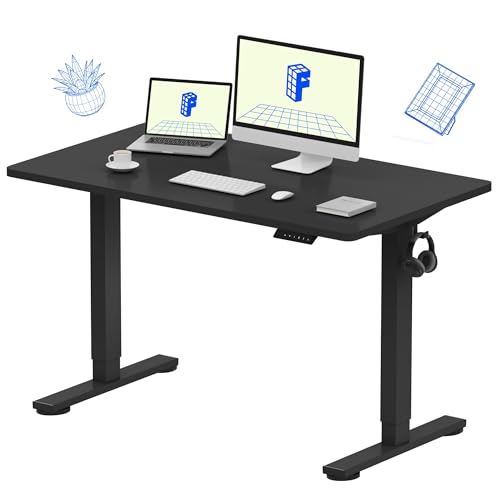
The best office desk for most people is a 55-63 inch wide, 24-30 inch deep desk with a sturdy frame and a stated weight capacity of at least 100 lb. If you work long hours, a height-adjustable desk is the best upgrade, with a range of about 25-50 inches covering most users. For small rooms, a compact 40-47 inch desk or a corner L-shape makes better use of space than a single wide slab.
Our top picks


As an Amazon Associate we earn from qualifying purchases at no extra cost to you.
Quick Comparison of the Best Office Desk Types
| Pick | Best for | Typical size (W x D) | Height | Price range |
|---|---|---|---|---|
| Height-adjustable desk (electric) | Best overall | 48-72 x 24-30 in | About 25-50 in | Mid-range to upper-mid |
| Fixed-height computer desk | Best budget | 47-55 x 23-24 in | 29-30 in | Budget |
| L-shaped desk | Best for multi-monitor setups | 59-66 in each leg | 29-30 in | Mid-range |
| Compact writing desk | Best for small rooms | 36-47 x 18-22 in | 29-30 in | Budget to mid-range |
| Executive desk with drawers | Best for storage and presence | 60-72 x 28-32 in | 29-30 in | Upper-mid to premium |
| Wall-mounted fold-down desk | Best for tiny apartments | 30-40 x 15-20 in | Set at install | Budget to mid-range |
Best Overall: Electric Height-Adjustable Desk
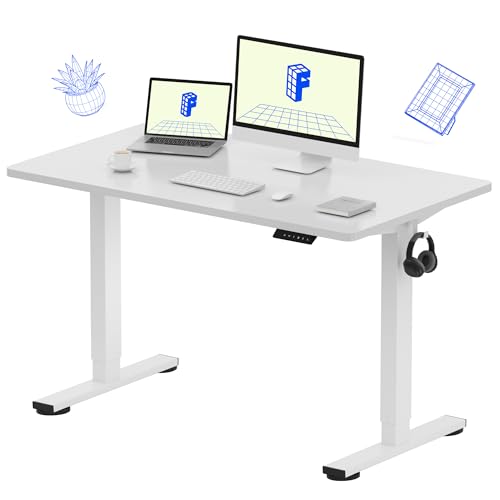
A sit-stand desk gives you the flexibility to change posture through the day, which many people find more comfortable than sitting for eight hours. Frames from Uplift, FlexiSpot, Fully (Jarvis), and Autonomous are well-known, and IKEA offers the IDÅSEN. Choose a dual-motor frame with a rated lift capacity of 200 lb or more, a range of at least 25-50 inches, and programmable memory presets.
Trade-off: cost and weight. A quality frame and top is usually the most expensive option on this list, and assembly can take 45-90 minutes. Wobble at full height varies by brand and top thickness, so choose a top of at least 1 inch thick and a crossbar for wider desks.
Best Budget: Fixed-Height Computer Desk
A simple 47-55 inch desk with a laminate top and a steel or wood frame covers a laptop, one monitor, and a mouse. Brands such as Sauder, Bush Furniture, Walker Edison, and IKEA (MICKE, LINNMON) make dependable models. Look for a frame with cross-bracing, adjustable feet for uneven floors, and a rear cable grommet.
Trade-off: fixed height at 29-30 inches suits average-height users, but not those taller than 6 feet 2 inches or shorter than 5 feet 2 inches. Cheap laminate chips at the edges, so use a desk pad.
Best for Multi-Monitor Setups: L-Shaped Desk
An L-shaped desk, with legs of 59-66 inches each, gives a main work surface and a return for a laptop, printer, or paperwork. It can host two or three monitors with room for peripherals. Models are often reversible, so you can choose the left or right return. The trade-off is footprint: expect to need at least 66 x 66 inches of floor, plus chair clearance of 36 inches.
Best for Small Rooms: Compact Writing Desk
A desk 36-47 inches wide and 18-22 inches deep fits in bedrooms, hallways, and closets. It suits laptop work and study. A drawer or a small shelf adds storage. The main limit is depth: a 20 inch deep desk places a monitor too close to your eyes, so use a laptop with a stand or a small monitor of 24 inches or less.
Best for Storage: Executive Desk With Drawers
Executive desks combine a large surface with file drawers, and often include pedestals or a credenza. They are a good choice for paperwork-heavy jobs. Weight and size are the downsides, as many exceed 150 lb. If you want drawers but not the bulk, choose a desk with a single pull-out drawer or a rolling file cabinet.
Best for Tiny Apartments: Wall-Mounted Fold-Down Desk
A fold-down desk mounts to studs and folds flat against the wall when not needed. It is ideal for a spare corner or a studio. Check its load rating, often 25-50 lb, and ensure a laptop plus a lamp is within limits. It is not a good fit for a desktop PC and large monitors.
How to Choose an Office Desk
Desk Depth and Monitor Distance
Depth determines how far your screen sits from your eyes. A 24 inch deep desk is the minimum for a laptop plus keyboard. For a 27 inch monitor, 28-30 inches deep lets you sit about 24-28 inches away, which is a comfortable viewing distance.
| Setup | Minimum width | Minimum depth |
|---|---|---|
| Laptop only | 40 in | 20 in |
| Laptop plus one monitor | 47 in | 24 in |
| Two 24-27 in monitors | 55-60 in | 26-30 in |
| Ultrawide plus accessories | 60-72 in | 28-30 in |
Height for Your Body
For a fixed desk, a common guideline is a 28-30 inch height for most adults. For sit-stand desks, set your elbows at about 90 degrees with wrists straight. As a rough guide, the standing height is about 0.63 times your height; for someone 5 feet 10 inches (70 in), that is about 44 inches.
Frame Stability and Weight Capacity
Compare the stated weight capacity to your equipment. Two 27 inch monitors weigh about 20-30 lb with arms, a laptop 3-5 lb, and a desktop tower 15-30 lb. A desk rated at 100 lb is fine for most, while heavy setups such as multiple screens and a PC may call for 200 lb or more.
Cable Management and Power
Pass-through grommets, a rear cable tray, and a spot for a surge protector help keep the desk tidy. On sit-stand desks, leave enough cable slack for the full height range, around 25 inches of extra length.
Material and Finish
- Solid wood or bamboo: Premium look, repairable, heavier.
- Laminate/MDF: Budget-friendly and stain resistant, vulnerable to chips.
- Glass: Stylish, shows smudges, avoid for keyboards and mouse tracking.
- Steel: Strong frames, can feel cold and needs floor protection.
Ownership Realities and Mistakes to Avoid
- Buying a desk too shallow for the monitor, causing eye strain.
- Choosing a sit-stand frame with a narrow height range that does not suit your body.
- Forgetting the chair: you need 30-36 inches behind the desk for chair travel.
- Ignoring floor type; level feet and felt pads protect hardwood.
- Skipping periodic bolt checks on adjustable frames, which loosen over months.
Worked Example: Choosing a Sit-Stand Desk Range
Suppose you are 5 feet 6 inches (66 inches) tall. Seated elbow height is often around 25-26 inches and standing elbow height around 41-42 inches, so you need a desk that travels from about 25 to 42 inches or more. Many frames list 25-50 inches, which covers this with margin. If you are 6 feet 3 inches, check that the maximum is at least 48 inches, and remember that a monitor arm or keyboard tray changes the target height. Always verify the range on the manufacturer’s spec sheet before buying.
Decision Guide: Which Desk Fits Your Situation?
| Situation | Best match |
|---|---|
| Work from home all day | Electric sit-stand desk, 55-63 in wide |
| Student or part-time use | Fixed 47 in computer desk |
| Two or three monitors plus paperwork | L-shaped desk |
| Bedroom corner or closet office | Compact 36-47 in writing desk |
| Studio apartment | Wall-mounted fold-down desk |
Frequently Asked Questions
What size desk do I need for a home office?
For one monitor and a laptop, a 47-55 inch wide, 24 inch deep desk works well. For two monitors, plan for 55-60 inches wide and 26-30 inches deep.
Are standing desks worth it?
Many people like having the option to alternate posture. If your budget allows, a sit-stand desk provides flexibility, but you still need to move regularly. General information only: ask a health professional if you have specific back or posture concerns.
What is the best material for an office desk?
Solid wood or high-quality plywood lasts longest, while laminate is budget-friendly and easy to clean. Choose by use and budget.
How deep should a desk be for a monitor?
A depth of 24 inches is a minimum, and 28-30 inches is better for a 27 inch monitor or larger, so you can sit at a comfortable distance.
L-shaped or straight desk?
L-shaped desks give more surface for multi-monitor setups and paperwork, while straight desks fit smaller rooms and are easier to move.



Write Your Review
No reviews yet. Be the first to share your experience!