

Key takeaways
- Corner posts that extend close to the ground rather than stopping halfway up the wall.
- Overlapping panel joints secured with multiple bolts, not one screw at each end.
- Interior tie bars or cross braces on long sides and deep beds.
- Wide, rigid corner plates that prevent the walls from spreading.
- A top rim that covers the raw panel edge and reduces flexing.
The best metal raised garden beds for most gardeners are galvanized-steel beds with panels at least 0.6 mm thick, rolled or capped edges, reinforced corners, and a depth of 17–24 inches; choose coated metal instead when color, heat management, or a decorative finish matters more than maximum service life.
Our top picks
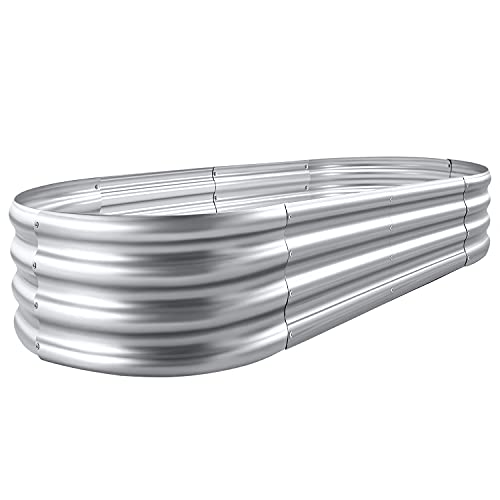
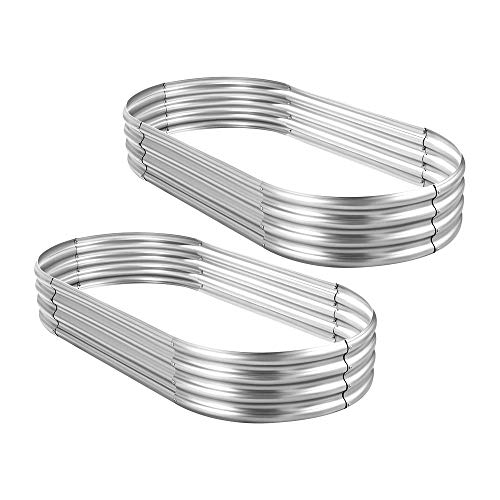
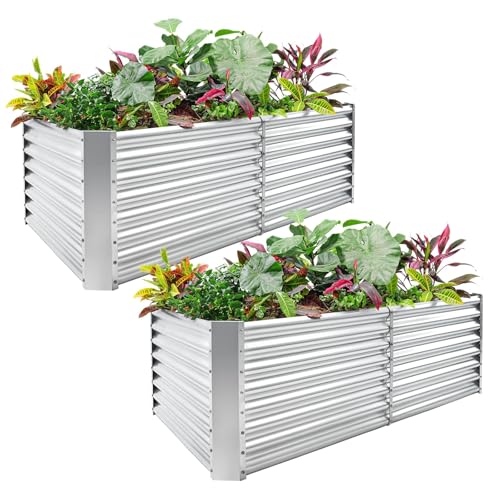

As an Amazon Associate we earn from qualifying purchases at no extra cost to you. Ratings are shown as listed on Amazon.
Galvanized Steel vs. Coated Metal: Which Construction Is Better?
Galvanized steel uses a zinc coating to protect the underlying steel from moisture and oxygen. It is usually the stronger value for vegetable gardens because scratches do not automatically expose bare steel across a large area: zinc provides a degree of sacrificial protection around small damaged spots. Its appearance is typically silver, gray, or lightly mottled, and the surface may dull over time.
Coated metal normally means steel with a painted, powder-coated, or polymer finish. It offers more color choices and can look better beside a patio or lawn. The coating also adds a barrier against water, but its performance depends heavily on adhesion and edge treatment. A deep scratch, cut edge, or chipped corner can become the first place for rust, particularly where wet soil stays against the panel.
| Criterion | Galvanized steel | Coated metal | What it means in practice |
|---|---|---|---|
| Typical finish | Zinc-coated silver or gray | Painted or powder-coated color | Coated metal has greater visual flexibility |
| Useful panel thickness | About 0.6–1.0 mm | About 0.6–1.0 mm, excluding coating | Thicker steel resists bowing and denting |
| Rust protection | Strong when zinc coverage is continuous | Strong while the coating remains intact | Inspect cut edges, screw holes, and scratches |
| Typical service expectation | Often 8–20 years, depending on gauge, drainage, and climate | Often 5–15 years, with premium finishes potentially lasting longer | These are broad ownership ranges, not guarantees |
| Common depth choices | 6, 12, 17, 24, and 32 inches | 6, 12, 17, and 24 inches | Depth determines soil cost and root space |
| Best reason to choose it | Long-term practicality and lower maintenance | Appearance, color, and a finished outdoor look |
Do not compare thickness numbers without checking the unit. A panel listed as 0.6 mm is substantially different from one listed as 0.3 mm, while “gauge” can be confusing because gauge conventions vary by material and manufacturer. Ask whether the stated thickness refers to the steel alone or the steel plus its finish.
How Thick Should a Metal Garden Bed Be?
For a small, low bed on level ground, 0.4–0.5 mm steel can be adequate if the frame has frequent corner supports and the bed is not moved after filling. For a more dependable choice, look for approximately 0.6 mm or thicker. Beds 24 inches deep, beds longer than 6 feet, and beds exposed to strong wind benefit from 0.8–1.0 mm panels or additional internal bracing.
Thickness is only part of the stability equation. A thin panel with a continuous top rail and several reinforced posts can outperform a thicker panel with loosely connected corners. Look for:
- Corner posts that extend close to the ground rather than stopping halfway up the wall.
- Overlapping panel joints secured with multiple bolts, not one screw at each end.
- Interior tie bars or cross braces on long sides and deep beds.
- Wide, rigid corner plates that prevent the walls from spreading.
- A top rim that covers the raw panel edge and reduces flexing.
Choose by Situation, Not Just by Appearance
| Your situation | Recommended configuration | Why |
|---|---|---|
| First-time gardener with limited budget | Galvanized steel, 6–12 inches deep, 0.5–0.6 mm thick | Lower soil requirement and simpler assembly |
| Frequent cooking-garden use | 17–24 inches deep, 0.6–0.8 mm steel, reinforced corners | More root volume and less bending while harvesting |
| Small balcony or paved courtyard | Compact modular bed, 6–12 inches deep, with a sealed or lined base if required | Controls weight and reduces the risk of water staining |
| Windy, exposed garden | 0.8 mm or thicker panels, ground stakes, and internal bracing | Full beds exert considerable outward pressure |
| Decorative front-yard planting | Well-finished coated metal with rolled edges and concealed fasteners | Better visual finish; inspect chips annually |
| Deep-rooted crops or poor native soil | 24–32 inches deep, with strong corner and mid-span supports | Provides usable root depth without excavation |
Size, Soil Volume, and the Cost You May Not See
Measure the site before selecting a bed, leaving at least 24 inches of walking space where possible. A bed that is 4 feet wide can be difficult to reach from both sides if it is against a wall; a 2–3 foot width is easier to maintain from one accessible side.
Calculate soil volume before buying the frame. Multiply length by width by depth, using the same unit. For example, a bed measuring 6 feet by 3 feet by 1.5 feet holds:
6 × 3 × 1.5 = 27 cubic feet
That is roughly 1 cubic yard, since one cubic yard equals 27 cubic feet. Soil settles, so plan on purchasing about 10–15% more than the calculated volume. A bed that appears inexpensive can become costly if it requires a large amount of bagged soil, especially at 24 inches deep.
For shallow beds, use a suitable growing mix rather than filling the entire structure with dense topsoil. For deep beds, bulk soil and compost are usually more economical, but avoid placing uncomposted woody material directly where shallow-rooted vegetables will grow. Do not fill a raised bed on a balcony or roof without confirming that the structure can support the saturated weight.
Safety Edges and Assembly Stability Matter More Than They Look
Raw sheet-metal edges can cut hands, gloves, hoses, and children’s clothing. Prefer a continuous rolled top edge, a fitted metal cap, or a thick protective trim that stays attached at corners. Examine the underside and panel ends as well as the visible top rim; exposed cut edges are often hidden there.
Assembly stability depends on getting the base level before tightening every fastener. A practical sequence is:
- Mark the footprint and remove sharp stones, roots, and high spots.
- Level the ground or create a shallow, compacted bed of paving sand.
- Join corners loosely so the frame can square itself.
- Measure both diagonals. Adjust until they are equal.
- Install braces, corner posts, and any ground stakes.
- Tighten fasteners gradually, alternating between opposite sides.
- Fill one-third full, check for bowing and twisting, then continue filling.
Unequal diagonals indicate a skewed rectangle. If you fill a skewed frame before correcting it, soil pressure can make the problem permanent and put extra strain on the corner joints. For long beds, add a mid-span support even if the instructions describe it as optional.
Rust Resistance During Long-Term Ownership
Most failures begin at neglected details rather than across the middle of an intact panel. Check the following once or twice a year:
- Scratches around screws and bolt heads.
- Panel ends hidden beneath corner caps.
- Standing water beside the outside wall.
- Soil or mulch packed against the exterior base.
- Loose fasteners caused by seasonal movement.
- Coating blisters, bubbling, or reddish staining.
Keep the outside wall reasonably clear of wet leaves and mulch. Rinse accumulated fertilizer residue with clean water, then allow the metal to dry. Small damage on coated steel can be cleaned, dried, and touched up with a compatible outdoor metal coating; follow the coating manufacturer’s preparation instructions. Zinc-coated surfaces may develop a dull white residue during early weathering, which is not the same as red rust, but persistent red corrosion or perforation indicates more serious deterioration.
Avoid placing copper-treated wood, continuously wet compost, or concentrated fertilizer directly against the metal without checking compatibility. Galvanized steel is widely used in outdoor growing structures, but no finish should be treated as indestructible. If you are growing food, follow local guidance and the bed manufacturer’s material disclosures, particularly for unknown recycled metal or decorative coatings.
The Bottom Line
Choose a galvanized-steel bed around 0.6–0.8 mm thick for the best balance of price, durability, and low maintenance. Move up to 0.8–1.0 mm, reinforced corners, and internal bracing for deep, long, or windy installations. Choose coated metal when the finish is central to the design, but inspect the coating, edges, and fastener holes more carefully. Whichever construction you select, the best bed is one with a sensible width, enough depth for the crops, safe edges, and a frame that remains square after it is filled.



Write Your Review
No reviews yet. Be the first to share your experience!