

Key takeaways
- Low-light foliage plants: begin around 50–150 µmol/m²/s at the leaves.
- Most houseplant growth: approximately 100–250 µmol/m²/s is a useful starting range.
- High-light plants and herbs: often need about 200–400 µmol/m²/s, depending on species.
The best LED grow lights for indoor plants are full-spectrum, dimmable lights that deliver roughly 10–25 watts per square foot for foliage plants, include a timer, and can be positioned close enough to provide useful intensity without overheating leaves.
For most homes, a 20–36W LED bulb or compact panel is the practical choice for one to three plants; a 40–100W panel is better for a shelf, plant cabinet, or larger grouping. The right purchase depends less on the advertised “sunlight” label than on usable coverage, hanging height, heat control, and operating cost.
Our top picks

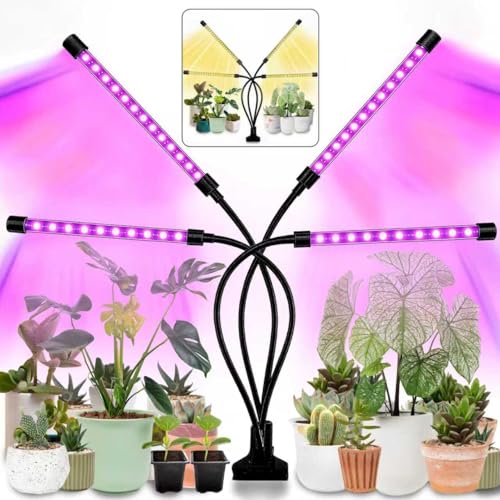

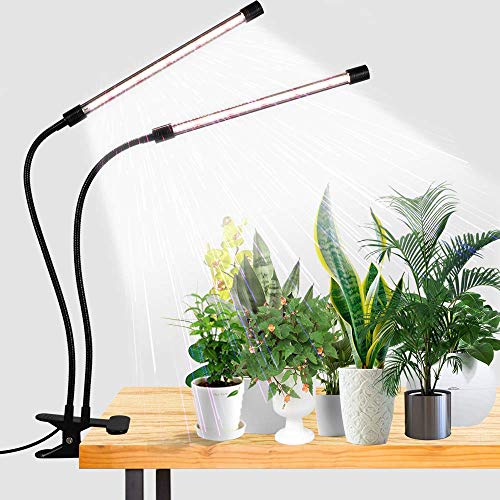
As an Amazon Associate we earn from qualifying purchases at no extra cost to you. Ratings are shown as listed on Amazon.
Best LED grow lights for indoor plants by situation
| Situation | Best light type | Useful power range | Typical coverage | Why it fits |
|---|---|---|---|---|
| One tall or light-hungry plant | Full-spectrum LED bulb in a reflector | 20–36W | 1–3 sq. ft. | Simple installation and adjustable positioning |
| Small shelf with several foliage plants | LED bar or slim panel | 24–48W | 2–4 sq. ft. | Even coverage and low visual bulk |
| Plant cabinet or propagation shelf | Multiple LED bars | 20–60W total | Per shelf, usually 2–6 sq. ft. | Reduces shadows across a long, narrow area |
| Large collection or high-light plants | Dimmable grow-light panel | 80–150W | 6–12 sq. ft. | Higher intensity, greater height adjustment, better uniformity |
Our top choices by use case
Best compact bulb: a 20–36W full-spectrum LED grow bulb
A screw-in bulb is the easiest solution for a single monstera, ficus, citrus seedling, herbs, or a plant sitting in a dark corner. Products such as the Sansi 36W grow bulb and GE Grow Light LED bulbs represent this category. Use a ceramic or heat-resistant socket, a reflector, and a mechanical or smart plug timer.
Bulbs are inexpensive and easy to replace, but their light spreads unevenly. They work best when placed 12–24 inches above the plant and aimed directly at the leaves. A lamp shade designed for ordinary household bulbs may block useful light or trap heat, so an open reflector is preferable.
Best for shelves: linear LED bars
Linear bars provide more even coverage than a single bulb and fit beneath shelves without taking much headroom. Barrina-style T5 LED grow-light bars and similar full-spectrum bar systems are suitable for foliage plants, seedlings, and propagation shelves. Choose a kit with linking cables, mounting clips, and a built-in timer or use an external timer.
Bars are especially useful when plants are arranged in a row. They reduce the bright center and dark edges that commonly occur with a point-source bulb. For a 2-foot shelf, start with approximately 24–40W total; for a 4-foot shelf, plan on about 40–80W, depending on plant type and mounting height.
Best for larger areas: a dimmable LED panel
A panel such as the Spider Farmer SF1000 or a comparable 100W full-spectrum board is better for a collection spread across a table or for plants that need stronger light. Dimming is valuable because the same fixture can operate gently for low-light foliage plants or more intensely for high-light species.
Panels usually offer better uniformity and cooling than improvised bulb arrangements, but they require overhead mounting. Check whether the fixture includes a timer, hanging hardware, and a dimmer. If not, those accessories add to the real purchase cost.
How to compare full-spectrum output
“Full spectrum” is a useful starting point, not a complete performance specification. Look for a fixture that visibly includes broad white light rather than only red and blue diodes. Broad-spectrum white LEDs make it easier to inspect leaf color, spot pests, and place plants accurately in a living space.
For meaningful comparisons, prioritize PPFD maps, power consumption, dimming range, and coverage at a stated hanging height. Lumens measure human-visible brightness and can be misleading for plants. A light advertised as “equivalent to sunlight” without a coverage area or height is difficult to evaluate.
- Low-light foliage plants: begin around 50–150 µmol/m²/s at the leaves.
- Most houseplant growth: approximately 100–250 µmol/m²/s is a useful starting range.
- High-light plants and herbs: often need about 200–400 µmol/m²/s, depending on species.
These are starting points rather than universal requirements. Use plant response as feedback: stretched growth and widely spaced leaves usually indicate insufficient light, while bleached patches, curled leaves, or persistently hot foliage can indicate excessive intensity or heat.
Wattage, coverage, and hanging height
Actual electrical wattage is more useful than a model number such as “1000” or “2000,” which may describe a marketing category rather than power draw. For ordinary foliage plants, estimate 10–25 real watts per square foot, then adjust for height, reflector design, and plant demand.
Light intensity falls rapidly as distance increases. Moving a fixture from 12 inches to 24 inches does not merely make the light slightly weaker; it can reduce intensity substantially while expanding the illuminated area. Follow the manufacturer’s height guidance when available, then make small adjustments rather than placing the light several feet away.
| Fixture | Starting height above foliage | Suggested daily schedule | Approximate electricity cost per month* |
|---|---|---|---|
| 20W bulb | 12–18 in. | 12–14 hours | $1.10–$1.55 |
| 36W bulb or bar system | 12–24 in. | 10–14 hours | $2.00–$2.80 |
| 60W shelf setup | 12–24 in. | 10–14 hours | $3.30–$4.65 |
| 100W panel | 18–30 in. | 10–12 hours | $5.50–$7.30 |
*Calculated at 12 hours per day and an electricity rate of $0.15–$0.20 per kWh. Local rates vary.
Worked energy-cost example
A 36W light running for 12 hours daily uses 0.036 kW × 12 × 30 days, or 12.96 kWh per month. At $0.18 per kWh, that costs about $2.33 per month. A 100W panel used for the same schedule consumes 36 kWh and costs about $6.48 per month.
The lower-wattage option is not always cheaper overall. If one 100W panel evenly covers 8 square feet while two 36W bulbs are needed for the same area, the bulbs consume 72W in total and may provide less uniform light. Compare watts per covered area, not wattage alone.
Timers, heat management, and noise
A timer is one of the most important features because plants benefit from a consistent light-and-dark cycle. Choose a fixture with a repeatable 24-hour timer, or connect it to a reliable plug-in timer. Twelve hours of light is a sensible starting schedule for many foliage plants; extend or reduce it based on growth and room conditions.
LEDs produce less heat than older fluorescent or incandescent alternatives, but they are not heat-free. Panels with aluminum heat sinks and passive cooling are usually quieter and more durable than fixtures with small fans. Leave ventilation space around the driver, do not cover the fixture with fabric, and keep leaves from touching hot surfaces.
Measure temperature at the plant canopy rather than beside the lamp. If the leaves feel noticeably warm, raise the fixture, reduce the dimmer setting, or improve airflow. A small oscillating fan can help circulate air, but it should not blast plants continuously at close range.
Ownership realities: what wears out first
- Timers and power supplies: these can fail before the LED diodes, especially in inexpensive fixtures. A replaceable external timer makes troubleshooting easier.
- Fans: fan-cooled panels collect dust and may become noisy. Clean vents with power disconnected every few months.
- Adhesive mounts: shelf-bar adhesives can loosen from heat or humidity. Screws, clips, or cable ties are more dependable for permanent setups.
- Optical covers: cloudy plastic diffusers reduce output over time if exposed to dust, fertilizer mist, or moisture.
- Plant placement: rotating pots weekly prevents one-sided growth when a bulb or panel does not illuminate evenly.
Wipe the fixture only when it is unplugged and cool. Use a dry microfiber cloth unless the manufacturer permits a damp clean. Avoid spraying water or fertilizer near electrical connections.
Bottom line
Choose a 20–36W full-spectrum bulb for one or two plants, LED bars for a shelf, and a dimmable 80–150W panel for a larger collection. Confirm real wattage, coverage at a stated height, timer behavior, cooling design, and warranty before buying. The best LED grow lights for indoor plants are not necessarily the brightest models; they are the ones that deliver even, controllable light over your actual growing area at a tolerable heat level and monthly energy cost.


Write Your Review
No reviews yet. Be the first to share your experience!