

Key takeaways
- Powder-coated aluminum: Lightweight, rust-resistant, and easy to move. It is one of the safest choices for humid or coastal conditions, although thin frames can dent and dark finishes become hot in direct sun.
- Steel: Strong and often less expensive, but scratches and exposed fasteners can begin to rust. Inspect welds, undersides, and bolt heads rather than judging only the visible finish.
- Teak and other outdoor hardwoods: Attractive and stable when properly maintained. Teak can weather to silver-gray; oil is optional for appearance, not a requirement for basic outdoor use.
- HDPE lumber and resin: Low-maintenance and resistant to moisture. It is heavier than many metal sets, which helps in windy locations, but it may cost more and can expand slightly with temperature changes.
- Wicker: Choose synthetic resin wicker over an aluminum frame. Natural wicker is generally unsuitable for unprotected outdoor exposure, and cheap synthetic strands can split after prolonged ultraviolet exposure.
- Ceramic, stone, and glass tops: Attractive but heavier and more vulnerable to chips, cracks, or thermal shock. A tempered glass top should have protected edges and a secure frame.
Best Outdoor Bar Furniture Sets for Any Patio
The best outdoor bar furniture set depends on your available floor space, the number of people you seat, and whether you need a compact drinks station or a full dining-height setup; for most patios, a powder-coated aluminum bar table with four counter-height chairs offers the strongest balance of durability, footprint, and everyday usability.
Quick comparison of the best set types
| Set type | Typical seating | Common footprint | Materials to look for | Counter height | Storage | Assembly |
|---|---|---|---|---|---|---|
| Two-seat balcony set | 2 people | 36–48 in. wide × 24–30 in. deep | Powder-coated steel or aluminum; compact sling fabric | 34–36 in. | Usually none; some tables have a lower shelf | 30–60 minutes |
| Four-seat counter set | 4 people | 48–60 in. wide × 28–36 in. deep | Aluminum, treated wood, HDPE lumber, or weather-resistant wicker over metal | 34–36 in. | Optional shelf or concealed cabinet | 60–120 minutes |
| Six-seat entertaining set | 6 people | 60–72 in. wide × 30–40 in. deep | Aluminum or steel frame; ceramic, composite, or sealed wood top | 34–36 in. | Open shelving or integrated bottle storage | 90–180 minutes |
| Bar-height table and stool set | 4–6 people | 60–72 in. wide × 30–36 in. deep | Coated steel, aluminum, teak, or commercial-grade resin | 40–42 in. | Often includes a foot rail; storage varies | 90–180 minutes |
| Outdoor bar cabinet set | 2–4 people | 48–72 in. wide × 24–32 in. deep | Aluminum, HDPE, marine-grade polymer, or sealed hardwood | 36–42 in. | Best storage: shelves, drawers, and bottle compartments | 2–4 hours |
Allow at least 30 inches of clearance behind each occupied stool so people can sit down and stand up without blocking a walkway. A 60-inch table may technically fit four stools, but it will feel more comfortable with about 24 inches of table edge per person. For six seats, a 72-inch table is a safer target.
Our top picks


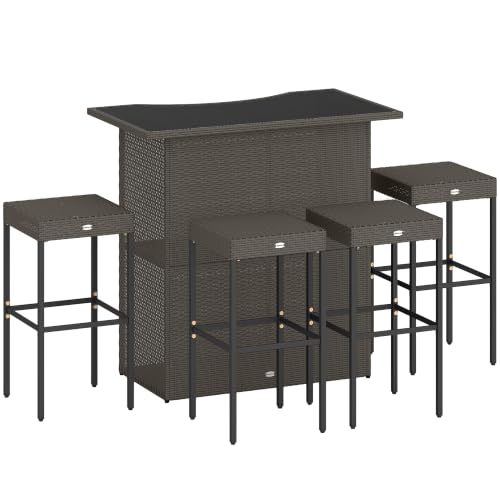

As an Amazon Associate we earn from qualifying purchases at no extra cost to you. Ratings are shown as listed on Amazon.
Best outdoor bar furniture sets by patio situation
Best for a small balcony: a two-seat counter-height set
A narrow two-seat set is the practical choice when every inch matters. Look for a table no deeper than 30 inches, stackable or foldable chairs, and a tabletop with a built-in umbrella opening only if the balcony rules and overhead clearance allow one. Aluminum is usually preferable to steel in this category because it is lighter and does not rely on a coating to prevent structural rust.
Avoid wide arms on the chairs: they can prevent two seats from fitting beneath a compact table. Sling or quick-dry fabric seats also reduce the need for cushions that must be stored indoors.
Best all-purpose choice: a four-seat counter set
For most patios, the four-seat counter set is the best compromise. A 48- to 60-inch table provides enough room for drinks, small plates, and a serving tray without taking over the outdoor dining area. Choose counter height, around 34 to 36 inches, if the set will also be used for casual meals. It is easier to enter and exit than bar height and works with a wider range of seating.
The most useful configuration has two stools or chairs on each long side rather than fixed seats attached to the table. Separate seating is easier to replace, rearrange, and protect during storms. A lower shelf is helpful for trays, but leave room for airflow and avoid using it as a permanent storage area in wet climates.
Best for frequent entertaining: a six-seat set
A six-seat set makes sense when outdoor gatherings are regular rather than occasional. A 60- to 72-inch table is large enough for six people, but the total footprint can exceed 100 square feet once seating and circulation are included. Measure the usable area, not just the patio’s wall-to-wall dimensions.
For frequent use, prioritize a rigid aluminum frame, a replaceable tabletop, and chairs with removable cushions. An integrated foot rail improves comfort at bar height, while adjustable leveling feet reduce rocking on pavers or slightly uneven concrete. If the table includes a fire feature, check the required clearance from walls, overhead structures, and combustible furniture before purchasing.
Best for drinks and outdoor cooking: a bar cabinet set
A cabinet-style bar set is worth the extra cost when it replaces several separate storage items. Look for adjustable shelves, doors that seal reasonably well, corrosion-resistant hinges, and a work surface at least 24 inches deep. Ventilated storage is preferable for accessories and glassware; tightly sealed compartments can trap moisture after rain.
These sets typically cost more than open tables, with general market pricing often ranging from about $500 to more than $2,000 depending on construction, countertop material, and included seating. Do not assume that a cabinet labeled “outdoor” is waterproof. Store paper goods, electronics, and fabrics elsewhere unless the manufacturer specifically rates the compartment for weather exposure.
Material head-to-head: what lasts outdoors?
- Powder-coated aluminum: Lightweight, rust-resistant, and easy to move. It is one of the safest choices for humid or coastal conditions, although thin frames can dent and dark finishes become hot in direct sun.
- Steel: Strong and often less expensive, but scratches and exposed fasteners can begin to rust. Inspect welds, undersides, and bolt heads rather than judging only the visible finish.
- Teak and other outdoor hardwoods: Attractive and stable when properly maintained. Teak can weather to silver-gray; oil is optional for appearance, not a requirement for basic outdoor use.
- HDPE lumber and resin: Low-maintenance and resistant to moisture. It is heavier than many metal sets, which helps in windy locations, but it may cost more and can expand slightly with temperature changes.
- Wicker: Choose synthetic resin wicker over an aluminum frame. Natural wicker is generally unsuitable for unprotected outdoor exposure, and cheap synthetic strands can split after prolonged ultraviolet exposure.
- Ceramic, stone, and glass tops: Attractive but heavier and more vulnerable to chips, cracks, or thermal shock. A tempered glass top should have protected edges and a secure frame.
Decision matrix for choosing the right set
| Your situation | Recommended format | Priority features | What to avoid |
|---|---|---|---|
| Budget-conscious, occasional use | Two- or four-seat aluminum set | Replaceable hardware, stackable seating, washable surfaces | Complex fire features and nonreplaceable cushions |
| Small patio or balcony | Two-seat folding or nesting set | Under-30-inch depth, slim chair arms, low storage needs | Fixed stools and deep cabinet doors |
| Weekly entertaining | Four- or six-seat counter set | Rigid frame, UV-resistant fabric, 24 inches of space per guest | Light frames that shift in wind |
| Wet or coastal climate | Aluminum or HDPE set | Stainless or coated hardware, drainage, removable cushions | Unprotected steel and porous untreated wood |
| Frequent outdoor cooking | Bar cabinet with worktop | Adjustable shelves, sealed or nonporous surface, ventilation | Particleboard interiors and fabric-lined cabinets |
Assembly requirements that affect the buying decision
Assembly is not only a time issue; it can determine whether a set remains stable. Tables with four legs and a separate frame usually require careful squaring before all bolts are tightened. Assemble on a level surface, hand-tighten every fastener first, then tighten in an alternating pattern. If the table rocks, do not compensate by over-tightening one corner; check whether the frame is sitting square.
Expect roughly 30 to 60 minutes for a small table and two chairs, one to two hours for a four-seat set, and several hours for a cabinet or six-seat arrangement. A second person is particularly useful for cabinet doors, large tabletops, and long crossbars. Keep spare washers and unused bolts until the set is fully assembled and inspected.
Ownership costs and maintenance realities
The first parts to wear are usually cushion fabric, plastic glides, hardware, and tabletop finishes—not the main frame. Before buying, confirm that replacement cushions, feet, slats, and fasteners are available separately. A set with a lower purchase price can become expensive if a single damaged chair requires replacing the entire group.
For routine care, brush away grit weekly, wash nonporous surfaces with mild soap and water, and dry cushions completely before storage. Do not use abrasive pads on powder coating or bleach on colored fabric unless the care instructions specifically permit it. Lubricate hinges with a product suitable for outdoor hardware, and inspect screws at the start and end of the season.
Use fitted covers only when the furniture is dry and the cover allows ventilation. A fully sealed cover over damp cushions can encourage mildew. In high-wind areas, stackable seating should still be secured, while lightweight tables may need an approved anchoring method.
Final recommendation
Choose a two-seat aluminum set for a compact balcony, a four-seat counter-height set for the best overall value, a six-seat aluminum or HDPE arrangement for regular entertaining, and a cabinet-style bar set when storage is as important as seating. Whatever the format, measure the complete operating footprint, favor corrosion-resistant hardware and replaceable soft parts, and select counter height unless you specifically prefer the taller feel of a bar-height table.





Write Your Review
No reviews yet. Be the first to share your experience!