

Key takeaways
- Small balcony or compact patio: Use a 36- to 48-inch-wide folding bar, slim console, or wall-adjacent serving surface with two stools.
- Medium patio: A 60-inch bar with three or four stools gives useful serving space without becoming the room’s main obstacle.
- Large entertaining area: Choose a 72- to 84-inch bar, separate storage cabinet, and six stools, or create two smaller serving stations for better traffic flow.
Best Outdoor Bar Furniture for Entertaining
The best outdoor bar furniture is a coordinated set of a weather-resistant bar or serving counter, correctly sized stools, and storage that fits your patio without blocking circulation.
For most shoppers, a 36-inch-high counter-height bar made from powder-coated aluminum, HDPE lumber, or well-maintained hardwood is the most flexible choice. Add stools with a 24- to 26-inch seat height, then choose a cabinet or serving cart according to how often you entertain and whether drinks will be stored outdoors.
Our top picks

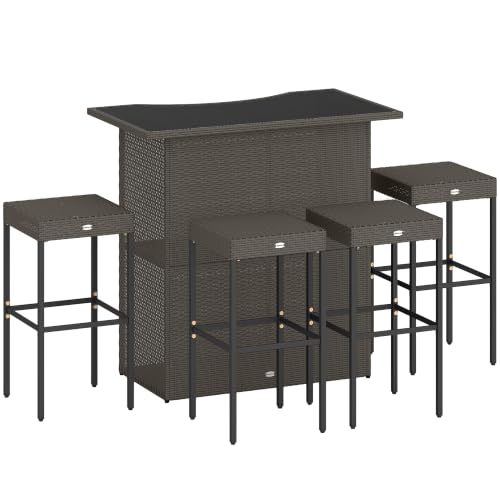

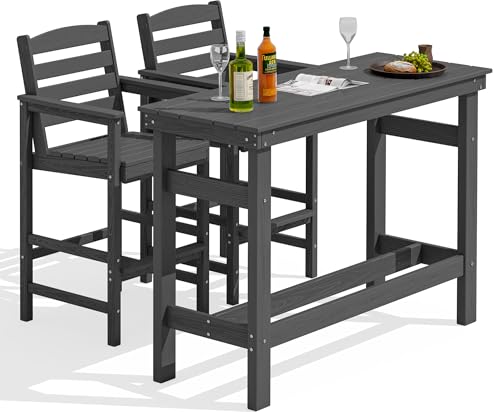
As an Amazon Associate we earn from qualifying purchases at no extra cost to you. Ratings are shown as listed on Amazon.
Start with the patio, not the furniture set
Outdoor bars need more clearance than their listed width suggests. People must sit, stand, pull out stools, and walk behind them. Measure the available area, including the depth of any roof overhang, grill, planter, railing, and door swing.
- Small balcony or compact patio: Use a 36- to 48-inch-wide folding bar, slim console, or wall-adjacent serving surface with two stools.
- Medium patio: A 60-inch bar with three or four stools gives useful serving space without becoming the room’s main obstacle.
- Large entertaining area: Choose a 72- to 84-inch bar, separate storage cabinet, and six stools, or create two smaller serving stations for better traffic flow.
Allow at least 36 inches behind seated guests for a normal walkway. If people will regularly pass while someone is sitting, 42 to 48 inches is more comfortable. A bar that is 24 inches deep may need roughly 60 inches of total room depth: 24 inches for the counter, about 18 inches for the stool and sitter, and at least 18 inches for movement.
Counter height, stool height, and usable comfort
“Bar height” is not a single standard. Many outdoor products are actually counter height, which is easier to use for meals and mixed-age gatherings.
| Furniture type | Typical surface height | Matching seat height | Best use | Practical clearance |
|---|---|---|---|---|
| Dining-height table | 28-30 in | 17-19 in | Full meals and everyday use | 9-12 in between seat and underside |
| Counter-height bar | 34-36 in | 24-26 in | Flexible entertaining and casual meals | 9-11 in between seat and underside |
| Bar-height table | 40-42 in | 28-30 in | Standing drinks and adult gatherings | 9-12 in between seat and underside |
For a 60-inch bar, plan on three stools if each stool is about 18 inches wide and you want 3 to 4 inches between seats. Four narrow stools can fit, but guests will have less elbow room. If stools have arms, measure their outside width rather than relying on the seat width.
Which material is best for your maintenance tolerance?
Powder-coated aluminum
Aluminum is a strong all-purpose choice for damp climates and shoppers who want low weight. A properly finished frame will not rust like bare steel, and it is easy to move when rearranging a patio. The weak points are scratches, loose fasteners, and low-quality welds. Choose thicker-looking frames, capped feet, stainless or corrosion-resistant hardware, and replaceable glides.
HDPE outdoor lumber
High-density polyethylene lumber resists moisture, insects, and peeling paint. It is useful for permanent bars and cabinets because it does not require staining. The tradeoff is weight: a solid piece can be difficult to move, and dark colors may become hot in direct sun. Look for UV-resistant material and hardware designed for outdoor exposure.
Teak and other hardwoods
Teak offers an attractive natural finish and good outdoor performance when constructed and maintained well. It can weather to silver-gray if left untreated, or retain more of its original color with periodic cleaning and a suitable outdoor finish. Avoid applying indoor furniture polish or sealing damp wood, which can trap moisture and encourage discoloration.
Steel and wrought iron
Steel can provide excellent stability for a windy patio, but its coating is crucial. Inspect chips and exposed edges promptly, especially around footrests and joints. A rust spot is easier to manage before it spreads beneath the finish. Wrought iron also tends to be heavier and may require cushions for comfortable extended seating.
Wicker and resin weave
Synthetic wicker can be comfortable and visually soft, but quality varies. It is most suitable when the frame beneath it is aluminum and the weave is UV-resistant polyethylene. Natural wicker is generally better protected from prolonged rain and intense sun than left fully exposed. Check whether the design has an open weave that allows water to drain quickly.
Match the configuration to how you entertain
| Your situation | Recommended configuration | Why it works |
|---|---|---|
| Small space, occasional use | 36-48 in folding or slim bar, 2 stackable stools, rolling cart | Stores compactly and keeps the main walkway clear |
| Weekly drinks, limited storage | 60 in counter-height bar, 3 stools, 30-36 in cabinet | Enough seating and enclosed space for glassware and tools |
| Frequent dinner parties | 72-84 in fixed bar, 5-6 stools, separate serving surface | Separates preparation from seating and reduces crowding |
| Windy or exposed patio | Heavy HDPE, hardwood, or steel base with anchored storage | More stable than lightweight furniture and less likely to shift |
| Minimal maintenance | Powder-coated aluminum or HDPE with removable cushions | No routine staining and simple soap-and-water cleaning |
Bars, cabinets, and serving surfaces: what each one should do
A bar should provide the main guest-facing surface, but it does not need to hold everything. Separate functions make a patio easier to use.
- Bar or counter: Prioritize a stable top, a comfortable footrest, rounded or softened edges, and enough overhang for knees. A 10- to 12-inch overhang is useful for seating; confirm that the supports do not interfere with legs.
- Storage cabinet: Choose adjustable shelves, ventilation, water-shedding doors, and feet that keep the base off standing water. Avoid storing temperature-sensitive food, unsealed paper goods, or electrical appliances in an exposed cabinet.
- Serving cart: Look for two locking casters, a raised lip, a handle that does not collide with chair backs, and a surface at least 18 inches wide. A cart is often more useful than a second bar because it can move between the kitchen, grill, and seating area.
- Portable serving surface: A nesting table or console is appropriate for small patios. Confirm its weight capacity before placing a loaded cooler or beverage dispenser on it.
A simple capacity calculation before you buy
Estimate your serving needs instead of choosing storage by appearance. Suppose six guests each receive two drinks during an evening. That is 12 drink servings. Add 25% for spills, refills, or extra guests: 12 × 1.25 = 15 servings.
If each chilled bottle or can occupies approximately 0.02 cubic feet, the drinks alone need about 0.3 cubic feet of usable cooler space. Ice, mixers, and a serving tray require additional room, so a cabinet shelf or cooler compartment of at least 0.75 to 1 cubic foot is a more practical target. Measure the interior, not the cabinet’s exterior dimensions, and account for shelves, hinges, and drainage.
Durability and ownership realities
The first parts to wear are often not the tabletop. Fasteners loosen, plastic foot caps crack, stool glides disappear, and cushion fabric fades or develops mildew when it stays damp. Inspect these parts before buying and favor designs with replaceable components.
Keep cushions upright or indoors when rain is expected. Wipe sugary drinks quickly because they attract insects and leave sticky residue. Rinse salt or chlorinated pool water from metal frames with fresh water, then dry the joints. Do not use abrasive pads on powder coating, and avoid chlorine bleach on ordinary outdoor fabrics unless the care label specifically permits it.
At the start and end of the season, tighten accessible screws, check welds and joints, clear debris from cabinet bottoms, and inspect for rust bubbles or cracked weave. Use furniture covers only when the furniture is clean and fully dry; a tightly fitted cover over damp cushions can trap moisture.
How to assemble a balanced set
- Measure the footprint and traffic lanes. Mark the proposed bar and stool positions with painter’s tape for a day.
- Select the surface height. Choose counter height for flexible daily use; choose bar height when standing drinks and a taller visual profile matter more.
- Buy stools by seat height and width. Leave at least 3 inches between stools and check arm clearance under the counter.
- Add storage based on workflow. Put glassware and napkins in a nearby cabinet, while keeping ice and frequently moved items on a cart.
- Test the maintenance plan. Confirm where cushions, covers, and removable trays will be stored before adding more furniture.
For most patios, a counter-height aluminum or HDPE bar, three weather-resistant stools, and one mobile serving cart offer the best balance of capacity, flexibility, and upkeep. If the patio is large and entertaining is frequent, upgrade by adding a separate cabinet and longer serving surface rather than simply squeezing more stools around one bar.





Write Your Review
No reviews yet. Be the first to share your experience!