

Key takeaways
- 8–12 inches: Suitable for lettuce, radishes, herbs, strawberries, and many shallow-rooted vegetables. It is the most economical height for a bed placed directly on soil.
- 12–18 inches: The best all-purpose range for beginners. It accommodates tomatoes, beans, peppers, chard, and most annual vegetables while improving drainage and reducing stooping.
- 18–24 inches: A practical choice over poor ground, on patios, or for crops needing deeper root space. It uses substantially more soil, so budget accordingly.
- 30–36 inches: Best for elevated planters and accessibility. These beds are convenient but more vulnerable to drying out and usually need strong legs, bracing, and a smaller planting width.
The best raised garden beds for easy growing are 12–24 inches tall, wide enough to support productive root zones without requiring a reach across the middle, and fitted with open-bottom drainage or a deliberately designed container base.
Our top picks

As an Amazon Associate we earn from qualifying purchases at no extra cost to you. Ratings are shown as listed on Amazon.
Quick picks by growing situation
| Situation | Best bed type | Recommended size | Why it works |
|---|---|---|---|
| Small balcony | Elevated planter or compact metal trough | 24–36 in long, 10–18 in deep | Fits tight spaces while keeping weight and reach manageable |
| Patio herb garden | Container-style raised bed with drainage holes | 24–48 in long, 12–18 in wide | Good for herbs, salad greens, and compact peppers |
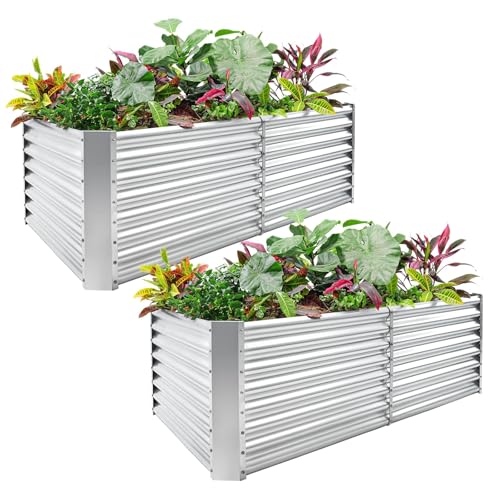
| First vegetable garden | Open-bottom cedar or galvanized-steel bed | 4 × 4 ft, 12–18 in high | Simple layout, moderate soil volume, and easy access |
| Older gardener or limited mobility | Waist-high elevated bed | 30–36 in high, no more than 24 in wide | Reduces bending and keeps the center within arm’s reach |
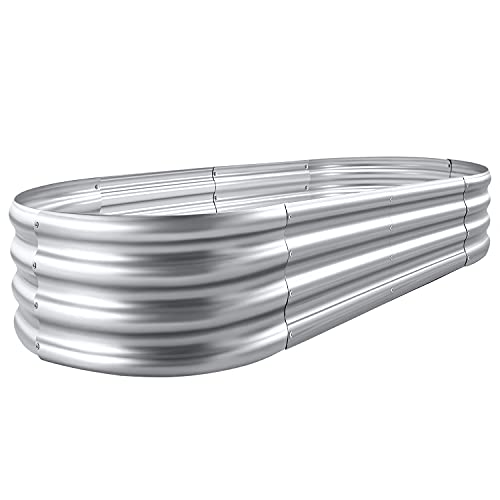
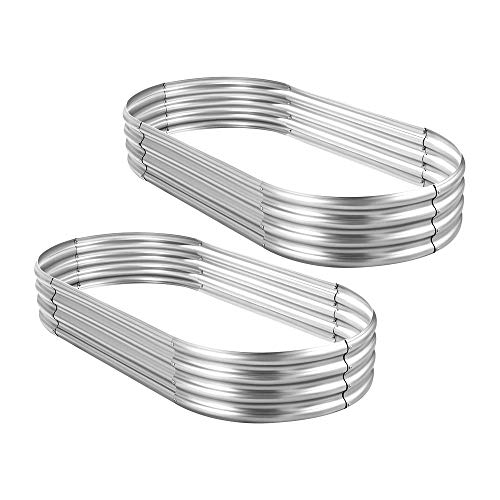
| Long-term yard installation | Modular galvanized steel or thick cedar bed | 2 × 8 ft or 4 × 8 ft, 17–24 in high | Provides useful volume and can be expanded later |
How tall should a raised garden bed be?
Height affects cost, soil volume, drainage, root space, and comfort. A 6–8-inch bed is mainly a soil-improvement frame: it works over reasonably good ground but is less useful over compacted clay, paving, or contaminated soil.
- 8–12 inches: Suitable for lettuce, radishes, herbs, strawberries, and many shallow-rooted vegetables. It is the most economical height for a bed placed directly on soil.
- 12–18 inches: The best all-purpose range for beginners. It accommodates tomatoes, beans, peppers, chard, and most annual vegetables while improving drainage and reducing stooping.
- 18–24 inches: A practical choice over poor ground, on patios, or for crops needing deeper root space. It uses substantially more soil, so budget accordingly.
- 30–36 inches: Best for elevated planters and accessibility. These beds are convenient but more vulnerable to drying out and usually need strong legs, bracing, and a smaller planting width.
Height is not a substitute for depth in every crop. Carrots, parsnips, large tomatoes, and some perennial herbs benefit from roughly 18 inches of usable soil. A shallow bed can still grow them if roots can continue into the ground, but a solid-bottom planter cannot.
Choose dimensions around reach, not maximum capacity
A 4 × 4-foot bed is popular because it offers 16 square feet of growing area, but it is awkward if you can only approach from one side. For a bed accessible from all four sides, 4 feet is generally the maximum comfortable width. If it sits against a wall or railing, limit the width to about 2 feet.
Length is mostly a layout and budget decision. A 2 × 8-foot bed has the same 16 square feet as a 4 × 4-foot bed but is easier to divide into crop rows and reach from both long sides. Narrow 2 × 6-foot beds also work well on patios and in side yards.
Allow at least 24 inches for a walking path; 30–36 inches is more comfortable when moving a wheelbarrow or carrying a watering can. For a balcony, check the building’s permitted load before adding a large bed. Wet soil can weigh several times more than the dry mix sold in bags.
Materials compared: what lasts and what wears first?
| Material | Typical service life | Main strengths | Ownership drawbacks | Typical market range |
|---|---|---|---|---|
| Untreated cedar | 5–10 years | Natural appearance, easy to cut and repair | Eventually softens at ground contact and corners | $80–$300 |
| Pressure-treated wood rated for garden use | 10–20 years | Lower cost and good structural strength | Heavier; inspect for splitting and fastener corrosion | $70–$250 |
| Galvanized steel | 10–30 years | Light for its strength, resists rot, modular options | Edges may be sharp; dark finishes can heat up | $100–$500 |
| Recycled plastic or composite | 10–25 years | Won’t rot, low maintenance, often lightweight | Can bow when overfilled and may fade or become brittle | $120–$600 |
| Masonry or stone | 25+ years | Permanent, stable, attractive | Expensive, heavy, and difficult to relocate | $300–$1,500+ |
For wood, the bottom edges, corners, and screw holes usually fail before the broad panels. Keep timber off constantly wet ground where possible, use exterior-rated hardware, and avoid sealing the inside with a product not intended for garden use. For steel, inspect cut edges, fasteners, and scratches where corrosion can begin. Plastic beds should not be dragged when full.
Drainage: the difference between a garden bed and a waterlogged box
An open-bottom bed placed on soil normally drains through the ground. Remove turf and loosen compacted soil beneath it rather than lining the base with plastic. Landscape fabric can help separate soil from a weedy surface, but it should not block drainage.
Container beds on patios need drainage holes distributed across the base, not just one small outlet. Raise the planter slightly on feet or blocks so water can escape. Do not create a thick gravel layer beneath the soil: it reduces planting volume and does not solve poor drainage. A quality growing mix with compost, structural material such as bark or coarse fiber, and adequate air space is more useful.
Drainage also means managing runoff. Put a tray beneath small balcony planters, protect the surface below, and confirm that excess water will not stain walls or drip onto a neighbor’s space.
Best layouts for patios, balconies, and yards
Balcony layout
Use one or two narrow beds rather than a single deep, wide box. Place taller crops toward the railing or back wall so they do not shade herbs and greens. A 30 × 12-inch planter may hold about 2.5 cubic feet of mix at 12 inches deep. That is roughly 19 gallons, before allowing for settling, so check the balcony’s load limit and avoid placing the heaviest container at an unsupported outer edge.
Patio layout
Arrange two 2 × 4-foot beds in an L shape or use one 2 × 6-foot trough along a sunny wall. Leave a service gap behind the bed if you need to clean the wall or inspect drainage. Choose wheels only for genuinely movable planters; casters add cost and can make a tall, soil-filled bed unstable.
Yard layout
Start with two 2 × 8-foot beds separated by a 30-inch path. This gives 32 square feet of growing area while keeping every row reachable. Dedicate one bed to frequently harvested crops such as salad greens and herbs, and the other to fruiting crops that need support. Add a trellis along the north side, where it is less likely to shade shorter plants in the northern hemisphere.
Assembly and setup: a practical sequence
- Measure the site and check sunlight. Most vegetables perform best with around six or more hours of direct sun, though leafy greens tolerate less.
- Assemble on level ground. A twisted frame puts stress on corners and makes water pool in one end.
- Protect accessible edges. Use capped screws, smooth metal edging, or a rim designed for sitting and leaning.
- Prepare the base. Remove sod, loosen compacted soil, and install fabric only when separation from the surface is needed.
- Fill in stages. Add a few inches at a time and water lightly so voids settle without washing soil from the frame.
- Install supports before planting. Trellises, cages, and hoops are harder to add once roots and stems occupy the bed.
- Mulch the surface. A 1–2-inch layer of suitable organic mulch reduces evaporation and soil splash, but keep it away from plant stems.
As a sizing example, a 4 × 4-foot bed filled 12 inches deep holds 16 cubic feet of mix. Because soil settles, buy about 17–18 cubic feet rather than exactly 16. At a general retail range of $5–$10 per cubic foot for bagged growing mix, the fill alone may cost roughly $85–$180. Buying bulk mix can reduce the price when you need several beds.
Which raised bed is the best value?
Choose an 8–12-inch untreated cedar bed for the lowest initial cost and direct-to-ground growing. Choose galvanized steel when you want a lighter, longer-lived frame with little seasonal maintenance. Choose an elevated planter when bending is the main obstacle, but keep it narrow enough to reach the center. For a permanent landscape feature, masonry is durable but rarely the economical first garden.
Whichever material you choose, prioritize safe edges, replaceable hardware, drainage access, and dimensions you can comfortably maintain. The best raised garden beds are not necessarily the tallest or largest; they are the ones that let you reach every plant, control water, and keep the yearly maintenance within your available time.



Write Your Review
No reviews yet. Be the first to share your experience!