

Key takeaways
- Suction control: Usually the best of the three categories, with separate stimulation and expression modes on many models.
- Milk capacity: Commonly 5 to 8 oz per bottle, although bottle markings are not laboratory-precise.
- Noise: Often moderate rather than silent; suitable for home and many office settings.
- Cleaning: Several valves, membranes, bottles, and breast shields need washing after use.
The best breast pumps for comfortable daily use are usually a quiet wearable for mobility, a double electric pump for efficient regular sessions, or a simple manual pump for occasional use; the right choice depends more on fit, suction control, cleaning, and frequency than on maximum suction.
Our top picks


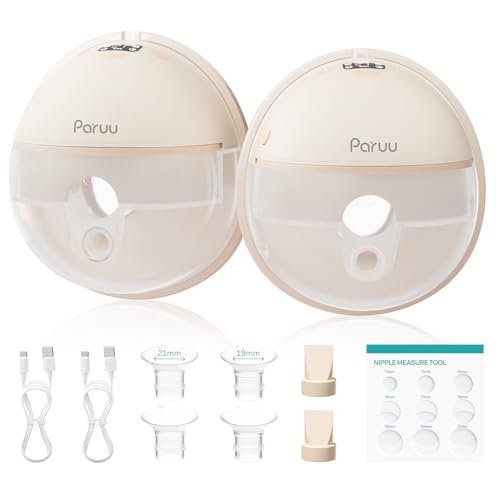

As an Amazon Associate we earn from qualifying purchases at no extra cost to you. Ratings are shown as listed on Amazon.
Quick picks by situation
| Situation | Best starting choice | Why it fits | Main compromise |
|---|---|---|---|
| Frequent pumping at home | Double electric pump | Fastest way to empty both breasts and usually offers the widest control range | Requires tubing, bottles, and a dedicated pumping space |
| Returning to work or commuting | Wearable electric pump | Hands-free, battery-powered, and discreet under many clothing styles | Smaller capacity and more parts to clean |
| Occasional relief or collecting let-down | Manual silicone or lever pump | Low cost, quiet, lightweight, and quick to wash | Slower and more tiring for a full pumping schedule |
| Most control over suction | Traditional electric pump | Separate cycle and vacuum adjustments make it easier to find a comfortable rhythm | Less portable than a wearable |
| Limited budget | Manual pump or insurance-covered electric pump | Lower upfront cost, with electric options sometimes available through insurance | Coverage rules and included accessories vary |
Best breast pump types compared
Double electric pumps: best for frequent daily use
A traditional double electric pump remains the practical benchmark when pumping several times a day. Models such as the Spectra S1 Plus, Spectra S2 Plus, and Medela Pump in Style offer adjustable suction and cycling, allowing you to use a gentler setting at first and increase vacuum only while it remains comfortable.
Many double electric pumps use a closed-system design that helps keep milk from entering the tubing. Typical motor weights range from about 1.5 to 3 lb, and a session commonly takes 10 to 20 minutes, depending on the person and the pump settings. The Spectra S1 Plus includes a rechargeable battery; the Spectra S2 Plus is generally positioned as a plug-in model. A pump with a strong motor is not automatically more comfortable: flange fit and gradual settings matter more than the highest advertised vacuum.
- Suction control: Usually the best of the three categories, with separate stimulation and expression modes on many models.
- Milk capacity: Commonly 5 to 8 oz per bottle, although bottle markings are not laboratory-precise.
- Noise: Often moderate rather than silent; suitable for home and many office settings.
- Cleaning: Several valves, membranes, bottles, and breast shields need washing after use.
Wearable electric pumps: best for portability
Wearable pumps, including products such as Willow Go and Elvie Stride, place the collection container inside the bra or connect a compact motor through tubing. They can be useful for commuting, caring for another child, or working away from a pumping room. Some wearables hold roughly 5 to 7 oz per side, while slimmer designs may hold less.
The important distinction is between “hands-free” and “invisible.” A wearable still adds weight to the breast, and the motor, bra pressure, body position, and breast shape can affect comfort and output. A wearable is often most useful as a convenience pump rather than the only pump for someone who needs frequent, highly efficient sessions.
- Suction control: Multiple levels and programs are common, but adjustment may be through buttons or an app rather than a large motor dial.
- Milk capacity: Typically 4 to 7 oz per side; check the maximum fill line before a long commute.
- Noise: Usually quieter than older portable pumps, but not completely silent. Clothing can also make motor sounds more noticeable.
- Cleaning: Compact parts can be fiddly, and a small seal or valve may be easy to misplace.
- Portability: Excellent, but battery charging becomes part of the daily routine.
Manual pumps: best for simplicity and occasional use
A manual pump can be a silicone collector that uses gentle suction or a lever-operated pump that actively expresses milk. Haakaa is a familiar example of the first type, while Medela Harmony represents the lever style. Manual pumps are quiet, inexpensive compared with electric models, and easy to keep in a diaper bag.
They are particularly useful for collecting milk from the opposite breast during feeding or for an occasional session. For exclusive pumping or many sessions every day, repeatedly operating a lever can become tiring, and a silicone collector may not provide enough active suction for every user.
- Suction control: Controlled by hand pressure and placement rather than a digital setting.
- Milk capacity: Commonly about 3 to 5 oz, depending on the design.
- Noise: Nearly silent.
- Cleaning: Usually the simplest, although valves and narrow openings still need thorough washing.
Head-to-head specifications
The figures below are typical ranges or representative published specifications, not guarantees of personal output. Actual capacity, battery runtime, and comfort vary by model and user.
| Feature | Double electric | Wearable electric | Manual |
|---|---|---|---|
| Typical weight | 1.5–3 lb motor and accessories | 0.5–1.2 lb per assembled side | 3–8 oz |
| Typical collection capacity | 5–8 oz per bottle | 4–7 oz per side | 3–5 oz |
| Battery or power | Plug-in or approximately 2–3 hours of battery use | Approximately 1.5–3 hours per charge | No battery |
| Usual session range | 10–20 minutes | 15–30 minutes | 10–25 minutes |
| Flange sizes included | Often 24 mm, sometimes with 28 mm | Often one standard size plus inserts | Usually one standard shield |
| Parts to wash after use | Approximately 5–9 milk-contact pieces | Approximately 5–8 pieces per side | Approximately 3–6 pieces |
Flange sizing is the comfort decision most shoppers miss
The flange tunnel should surround the nipple without pulling a large amount of areola inward. A flange that is too small may rub; one that is too large can draw in excess tissue and make suction feel unnecessarily harsh. Breast size or bra size does not determine flange size.
Measure the nipple base, not the areola, with a ruler in millimeters. As a starting point, some people use a flange about 2 to 4 mm larger than the measured nipple diameter, but the correct fit depends on swelling, elasticity, and the pump. For example, a 17 mm measurement might lead you to compare 19 mm, 21 mm, and 24 mm options rather than automatically choosing the common 24 mm shield.
Check the fit during pumping: the nipple should move freely in the tunnel, the breast should not be pulled deeply into it, and the nipple should not turn white or rub persistently. Reassess if discomfort continues, and consult a lactation professional or other qualified clinician for persistent pain, injury, or feeding concerns.
Cleaning, durability, and ownership costs
The parts that usually wear first are duckbill valves, membranes, silicone seals, and tubing that becomes cloudy or develops condensation. Keep spare valves and membranes available if you pump daily. A weak valve can reduce performance and may look like a motor problem.
- Disassemble every milk-contact part immediately after a session.
- Rinse away milk residue with cool or lukewarm water before washing with dish soap.
- Use a clean brush dedicated to pump parts, then air-dry pieces completely on a clean rack.
- Keep motor housings and electrical connections dry.
- Inspect seals and valves regularly; replace them according to the manufacturer’s schedule or sooner if suction changes.
For a simple cost-per-use comparison, suppose a $250 electric pump is used twice daily for one year: $250 divided by 730 sessions is about 34 cents per session before replacement parts. A $35 manual pump used twice weekly for a year costs about 34 cents per use as well, but the electric pump buys speed and reduced hand effort. Add replacement membranes, storage bags, a correctly sized flange, and possibly a second charging cable when comparing total ownership cost.
Insurance and return-policy checks
In the United States, many health plans cover a breast pump, but the model, upgrade fee, supplier, timing, and replacement-parts allowance can differ. Contact the insurer before buying and ask:
- Which pump types and suppliers are covered?
- Is a wearable covered fully, or only as an upgrade from a standard electric pump?
- Are spare breast shields, valves, membranes, bottles, and tubing included?
- Can you choose a double electric pump instead of a single pump?
- What is the return or exchange policy if the flange fit is wrong?
For a first pump, a covered double electric model plus a low-cost manual pump is often a more flexible combination than paying extra for a wearable immediately. Choose a wearable when mobility is the priority, a traditional electric pump when regular output and adjustability matter most, and a manual pump when you value quiet, low-maintenance occasional use.



Write Your Review
No reviews yet. Be the first to share your experience!