

Key takeaways
- Cover fabric: Kneading and claw catching usually damage fabric before the foam loses resilience. Inspect for pulled loops and loose threads.
- Foam and fiber fill: Low-density fill can flatten in the center, especially when one cat uses the same spot every day. A reversible cushion can extend its useful life.
- Zippers: Fur and litter can jam a zipper. Vacuum the track before washing and do not force it around an overstuffed insert.
- Non-slip backing: Rubberized dots may crack or shed after repeated hot drying. Air-dry according to the care label when possible.
- Window hardware: Suction cups can lose grip from dust, temperature changes, or aging. Recheck them regularly and remove the perch if any attachment looks damaged.
The best cat beds for small spaces are compact, washable beds with a footprint of roughly 16–20 inches, a low-to-medium bolster, and enough structure to stay put without making a corner look crowded.
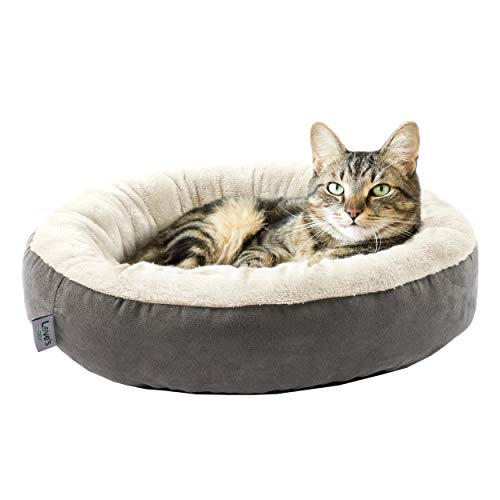
For most apartments, a washable bolster bed is the safest all-round choice: it gives a cat a defined place to curl up, fits beside furniture, and is easier to clean than a fully enclosed cave. Choose a flat mat for the smallest floor area, a window perch when vertical space is available, or a covered cave only if your cat already prefers enclosed sleeping spots.
Our top picks



As an Amazon Associate we earn from qualifying purchases at no extra cost to you. Ratings are shown as listed on Amazon.
Quick picks by apartment situation
| Situation | Best bed type | Target footprint | Ideal bolster or wall height | Typical market range |
|---|---|---|---|---|
| Tight corner beside a sofa | Low-profile rectangular mat | 16–18 × 20–24 in | 0–2 in | $15–$35 |
| Cat likes curling against an edge | Small bolster bed | 17–20 in diameter | 3–5 in | $20–$50 |
| Limited floor space but a sunny window | Window hammock or perch | 16–20 in wide | 1–3 in front lip | $25–$60 |
| Cat seeks privacy | Collapsible covered cave | 16–19 × 16–19 in | 5–9 in entrance rim | $30–$75 |
| Senior or less agile cat | Orthopedic-style flat bed | 18–22 × 22–28 in | 1–3 in entry edge | $35–$90 |
These are useful buying targets rather than universal specifications. Actual dimensions vary, and a bed’s exterior size can be several inches larger than its sleeping surface.
What matters most in a small living room
1. Footprint and usable sleeping area
Measure the space the bed will occupy, including clearance for a cat to approach it. A 20-inch round bed may fit in a corner, but it can block a cabinet door or narrow a walkway. Rectangular beds often use awkward spaces more efficiently than round beds, especially beside a bookcase or under a side table.
Do not size by the outer edge alone. A thick bolster can reduce the interior by 3–5 inches in every direction. For a cat that weighs 10 pounds and curls tightly, an interior sleeping area around 14–16 inches wide may be sufficient. A long-bodied cat or one that sleeps stretched out will usually need at least 18–22 inches of usable length.
2. Washable covers, not just washable fabric
A removable, machine-washable cover is more practical than a bed advertised as “easy to clean” when the cushion itself cannot be separated. Look for a zipper that runs along two sides, a cover that can be turned inside out, and care instructions that permit regular washing.
Microfiber, polyester fleece, and quilted polyester are common apartment-friendly choices because they dry relatively quickly. Plush fabric feels comfortable but can trap fur and take longer to dry. Faux fur is attractive for some cats, yet it can mat or retain litter dust. A tightly woven cover is usually easier to vacuum between washes.
Check whether the insert is washable, spot-clean only, or permanently sealed. If only the cover can go in the machine, place a thin washable blanket over the sleeping surface. That creates a replaceable barrier for hair, tracked litter, and occasional accidents.
3. Bolster height and entry height
Bolsters provide a headrest and help a bed hold its shape, but taller is not automatically better. A 3–5-inch bolster is a good compromise for many cats: it creates a nest-like edge without visually dominating a small room. Beds with 6–9-inch walls feel more enclosed and can suit cats that lean against something while sleeping, but they occupy more visual volume.
Pay particular attention to the entrance. A high surrounding wall with one low opening is easier to enter than a uniformly tall bed. For a kitten, older cat, or cat that dislikes stepping over objects, aim for an entry edge of about 1–3 inches. If the bed will sit under a desk, measure the lowest point of the desktop or chair clearance before choosing a raised design.
Head-to-head: the four most useful compact designs
Low-profile mat versus bolster bed
A mat wins when every inch matters. It slides under a coffee table, has no edge to catch on, and is usually the simplest design to wash. Its weakness is that it can bunch, slide, or look like a loose blanket unless it has a non-slip underside.
A bolster bed offers better edge support and tends to look more intentional in a living room. It also stays more contained when a cat kneads or circles before settling. The trade-off is a larger exterior footprint and more seams where hair and debris collect.
Window perch versus floor bed
A window perch preserves floor space and uses an area many cats already seek. Suction-cup models need a smooth, clean window and periodic inspection; clamp-style perches require a compatible sill and enough structural support. A removable cover is especially important because window areas collect dust and shed fur.
A floor bed is more flexible: it can move to a quiet corner, bedroom, or travel setup without reinstallation. It is the better choice when your cat changes preferred sleeping locations or when the window receives drafts, intense sunlight, or frequent condensation.
Open bed versus covered cave
An open bed is easier to clean and lets you see whether it is occupied. A cave gives privacy and can make a busy studio apartment feel calmer for a cat that hides under furniture. However, the entrance and roof reduce airflow and usable space, and some cats simply refuse enclosed beds.
If you are unsure, buy an open bed with a flexible cover or folded blanket option rather than committing to a rigid cave. A cat’s existing sleeping habits are a better predictor than appearance: cats that choose boxes, closets, or covered carriers may appreciate a cave, while cats that sleep in open areas generally prefer a mat or bolster bed.
Decision matrix for choosing without clutter
| Your priority | Choose | Avoid | Reason |
|---|---|---|---|
| Lowest cost and easiest upkeep | Washable fleece or quilted mat | Multi-layer cave with fixed lining | Fewer seams and simpler laundering |
| Cat sheds heavily | Tightly woven removable cover | Long shag or loosely woven plush | Hair is easier to vacuum and release in the wash |
| Small studio with no spare floor area | Window perch or 16–18-inch mat | Oversized round bed | Uses less floor and walkway space |
| Cat kneads and rearranges bedding | Non-slip base and reinforced seams | Loose, lightweight cushion | Reduces bunching and premature seam stress |
| Cat is cautious with new furniture | Open bed with familiar blanket | Deep enclosed cave | Allows an easy exit and familiar scent |
How to calculate the right size
Measure your cat from nose to the base of the tail while it is relaxed, then add 4–6 inches for a comfortable stretched-out bed. For example, if that measurement is 16 inches, look for an interior length of approximately 20–22 inches. For a round bed, use the cat’s shoulder-to-hip body width and add at least 4 inches to the interior diameter.
Then add the wall thickness to estimate the external footprint. A bed with a 20-inch interior and 3-inch bolsters may require about 26 inches of floor width. This simple calculation prevents a common mistake: buying a bed that appears to fit by its listed sleeping area but overwhelms the intended corner once the bolsters are included.
Ownership realities: what wears out first
- Cover fabric: Kneading and claw catching usually damage fabric before the foam loses resilience. Inspect for pulled loops and loose threads.
- Foam and fiber fill: Low-density fill can flatten in the center, especially when one cat uses the same spot every day. A reversible cushion can extend its useful life.
- Zippers: Fur and litter can jam a zipper. Vacuum the track before washing and do not force it around an overstuffed insert.
- Non-slip backing: Rubberized dots may crack or shed after repeated hot drying. Air-dry according to the care label when possible.
- Window hardware: Suction cups can lose grip from dust, temperature changes, or aging. Recheck them regularly and remove the perch if any attachment looks damaged.
Wash bedding before it develops a strong odor rather than waiting for visible dirt. Vacuum loose hair first, close the zipper, and use a fragrance-free detergent if your cat is sensitive to strong smells. Dry the cover completely before replacing the insert; damp padding can develop an unpleasant odor and lose its shape.
Common small-space buying mistakes
The most frequent mistake is choosing a bed for human décor rather than feline behavior. A sculptural bed with a tall wall may look tidy but remain unused if the cat prefers a clear view of the room. Another is placing the bed in a convenient corner that is also a high-traffic route. Cats often prefer a location with a wall or furniture behind them, but they still need an unobstructed exit.
Avoid putting a bed directly beside a litter box, food bowl, radiator, or drafty exterior door. In a compact apartment, a quiet corner near—but not immediately beside—a window or sofa is often a better compromise. If the cat ignores the bed, first move it to a familiar sleeping location and add a blanket carrying the household’s scent before replacing it with a new cover.
Bottom line
For most apartments, choose a 16–20-inch washable bolster bed with a 3–5-inch wall, a low entry, a non-slip base, and a removable cover. Pick a flat mat when the bed must disappear under furniture, a window perch when floor space is scarce, and a cave only when your cat already seeks enclosed resting places. The best cat beds are not necessarily the softest or largest; they are the ones whose usable sleeping area, cleaning routine, and footprint match both your cat’s habits and your available corner.



Write Your Review
No reviews yet. Be the first to share your experience!