

Key takeaways
- Best value for a typical two- or three-bedroom home: TP-Link Deco XE75.
- Best for homes with Ethernet between rooms: ASUS ZenWiFi XT9.
- Best for the least technical setup: eero Pro 7.
- Best affordable WiFi 7 upgrade: TP-Link Deco BE63.
- Best for very large homes and many simultaneous devices: Netgear Orbi 770.
- Best for Google Home households: Google Nest Wifi Pro.
The best mesh WiFi systems for most homes are the TP-Link Deco XE75 for value, the ASUS ZenWiFi XT9 for flexible wired-backhaul performance, and the eero Pro 7 for the simplest setup; larger or multi-gigabit homes should consider a WiFi 7 system such as the TP-Link Deco BE63 or Netgear Orbi 770.
A mesh system replaces one router with two or more coordinated nodes. The result is usually better coverage and easier roaming than adding random extenders, but the best choice depends on your floor plan, internet speed, Ethernet wiring, number of devices, and tolerance for subscriptions.
Our top picks


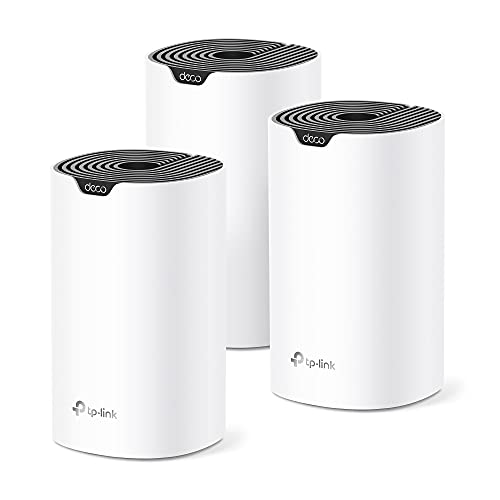

As an Amazon Associate we earn from qualifying purchases at no extra cost to you. Ratings are shown as listed on Amazon.
Best mesh WiFi systems by situation
- Best value for a typical two- or three-bedroom home: TP-Link Deco XE75.
- Best for homes with Ethernet between rooms: ASUS ZenWiFi XT9.
- Best for the least technical setup: eero Pro 7.
- Best affordable WiFi 7 upgrade: TP-Link Deco BE63.
- Best for very large homes and many simultaneous devices: Netgear Orbi 770.
- Best for Google Home households: Google Nest Wifi Pro.
Head-to-head comparison
| System | WiFi generation | Typical coverage claim for a two-pack | Ethernet ports per node | Backhaul and capacity highlights | Subscription position |
|---|---|---|---|---|---|
| TP-Link Deco XE75 | WiFi 6E | Up to about 5,500 sq ft | 3 × gigabit | Tri-band; dedicated 6 GHz band can carry backhaul | Core controls are generally free; HomeShield advanced features are optional |
| ASUS ZenWiFi XT9 | WiFi 6 | Up to about 5,700 sq ft | 2.5Gbps WAN/LAN plus gigabit ports | Tri-band; strong wired-backhaul options and detailed controls | No required security subscription for the main router feature set |
| eero Pro 7 | WiFi 7 | Varies by configuration and building materials | Multi-gigabit Ethernet ports | Automatic mesh optimization; designed for simple management | Basic service works without a plan; eero Plus adds security and management features |
| TP-Link Deco BE63 | WiFi 7 | Up to about 7,600 sq ft for a three-pack | 4 × 2.5Gbps | Multi-gigabit wired backhaul; MLO support; high client capacity | Core operation is available without a subscription; premium security is optional |
| Netgear Orbi 770 | WiFi 7 | Up to about 10,000 sq ft for a three-pack | Multi-gigabit ports, configuration dependent | Tri-band WiFi 7 with a high-capacity mesh design | Advanced security and parental tools may require Netgear Armor or a related plan |
| Google Nest Wifi Pro | WiFi 6E | Up to about 6,600 sq ft for a three-pack | 2 × gigabit per node | Tri-band; straightforward Google Home management | Basic controls are included; enhanced family and security features may be paid |
Coverage figures are manufacturer estimates measured under favorable conditions. Brick, concrete, foil-backed insulation, metal ductwork, neighboring networks, and multiple floors can reduce usable coverage considerably. A two-pack that covers a single-level 2,000-square-foot home may perform poorly in a narrow three-story house.
TP-Link Deco XE75: the sensible value choice
The Deco XE75 is a strong fit when you want tri-band performance without paying for the newest WiFi 7 hardware. Its 6 GHz band can provide a relatively clean wireless connection between nodes, which matters when you cannot run Ethernet. It is particularly attractive for homes with a fast connection, several streaming devices, and a few WiFi 6E-capable phones or laptops.
Its limitations are equally important: the Ethernet ports are gigabit, so it is not the best long-term choice for a multi-gigabit internet plan or a home server that needs faster local transfers. The 6 GHz signal also loses strength through walls faster than 5 GHz, so node placement is critical.
ASUS ZenWiFi XT9: best when you can wire the nodes
The XT9 is a practical choice for a larger home with Ethernet cabling. In wired-backhaul mode, the satellite does not need to use wireless airtime to communicate with the main router, leaving more capacity for phones, televisions, cameras, and computers. Its 2.5Gbps port also gives it more headroom than basic gigabit mesh kits.
ASUS provides more configuration depth than app-first systems: guest networks, VPN features, traffic controls, and detailed wireless settings are available without making the router dependent on a monthly plan. That flexibility is useful for technically confident owners, but the interface can feel busier than eero or Google Nest.
eero Pro 7: best for simple ownership
Choose the eero Pro 7 when the priority is a quick installation and consistent automatic management rather than extensive manual tuning. The app guides you through adding nodes, checks their connection quality, and handles many channel and roaming decisions automatically. This makes it appealing for households where several people need reliable WiFi but nobody wants to manage radio settings.
The trade-off is a more subscription-oriented ownership model. Core mesh networking does not require a paid plan, but advanced security, content filtering, and some management tools can be placed behind eero Plus. Check which controls you need before buying; otherwise, the lower upfront price may not represent the complete cost over several years.
WiFi 7 choices: TP-Link Deco BE63 versus Netgear Orbi 770
The Deco BE63 is compelling for a home with multi-gigabit internet, newer WiFi 7 devices, or a wired network that can use 2.5Gbps links. Four 2.5Gbps ports per node make it easier to connect a desktop, television, network-attached storage device, and wired satellite without immediately needing a switch.
The Orbi 770 is more appropriate when coverage area and simultaneous device capacity matter more than low purchase cost. Its larger multi-node configurations suit sprawling homes, detached workspaces, and households with many active clients. The Orbi range generally costs more, and advanced security features can add a recurring charge.
WiFi 7 is not automatically faster on every phone. Older WiFi 5 and WiFi 6 devices can connect normally, but they will not use every WiFi 7 feature. Buy WiFi 7 mainly for multi-gigabit networking, newer client devices, or a long ownership horizon—not merely because the label is newer.
How to place mesh nodes for reliable coverage
- Place the main unit in a central, open location. Avoid a basement corner, closed cabinet, or cabinet beside a television and game console.
- Put the second node halfway toward the weak area. Do not place it inside the dead zone. It needs a good signal from the main unit before it can repeat that signal effectively.
- Use height and line of sight where possible. A shelf at desk height is usually better than the floor behind furniture.
- Keep nodes away from interference. Separate them from cordless-phone bases, microwave ovens, Bluetooth hubs, large speakers, and dense metal objects.
- Wire the nodes if practical. Connect the satellite to the main network with Ethernet, then confirm in the app that wired backhaul is active.
A useful planning rule is to begin with nodes no more than one or two rooms apart, then move them outward while checking signal quality. Adding a third node is not always an improvement: excessive overlap can increase interference and cause devices to stay connected to a distant node.
Capacity, controls, and subscription costs
Ignore inflated “number of devices” claims unless the manufacturer explains how they were measured. For a normal family home, look for a tri-band system with at least 512MB of memory, a current WiFi 6E or WiFi 7 platform, and Ethernet ports suited to your internet service. A home with 50 connected devices can work well on a modest system if only a few are transferring data at once; a home with 25 cameras and several simultaneous 4K streams needs more headroom.
Parental controls differ more than speed claims suggest. Basic options may include pausing a profile, setting bedtime schedules, and blocking broad content categories. Paid plans may add richer security reports, safe-search enforcement, ad blocking, or device-level threat protection. Typical optional subscriptions range from roughly $3 to $10 per month, depending on brand and plan. Over three years, $5 per month adds $180 to ownership cost.
For the lowest recurring cost, ASUS systems usually offer the broadest built-in controls without a mandatory subscription. TP-Link and Google provide useful basic features, while eero and Netgear can make advanced security and family-management functions more dependent on paid services.
What to buy if your budget and experience differ
| Your situation | Recommended direction | Why |
|---|---|---|
| Small apartment, under 1,500 sq ft, basic broadband | Two-node WiFi 6 or WiFi 6E system | Lower cost and less radio congestion than an oversized three-pack |
| 2,000–3,000 sq ft home, no Ethernet | TP-Link Deco XE75 or similar tri-band system | Dedicated wireless backhaul is more useful than extra low-cost nodes |
| Large home with Ethernet wiring | ASUS ZenWiFi XT9 or a wired-backhaul WiFi 7 kit | Wiring improves consistency and preserves wireless capacity |
| Multi-gigabit plan and newer devices | TP-Link Deco BE63 or Netgear Orbi 770 | Multi-gigabit ports and WiFi 7 features reduce network bottlenecks |
| Nontechnical household | eero Pro 7 or Google Nest Wifi Pro | Guided apps and automatic management reduce setup decisions |
Ownership details people often overlook
Mesh hardware has few consumables, but power adapters and Ethernet cables are common failure points. Keep ventilation openings clear, update firmware, and reboot only when troubleshooting rather than using frequent power cycles as a routine fix. Dust the units with a dry or slightly damp microfiber cloth; never spray cleaner into the vents.
The most common setup mistake is placing the satellite too far away and then adding another node to compensate. The second is leaving an old router broadcasting the same network nearby, which can create channel congestion. Put the old router in access-point mode or turn off its WiFi. Finally, test from the rooms where reliability matters—such as a home office or bedroom—not only beside the main unit.
Bottom line
The TP-Link Deco XE75 is the best balance for many homes, the ASUS ZenWiFi XT9 is the stronger no-subscription choice when wired backhaul is available, and eero Pro 7 is the easiest system to live with. Choose the Deco BE63 or Orbi 770 when multi-gigabit ports, WiFi 7 clients, and long-term capacity justify the higher cost. Whatever you buy, correct node placement and Ethernet backhaul will usually matter more than a larger coverage number printed on the box.





Write Your Review
No reviews yet. Be the first to share your experience!