

Key takeaways
- Stainless-steel kettle with a hinged lid
- Built-in stirring system to reduce scorching
- Warming deck or heated base to keep finished popcorn crisp
- Lighted glass cabinet and red or black concession-style finish
- Separate switches for kettle heat, stirrer, warming light, and interior light
- Removable serving tray and perforated deck for catching unpopped kernels
The best movie theater popcorn machines for home are an 8-ounce commercial-style kettle popper for frequent entertaining, a 4-ounce countertop machine for smaller kitchens, or a stovetop popper when low cost and easy storage matter most.
Our top picks
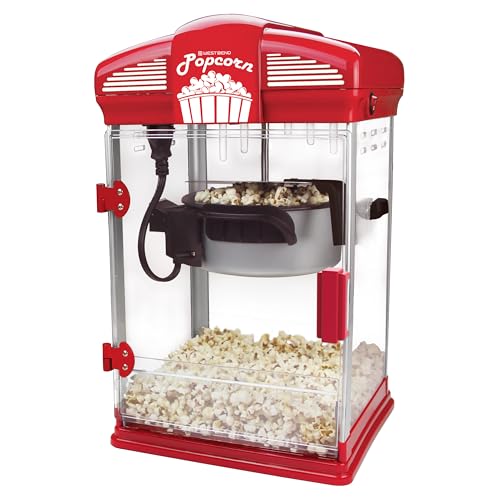
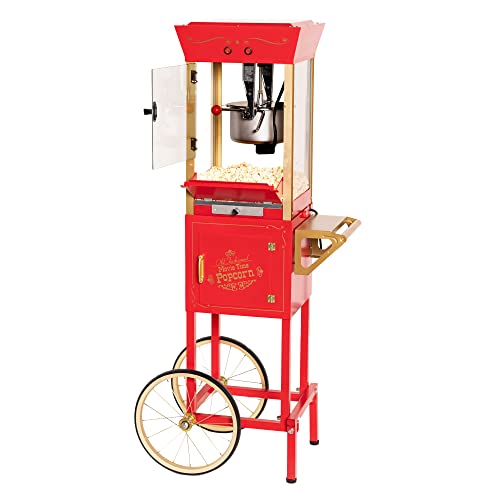

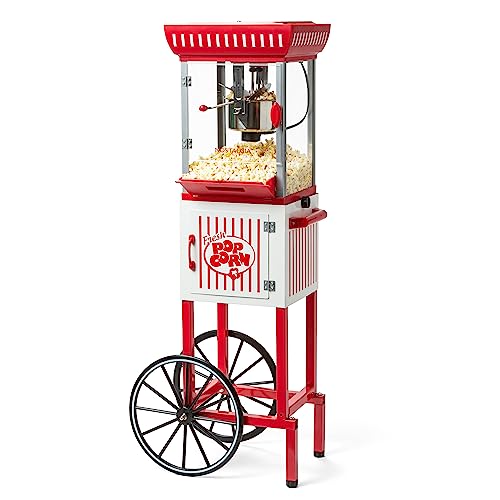
As an Amazon Associate we earn from qualifying purchases at no extra cost to you. Ratings are shown as listed on Amazon.
Quick picks by home situation
| Best for | Recommended type | Typical kettle | Approximate batch output | Typical market range |
|---|---|---|---|---|
| Regular movie nights and parties | Commercial-style cabinet machine | 8 oz | About 24 cups popped | $180–$350 |
| Small families and limited counters | Compact cabinet machine | 4 oz | About 12 cups popped | $90–$180 |
| Lowest cost and easiest storage | Stovetop crank popper | 4–6 qt pan | About 10–18 cups popped | $25–$60 |
| Authentic concession-stand appearance | Large 8 oz cabinet with warming deck | 8 oz | One batch every 3–5 minutes | $250–$500 |
These output figures are practical estimates rather than guarantees. Popcorn variety, oil quantity, fill level, and the manufacturer’s definition of a “cup” can change the result. As a useful planning rule, one ounce of unpopped kernels makes roughly three cups of popped popcorn.
Best overall: an 8-ounce commercial-style cabinet machine
For most households searching for the best movie theater popcorn machines, an 8-ounce cabinet model offers the best balance of capacity, speed, and theater-style presentation. Examples include the Great Northern Popcorn Foundation 8-ounce machine and comparable 8-ounce machines from Paragon.
An 8-ounce kettle typically uses around 2–3 ounces of kernels per batch and produces approximately 20–24 cups of popcorn. That is enough for a family movie night, but also useful when several guests are serving themselves. Most models can begin popping within a few minutes after preheating and can produce successive batches at roughly three- to five-minute intervals, depending on recovery time.
The trade-off is a substantial countertop footprint. Expect approximately 20–24 inches of width, 16–20 inches of depth, and 24–30 inches of height. Many weigh 25–40 pounds. Measure the counter with the kettle lid open, not merely the cabinet dimensions. A machine that fits beneath a cabinet may still be awkward to load and clean.
Why this type feels like a theater machine
- Stainless-steel kettle with a hinged lid
- Built-in stirring system to reduce scorching
- Warming deck or heated base to keep finished popcorn crisp
- Lighted glass cabinet and red or black concession-style finish
- Separate switches for kettle heat, stirrer, warming light, and interior light
- Removable serving tray and perforated deck for catching unpopped kernels
Some machines sold under theater-style branding are primarily decorative. Give priority to a stainless-steel kettle, a real warming deck, an effective stirrer, and accessible switches. A decorative light does not compensate for a small kettle or difficult cleaning.
Best for small spaces: a 4-ounce countertop cabinet
A 4-ounce machine is the better choice when the popcorn is for two to four people and counter space is limited. Compact Nostalgia cabinet poppers and similar 4-ounce models generally occupy about 12–16 inches of width, 9–12 inches of depth, and 15–20 inches of height. Their smaller cabinets are easier to store and less intimidating in an apartment kitchen.
The capacity is the key limitation. A 4-ounce kettle makes approximately 10–12 cups per batch, enough for a small household but not ideal for a party. It may also take nearly as long to heat as a larger model, so its advantage is footprint rather than dramatically faster service.
Choose this size if you usually make one batch per evening and value the visual appeal of a cabinet machine. Avoid it if you expect guests to refill bowls continuously; repeated batches can leave the operator waiting between servings and can accelerate wear on the kettle’s heating components.
Best value: a stovetop crank popper
A stovetop popper such as the Whirley-Pop is the practical alternative when authentic flavor matters more than the illuminated cabinet. Its hand-crank agitator keeps kernels moving across the pan, helping distribute heat and reduce burned spots. It typically makes 10–18 cups of popcorn, depending on the pan size and kernel load.
Stovetop models heat quickly because the pan sits directly on the burner. They also use less counter space, cost less, and usually have fewer electrical parts to fail. The compromise is presentation: there is no warming deck, cabinet, light, or automatic kettle cycle. You must monitor the popping and transfer the popcorn yourself.
For occasional movie nights, this is often the most sensible purchase. For a home theater room where serving appearance is part of the experience, a cabinet machine earns its additional cost.
Head-to-head comparison: what actually changes between models?
| Factor | 4 oz cabinet | 8 oz cabinet | Stovetop crank popper |
|---|---|---|---|
| Approximate popped output | 10–12 cups | 20–24 cups | 10–18 cups |
| Serving cycle | About 3–6 minutes | About 3–5 minutes | About 2–4 minutes |
| Counter width | 12–16 in | 20–24 in | 8–12 in when stored |
| Approximate weight | 10–20 lb | 25–40 lb | 2–5 lb |
| Warming function | Usually included | Usually included | No |
| Cleaning effort | Moderate | Moderate to high | Low to moderate |
| Best service size | 2–4 people | 4–10 people | 2–6 people |
Oil, seasoning, and authentic theater flavor
The machine does not create theater flavor by itself. The characteristic taste usually comes from coconut oil or another high-heat popcorn oil, fine popcorn salt, and a butter-flavored topping added after popping. Commercial-style seasoning powders distribute more evenly than ordinary table salt because their particles are smaller.
For an 8-ounce kettle, a common starting point is approximately 2–3 ounces of kernels, 1–2 tablespoons of oil, and a small amount of fine seasoning salt. Follow the machine’s manual before increasing the load. Overfilling the kettle is one of the fastest ways to produce unpopped kernels, overflow, or scorched oil.
Do not pour liquid butter into the kettle unless the instructions specifically allow it. Water in butter can cause spattering, while dairy solids can burn on the heating surface. Use a separate butter warmer or apply a shelf-stable popcorn topping after serving. Never substitute cooking spray for the oil specified by the manufacturer.
Cleaning and ownership realities
Cleaning is where inexpensive-looking machines can become frustrating. Oil residue collects on the kettle, lid, tray, glass, and cabinet floor. If it is left overnight, it becomes sticky and attracts dust.
A reliable cleaning routine
- Turn off the kettle heat and unplug the machine after the final batch.
- Allow the kettle to cool until it is warm but safe to touch.
- Remove loose kernels and crumbs from the tray and cabinet floor.
- Wipe the kettle interior with a damp, soft cloth and mild detergent if the manual permits it.
- Clean the exterior glass and stainless-steel surfaces without soaking electrical controls.
- Dry every surface completely before storing or making another batch.
Do not immerse an attached kettle, spray water into the cabinet, or scrape stainless steel with abrasive pads. Some kettle assemblies are removable, while others are not; this difference is more important than a decorative finish when comparing models.
The parts most likely to need attention are the kettle thermostat or heating element, stirrer motor, kettle hinge, door magnet, and plastic serving tray. Frequent users should check whether replacement kettles, stirrer parts, and trays are available before buying. A machine with replaceable consumable parts can remain useful much longer than a cheaper model that must be discarded after one component fails.
How to choose the right size
Estimate your typical demand rather than buying the largest kettle. For example, six guests eating two 3-cup servings each need about 36 cups. An 8-ounce machine producing 24 cups per batch would require two batches. A 4-ounce machine producing 12 cups would require three batches, creating more waiting and cleanup. If your group is usually four people eating one large bowl each, a 4-ounce model is sufficient.
Also allow at least 3 inches of ventilation space around the machine and enough clearance to lift the kettle lid. A large cabinet should remain on a stable, level surface; its weight and hot metal kettle make a narrow rolling cart a poor choice unless the cart is specifically rated for the load.
Final recommendation
Choose an 8-ounce commercial-style cabinet if you host movie nights often, want continuous serving, and have a permanent counter or home theater location. Choose a 4-ounce cabinet for the same theater appearance in a smaller kitchen. Choose a stovetop crank popper if flavor, speed, storage, and low ownership cost matter more than the concession-stand look.
Before purchasing, verify the kettle capacity, actual exterior dimensions, heating and warming controls, cleaning instructions, power requirements, and availability of replacement parts. Those details determine whether a popcorn machine remains a fun centerpiece or becomes a bulky appliance used only once.





Write Your Review
No reviews yet. Be the first to share your experience!